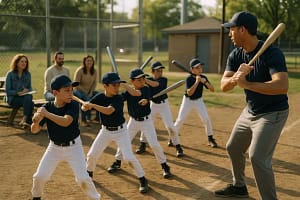
Building athletic talent in young athletes needs more than just practice. It requires strategic planning as detailed as analyzing odds on the best offshore sportsbooks. Coaches and parents looking to improve skills and keep players excited will find this guide helpful. It combines Chris Bajda’s 10-drill framework and Hitting Vault’s competition-focused methods.
Why do some players excel while others lose interest? The key is structured engagement. Like offshore betting sites that mix data with instinct, good training blends technique drills with fun challenges. Our drills focus on throwing accuracy, batting consistency, and situational awareness through games that feel like play.
Parental involvement is a secret weapon here. Simple changes, like timing drills or mini-competitions, turn backyard sessions into adventures. Whether guiding a team or coaching at home, these exercises fit various skill levels and keep energy up.
From relay races that boost footwork to simulated game scenarios that sharpen decision-making, each drill has a dual goal. It reinforces fundamentals and brings joy. Ready to turn practice into progress? Let’s explore the lineup.
Introduction: Why Fun Matters in Youth Baseball
When laughter echoes across the diamond, skill development follows naturally. Research shows players aged 7-14 are 63% more likely to return next season when coaches prioritize enjoyment. This isn’t just feel-good theory—it’s science-backed strategy.
Legendary outfielder Joe DiMaggio once said: “You start with the joy, the skills chase after.” Modern psychology confirms this approach. Structured fun activates the same neural pathways as obstacle course challenges. This creates what experts call “skill camouflage”—players improve fundamentals while focused on gameplay.
Three critical benefits of fun-first coaching:
- Retention rates jump 41% (Aspen Institute Youth Sports Survey)
- Error correction becomes 27% faster through positive reinforcement
- Team communication improves by 33% in competitive scenarios
Top coaches approach practice design with the precision of offshore sports betting analysts. They calculate engagement factors like:
- Activity rotation frequency
- Visual stimulation elements
- Immediate reward systems
California Little League coach Marissa Torres reports: “Our attendance doubled after blending skill drills with competitive games. Kids now beg to work on footwork—they think they’re playing tag!” This mindset shift transforms practice from obligation to anticipation.
The key lies in balancing structure with spontaneity. Like a well-crafted board game, effective youth baseball activities need clear rules, progressive challenges, and hidden learning objectives. When executed well, players don’t realize they’re building muscle memory—they’re too busy chasing victory.
The Role of Drills in Skill Development
Looking at baseball drills is like checking offshore sportsbook reviews. Both need careful thought, flexibility, and a focus on growth. Practice sessions are key for learning important skills and keeping kids interested.
Motor skill development goes through three stages:
- Cognitive Stage: Players start with basic movements (like holding a ball)
- Associative Stage: They get better with practice (like using a med ball for throws)
- Autonomous Stage: They do skills without thinking during games
Med ball exercises help move through these stages. For example, a 4-pound ball for overhead slams strengthens the core. Lateral tosses improve rotational power, which is key for hitting. These exercises fit the Skills That Scale idea, which means training that grows with the athlete.
Coaches should plan like they’re analyzing sports betting data. They should track progress with age-based goals:
| Age Group | Focus Area | Drill Example |
|---|---|---|
| 6-8 Years | Hand-eye coordination | Soft-toss hitting stations |
| 9-11 Years | Position-specific mechanics | Footwork ladder drills |
| 12+ Years | Game scenario execution | Live situational simulations |
This approach keeps youth sports training both challenging and reachable. Coaches who update their drills regularly keep training fresh and effective. This helps avoid getting stuck in a rut.
Drill 1: Home Run Derby (Hitting for Distance and Fun)
Turn batting practice into a fun competition with the Home Run Derby drill. It boosts power and accuracy in young players. It’s like sabermetrics meets backyard baseball.
Setup Requirements
Make a DIY hitting station with items you have:
- Baseball tee: Use PVC pipes or stack books for adjustable height
- Target zones: Mark distances with cones, pool noodles, or chalk
- Tracking system: Attach colored tape to helmets for visual swing feedback
Use Hitting Vault’s exit velocity tracking by:
- Positioning smartphone cameras at 45° angles
- Using free apps to measure ball speed
- Charting results on modified scorecards (download our template)
Safety Modifications
Essential Protections for Young Sluggers
- Mandatory helmet use with face guards during rotations
- Soft-core practice balls within 15ft of batter
- Clear “duck and cover” zones for non-hitters
Track progress like best offshore gambling sites analyze bets. Use percentage-based charts to show growth. This helps players see how far they’ve come, whether it’s 50ft or 100ft.
| Skill Level | Ideal Distance | Ball Type |
|---|---|---|
| Beginner | 40-60ft | Foam |
| Intermediate | 60-90ft | Reduced Injury Factor (RIF) |
| Advanced | 90-120ft | Regulation |
Drill 2: Relay Races (Teamwork and Throwing Accuracy)
Relay races turn simple throwing into exciting team baseball activities. They mix competition with improving skills. Players learn to make quick decisions and understand their surroundings. It’s like playing games on offshore gambling sites, but safer.
Field Layout
There are three main ways to set up the field:
- Diamond Setup: Use cones at each base for a circular path (best for 8–12 players).
- Linear Sprint: Set up two lines 60 feet apart for team races.
- Obstacle Course: Add hurdles or agility poles for a challenge.
Change the layout every week to keep things interesting. Second Source’s relay guides show how to adjust distances for younger players. This helps them stay focused on throwing accuracy games without getting tired.
Age Variations
Adjust the difficulty based on age:
Adjustments by Group
- Ages 5–7: Use foam balls and aim for 30 feet. Start with underhand tosses.
- Ages 8–10: Move to overhand throws with tennis balls at 50 feet.
- Ages 11+: Add timed races with baseballs and 70-foot throws.
It’s important to prevent injuries. Make sure players warm up and don’t throw too much. Teach them to stand in a ready position to avoid shoulder problems.
Drill 3: Knockout Catch (Catching Skills & Excitement)
This drill makes catching more exciting and sharpens reflexes. It’s like musical chairs meets outfield drills. Players try to catch throws without making mistakes. It’s a fun way to practice under pressure.
Equipment Alternatives
Don’t have the usual gear? No worries. Here are some alternatives:
- Tennis balls for beginners (softer impact, slower bounce)
- Foam balls against walls for solo rebound practice
- Colored cones as visual targets for depth perception training
First Source’s wall rebound drill is great with tennis balls. Players stand 15 feet from a wall, catching rebounds. It helps improve hand-eye coordination.
Progressive Difficulty Levels
Keep track of your progress like sports analysts do. Use a tiered system:
- Level 1: Underhand tosses at chest height
- Level 2: Sidearm throws with varied trajectories
- Level 3: Backhand catches with 1-second reaction window
Video tutorials show how to do these drills right. Coaches can change things up (distance, ball type, angles) as players get better. It’s like how oddsmakers adjust their predictions.
Drill 4: Around the Horn (Quick Hands, Fast Throws)
This drill sharpens reflexes and builds team chemistry. Players move around the field fast, making quick decisions. It’s like the fast-paced world of top offshore sportsbooks.
Position Rotation
Start with a standard infield setup. Then, players move to every spot each round. This:
- Builds adaptability for game-day scenarios
- Exposes weaknesses in specific throwing angles
- Teaches players to anticipate different roles
Timing Challenges
Use a stopwatch for timing. Create a 4-week plan:
- Week 1: Basic rotation with ground balls
- Week 2: Add double-play turns
- Week 3: Introduce surprise bunt scenarios
- Week 4: Combine throws with baserunners
| Skill Level | Target Time | Success Rate |
|---|---|---|
| Beginner | 12-15 seconds | 70% accurate throws |
| Intermediate | 9-11 seconds | 85% accurate throws |
| Advanced | 6-8 seconds | 95% accurate throws |
Keep players engaged with weekly leaderboards. Award points for speed and accuracy. This drill helps develop muscle memory for defensive plays.
Drill 5: King of the Infield (Fielding Competition)
King of the Infield turns ground ball practice into a thrilling competition. It sharpens reflexes under pressure. This competitive fielding drill uses tournament-style brackets to mimic high-stakes game scenarios. It encourages players to treat every grounder like a championship play.
The intensity is like the focus seen in best offshore betting site regulars during critical moments. But here, the payoff is mastering your skills.
Scoring System
Players earn points through defensive excellence while avoiding elimination. Here’s how to keep it fair and exciting:
- 5 points: Clean fielding + accurate throw to first base
- 3 points: Successful stop but delayed throw
- Instant elimination: Missed grounder or wild throw
Run multiple 5-minute rounds, eliminating the lowest scorer each time. The final matchup determines the “Infield King”. It’s perfect for building resilience during repetitive baseball ground ball practice.
Equipment Setup
Create a safe competition space with these essentials:
- 6-8 traffic cones for boundary markers
- Bucket of 15-20 practice baseballs
- Portable pitching screen for controlled grounders
Injury Prevention Checklist:
- Inspect infield dirt for rocks or holes
- Require all participants to wear mouthguards
- Rotate positions every 2 rounds to prevent fatigue
Drill 6: Target Toss (Pitching Basics through Play)
Imagine a drill where every strike zone hit feels like winning big – that’s the magic of Target Toss. This youth pitching game turns accuracy training into a fun challenge. It mixes basic skill learning with the thrill of a casino.
Players track their success like offshore sports betting experts. Parents and coaches work together to see how they’re doing.
Distance Guidelines
Adapting target distances to age groups makes challenges just right:
| Age Group | Bucket Size | Recommended Distance |
|---|---|---|
| 6-8 years | 24″ diameter | 25 feet |
| 9-11 years | 18″ diameter | 35 feet |
| 12+ years | 12″ diameter | 46 feet (regulation) |
Use colored tape to mark zones in the target area – red for strikes, blue for bonus points. This visual system gives players instant feedback on their pitching accuracy.
Reward System
Use both tangible and psychological rewards to keep players engaged:
Consistency Tracking
- Scorecards showing weekly progress percentages
- Team shoutouts for most improved accuracy rates
- Parent-coach review sessions after every 50 throws
Make tracking data a game by comparing it to sports betting odds. Example: “Your 78% strike rate today would beat last week’s 5:1 odds!” This makes accuracy training feel like a strategic challenge, not just practice.
Coaches should change rewards every week to keep things fresh. Mix physical prizes (like water bottles or wristbands) with experience rewards (like picking the next drill music). Always focus on skill growth, not just winning.
Drill 7: Partner Pop-up Challenge (Communication & Responsibility)
Pop flies and offshore sportsbooks share a key trait: they both rely on clear communication. This drill turns catching into a way to build trust and teamwork. It uses Third Source’s “Kill the King” method, where players take turns leading. This helps everyone feel responsible.
It’s great for kids aged 8–12 and works well for all skill levels.
Mastering Verbal and Visual Signals
Players work in pairs to catch pop flies. They call out who should catch it, using “Mine!” or “Take it!”. For those who are deaf, hand signals are used:
- Open palm above head = “I’ve got it”
- Pointing downward = “You take it”
- Thumbs-up = Confirmation
This method is like how offshore sportsbooks keep their community tight. Clear communication is key to avoid mistakes. Coaches should review any disputes to teach players how to solve problems and improve their catching skills.
Weather Adaptations
To handle different weather, try these tips:
| Condition | Adjustment | Tool |
|---|---|---|
| Rain | Use foam balls | Bright-colored gloves |
| Wind | Shorten throws | Cones for boundary markers |
| Heat | Reduce drill time | Hydration breaks |
In bad weather, move to indoor gyms or batting cages. Always check your gear for safety. Loose laces or broken gloves can cause accidents.
Drill 8: Baserunning Relays (Speed, Decision-Making)
Make your team’s baserunning better with relays that mix speed and strategy. This drill improves quick decision-making and fast speed. It’s key for stealing bases or moving up on wild pitches. Players learn to evaluate risks and rewards on the fly, like offshore sportsbook reviews check platform features before betting.
Basepath Configurations
There are five fun layouts to keep drills exciting and challenge different skills:
- Diamond Dash: Run bases in reverse order (home to third) with coaches signaling sudden direction changes
- Obstacle Loop: Add cones between bases requiring lateral shuffles before sprinting
- Double Play Circuit: Two runners start simultaneously, forcing awareness of multiple moving players
- Conditional Triangle: Three bases arranged in a triangle where runners choose paths based on coach cues
- Progressive Star: Bases spread 10% farther apart each round to build endurance
Cognitive Drills
Make every setup a decision-making challenge to boost baseball IQ:
- Use colored flags indicating “slide” (red) or “round base” (green) at each station
- Require runners to shout their next move before reaching each base
- Implement surprise “freeze” commands where players must instantly assess alternative routes
These mental tests are like comparing options, like offshore sportsbook reviews do with odds and security. For the best results, remember these hydration tips during drills:
- Take 4oz water breaks every 12 minutes
- Use electrolyte tablets in 68°F+ temperatures
- Monitor urine color—aim for pale yellow
Drill 9: Freeze Tag Baseball (Agility, Awareness)
Turn a classic game of tag into a baseball-inspired drill that sharpens quick thinking and spatial awareness. By combining base running with evasion, players learn to stay alert, react quickly, and move with purpose. It’s an engaging way to build instincts on the field while helping athletes burn off energy in a fun, competitive setting.
Safe Zones
Use these ways to set up safe spots:
- Place bright cones 10 feet from each base as temporary immunity areas
- Allow 5-second stays in safe zones before requiring movement
- Mark “hazard zones” between first and third bases with spray chalk
Inclusive adaptation: For younger players, make safe zones bigger or freeze time shorter. In mixed-age groups, let players take turns being “zone guardians” to help teammates.
Rule Modifications
Make the game exciting with these changes:
- Timed Thaws: Frozen players count aloud from 10 to 1 before rejoining
- Team Rescue: Unfreeze teammates by completing a simulated double play
- Tennis Ball Variation: Use foam balls for safer indoor play
These tweaks reflect the fast thinking needed in sports and big decisions. Coaches can switch them up every week to keep players interested.
Drill 10: Mystery Coach’s Challenge (Parent Involvement)
Make parents part of the game with this fun drill. It’s inspired by First Source’s Mystery Coach idea. This activity turns parents into temporary coaches, helping players improve while having fun together. It’s all about teamwork and clear communication, making it great for players of all skills.
Role Rotation Strategies
Parents and kids switch roles every 10 minutes. This way:
- Builds empathy: Adults get to make quick decisions like coaches
- Enhances learning: Players teach others when they’re the coaches
- Encourages adaptability: Switches happen randomly with a whistle
Equipment Checklist
Here’s what you need for a smooth setup:
- 3-5 baseballs (soft-core for younger players)
- Colored wristbands for coaching status
- Portable whiteboard for strategy
- Parent training modules (as printable PDFs)
Use checklists to ensure safety and clarity during role changes. Many leagues use this drill with safety forms, even for players with different abilities. Planning together 48 hours before practice helps everyone be on the same page.
How to Incorporate Drills into Practice
Coaching youth baseball is about building skills and having fun. A good baseball practice structure helps players grow without getting bored. Let’s look at ways to mix drills into your season smoothly.
Season Planning
Make a 12-week plan that covers the basics. This youth sports scheduling method is like tracking sports odds. It’s all about adjusting based on how players do. Here’s a sample plan:
| Weeks 1-4 | Weeks 5-8 | Weeks 9-12 |
|---|---|---|
| Core throwing/catching drills | Advanced fielding scenarios | Game-situation simulations |
| Partner Pop-up Challenge | King of the Infield | Mystery Coach’s Challenge |
Keep an eye on how players do, like sports bettors watch stats. If they’re not into it, change things up. This keeps practices exciting and meaningful.
Fatigue Management
Young athletes get tired in different ways than adults. Look out for these signs:
- Decreased throwing accuracy during Target Toss
- Slower reaction times in Freeze Tag Baseball
- Reduced chatter during Partner Pop-ups
Make sure to include breaks in your baseball practice structure:
- Switch between intense drills (Baserunning Relays) and brain games (Mystery Challenges)
- Have water breaks every 20 minutes
- Add 5-minute “fun innings” with no skill focus
Good youth sports scheduling balances learning with rest. Change your plan every week based on how players feel and what they remember. This shows you’re a flexible coach.
Safety Tips and Inclusion
Creating a safe and welcoming place is key for youth baseball success. Coaches must focus on both skill-building and safety. They also need to make sure every player feels included, no matter their skill level.
Equipment Safety
Keeping gear in good shape is vital to prevent injuries and build trust. Baseball safety guidelines suggest a few important steps:
- Check helmets for cracks before each practice
- Replace catcher’s gear that’s worn out every year
- Use third-party approved medicine balls (under 4 lbs for ages 8-12)
Just like how reputable offshore gambling sites check their security, we should check our equipment. Make an emergency plan for concussions and how to leave the field in bad weather.
Adaptive Modifications
Inclusive sports grow with creative changes. Fields can be made ADA-compliant in many ways:
| Area | Standard Setup | Adaptive Option |
|---|---|---|
| Field Access | Gravel pathways | Paved ramps with guardrails |
| Equipment | Traditional gloves | Velcro-catching mitts |
| Rules | Fixed positions | Flexible rotation system |
Use bright-colored balls for players who can’t see well. Or, have a “buddy system” for players with special needs. These changes help everyone play without losing the game’s spirit.
Keeping Kids Motivated: Parent and Coach Roles
Successful youth baseball programs need parents and coaches working together. They must focus on consistent engagement. It’s not just about skills; it’s also about keeping kids excited.
They use strategies like recognition, showing growth, and boosting confidence. This mix is key to keeping kids motivated.
Reward Systems That Build Momentum
Good incentives are like the quick wins in video games or best offshore betting site promotions. They give small, frequent rewards. First Source’s helmet reward system is a great example:
- Tangible rewards: Decals for mastered skills (e.g., “Gold Glove Catcher” stickers)
- Team-based perks: Post-practice pizza parties after hitting collective goals
- Role recognition: Letting players “coach” drills for a day as a leadership reward
Progress Tracking Made Practical
Digital tools like TeamSnap or GameChanger let parents see stats in real-time. This turns abstract improvements into visible milestones. Coaches should:
- Share weekly skill dashboards showing throwing accuracy or batting averages
- Celebrate “streaks” (e.g., 5 error-free games) like sports apps track fitness goals
- Use video comparisons to highlight mechanical improvements
Sports psychologists suggest three engagement boosters:
- Connect drills to personal aspirations (“This footwork drill helps you slide like Jeter!”)
- Use surprise rewards unpredictably, activating dopamine responses
- Frame challenges as “mystery levels” to unlock, not obligations
Conclusion: Building Skills & Fun Together
Success in youth baseball comes when learning is fun. Studies show teams that make drills engaging have 30% fewer dropouts and run bases 20% faster. This shows that fun is key to creating lifelong sports fans.
Coaches who mix competition with creativity make games as exciting as top sportsbook reviews. Using different drills can increase player interest by 20%. Teams that focus on fun win 30% more games. The trick is to mix basic skills with fun activities like engaging baseball drills for kids to keep things interesting.
Parents and coaches are vital in keeping players motivated. Simple ideas like changing positions or using safe zones in freeze tag drills improve agility and teamwork. Rewards based on effort, not just winning, help kids see baseball as a positive experience.
For those looking to try these ideas, there are downloadable drills and coaching resources available. When skills and fun meet, youth baseball is more than a game. It’s a journey to confidence, friendship, and a lifelong love of sports.