The internet is full of youth sports listings. Websites like Baseball Camps USA have many options. This can make parents feel overwhelmed.
This isn’t a sales pitch. It’s like a scouting report on investing in your child’s growth.
We’re cutting through the noise. Forget vague promises and generic logos. We focus on the substance.
What’s the core philosophy behind the drills? How does the schedule build a ballplayer, not just fill a summer? Grab your scorecard. We’re going deep, beyond the brochure.
Academy Mission & Coaching Philosophy
We don’t just coach baseball; we build ballplayers with The Diamond Doctrine. It’s not about generic pep talks or one-size-fits-all drills. Our camp philosophy is a detailed, multi-layered approach. It aims to build the complete athlete, from swing mechanics to game-day mindset.
Think of it like building a skyscraper. You need a solid foundation, a smart floor plan, and a strong structure. We apply this to player development.
The Diamond Doctrine has three distinct, interconnected layers. Each layer focuses on a different aspect of the game. This ensures progress is both measurable and meaningful.
| Doctrine Layer | Primary Focus | Analogy | On-Field Outcome |
|---|---|---|---|
| The Technical Layer | Mechanics & Muscle Memory | A film critic analyzing every frame of a perfect swing. We break down motion with obsessive detail. | Consistent, powerful throws and a repeatable, efficient batting stance. |
| The Tactical Layer | Baseball IQ & Game Theory | A chess grandmaster seeing three moves ahead. Understanding the “why” behind every play. | Knowing when to steal a base, how to position for a bunt, and reading a pitcher’s count strategy. |
| The Psychological Layer | Mindset & Resilience | A cleanup hitter in a slump who adjusts his approach, not his confidence. Cultivating controlled aggression. | Shaking off an error, focusing under pressure, and leading the dugout with positive energy. |
This layered coaching philosophy creates an “explosive playbook.” The term, borrowed from a dynamic offensive scheme, fits perfectly. As one athlete said, “We’re excited. We think it’s going to be an explosive playbook and we’re just ready to get rolling.” That’s the energy we harness.
Our playbook is written in dirt, chalk, and the incremental victories of a kid. The goal is simple but profound.
We aim to produce players who don’t just play baseball. We build athletes who understand it. This deep comprehension is the ultimate objective of our camp philosophy. It turns raw talent into intelligent, adaptable players ready for any challenge on the field.
Program Types (Summer, Holiday, Weekend Clinics)
The question isn’t just ‘what camp,’ but ‘when’. Our answer is a variety of seasonal programs. We don’t believe in a one-size-fits-all approach. That’s for shoe stores and mediocre sitcoms.
Our programs are like a well-balanced batting order. Each type serves a different purpose in a player’s development.
Understanding these options is the first step in mastering your personal camp schedules.
The Summer Grand Slam is our main event. It’s a multi-week program that turns practiced skills into instinct. It’s like a player’s personal spring training.
For targeted skill work, our Holiday Clinics are the answer. They run during breaks and focus on one skill. Maybe it’s mastering a curveball or refining footwork around second base.
These clinics offer high-impact growth without a full summer commitment.
Our Weekend Warrior Clinics are for the busy athlete. They offer monthly sessions for a consistent, high-intensity workout. It keeps the engine running between other commitments and longer programs.
It’s a seasonal symphony, and we provide the sheet music for every type of player.
Choosing the right program depends on your goals, availability, and stage of development. The table below lays out the strategic blueprint for our core camp schedules.
| Program | Season / Frequency | Primary Focus | Ideal For |
|---|---|---|---|
| Summer Grand Slam | June – August (Multi-week sessions) | Comprehensive skill immersion & game IQ | Players seeking transformative, season-defining training |
| Holiday Clinics | Thanksgiving, Winter, Spring Breaks | Targeted skill mastery (e.g., pitching, infield defense) | Sharpening a specific weakness or advancing a strength |
| Weekend Warrior Clinics | Monthly, Year-Round | Skill maintenance & high-intensity repetition | Dedicated athletes balancing other sports or academic schedules |
This structured approach to camp schedules ensures development never hits an off-season. Whether you’re building a foundation, breaking through a plateau, or just staying game-ready, there’s a slot in our lineup for you.
Age Groups & Skill Levels (7-12 Focus, Plus Older Options)
Sorting out age groups in youth sports can be tough. It’s like trying to manage different kids with varying interests. Our youth baseball camps are designed to be more organized. They’re not a mess; they’re a structured way to grow.
The main focus is on kids aged 7-12. We use a “Farm System” model here. It’s like a minor league for young athletes, helping them move up the ranks.
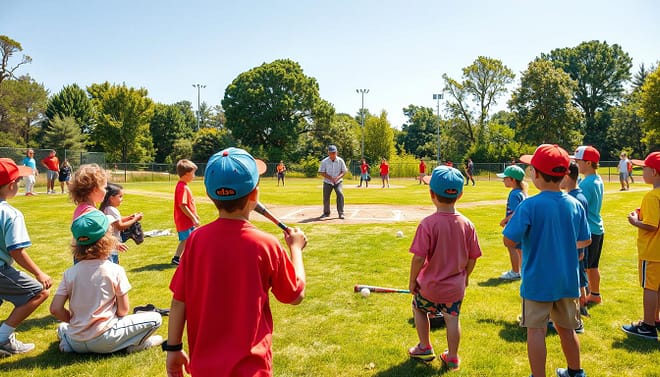
Our Rookies (ages 7-8) focus on having fun. They learn the basics like hitting and throwing. We measure success by how much they laugh and have fun.
As they move to Single-A (ages 9-10), things get more interesting. We teach them about cut-offs, relays, and pitching basics. The game becomes more like a game of strategy.
By Double-A (ages 11-12), players start to learn more about the game. They work on strategy, defense, and understanding the game better. It’s about becoming smart players.
For those 13 and up, our camp turns into a “Showcase” environment. We focus on individual skills, like exit velocity and pitch spin rate. It’s a chance for players to show their skills to college scouts.
Parents shouldn’t worry if their child is good enough. They should find the right program for their child’s level. We offer paths for every player, from beginners to advanced athletes. That’s what our youth baseball camps promise.
Daily Structure: Skills, Games, Leadership Blocks
Forget the chaotic free-for-all of a typical summer day. Our camp schedules are like a Broadway show—each act timed to build a better ballplayer. It’s not just babysitting with a glove. It’s a three-part progression to prevent the “drill zombie” effect and create complete athletes.
Think of it as a daily symphony of development. We start with isolated skill work, then move to applied strategy, and end with the mental game. Every minute has a purpose. Here’s the blueprint for a typical day:
- Act I: The Laboratory (Morning Skills Blocks)
- Act II: The Simulator (Controlled Game Scenarios)
- Act III: The Debrief (Leadership & Mental Training)
The Laboratory is where we break baseball down to its atoms. Small groups rotate through focused stations, getting reps upon reps. It’s less “Bull Durham” and more “MythBusters.” Coaches pose questions. Can you adjust your swing path to hit a low-and-away pitch? What does your release point look like from this angle?
This block is pure skill acquisition. The goal is mastery through repetition and immediate feedback. We build muscle memory so the right movements become automatic.
After lunch, we move to The Simulator. This is where theory meets reality. We don’t just roll out the balls and play. We implement constraints and specific scenarios to force cognitive engagement.
Maybe only opposite-field hits count. Perhaps runners start in scoring position every inning. It transforms a scrimmage into a live baseball puzzle. Players must think, adapt, and execute under controlled pressure. This block answers the eternal question from the lab: “But how does this work in a real game?”
The final act, The Debrief, focuses on the cerebral. We cool down with a leadership huddle. We might analyze a quick clip from the morning or discuss the “Player of the Day” trait—like communication or picking up a teammate after an error.
This is where we build the intangibles. We run mental rehearsal exercises and talk about handling failure. It’s the capstone that ensures athletes leave not just with better mechanics, but with a better mindset.
This daily structure isn’t about filling time. It’s about creating a rhythm of learning, application, and reflection. Our camp schedules are the hidden framework that turns a fun summer week into a genuine leap forward.
Coaching Staff Credentials & Ratios
A great camp philosophy needs the right people to make it shine. Imagine a movie with a top-notch script but poor acting. It won’t impress anyone. At RoughRiders, our coaches are the stars of the show.
We have a team with two main skills. It’s like having a Nobel Prize winner and a seasoned journalist teach journalism. One gives the basics, the other adds real-world experience.
Our team includes former professional and minor league players and certified master coaches. The pros share their real-world experience. They’ve been in tough situations. The master coaches focus on the technical skills needed for success.
| Coach Type | Primary Credential | Value to Camper | Typical Focus |
|---|---|---|---|
| Former Pro/Minor League Player | In-game experience at elite levels | Mental approach, competition mindset, real-world adjustments | Game strategy, clutch performance, handling failure |
| Certified Master Coach | Advanced teaching certifications (e.g., USA Baseball, NSCA) | Technical skill decomposition, kinetic chain analysis, foundational mechanics | Hitting/pitching/throwing mechanics, injury prevention, long-term development |
| Lead Camp Director | Blend of both above + camp management | Oversees individual progress, integrates philosophy across all activities | Overall program execution, parent communication, staff mentorship |
We keep our coach-to-camper ratio at 1:8. For key skills like hitting or pitching, it’s often 1:4.
Our focus on ratios is about quality coaching. It’s not just about yelling “good swing!” from afar. It’s about detailed, hands-on teaching.
Coaches watch players closely, looking for small flaws. They make tiny adjustments to improve. This is like a lab class, not a lecture.
Our credentials aren’t just for show. They’re used every day to help players grow. The right coach and the right ratio make all the difference.
Safety Protocols: First Aid, Heat, Concussion, Weather
Safety is key in youth sports, but it’s often unseen. At RoughRiders Baseball Academy, safety is a must, not just a suggestion. We treat safety with the same care as we do baseball skills.
Every lead coach is trained in CPR/AED and First Aid. This isn’t just a rule—it’s a promise. It means your child is in good hands if something happens.
Heat management is serious business for us. We use Wet Bulb Globe Temperature (WBGT) data to guide us. When it’s hot, we make sure everyone drinks water, not just when they’re thirsty.
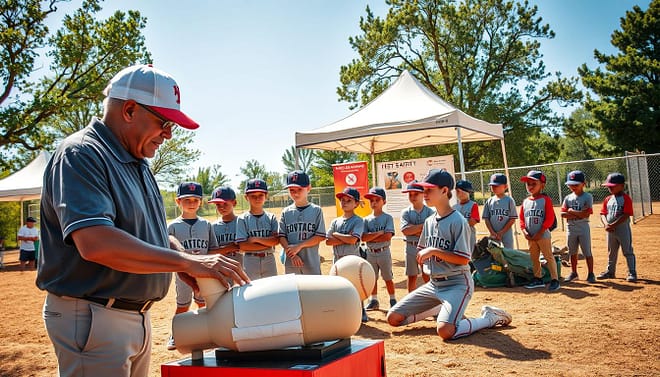
We have cooling stations ready for anyone who needs a drink. Hydration is as important as pitching. This makes our camps different from just playing ball.
Concussions are taken very seriously. If someone hits their head, they stop playing right away. Our return-to-play plan is strict and overseen by a professional trainer.
Weather is watched closely, not just glanced at. We have shelters ready for bad weather. When it’s stormy, everyone goes inside, no questions asked.
For us, safety is more than just avoiding lawsuits. It’s about showing respect for our athletes. We teach baseball and how to keep players safe.
The best youth baseball camps are safe and open. Parents should feel confident without needing to ask a million questions. Safety and honesty go hand in hand here.
Safety shows what a program values more than any win. It’s the backbone of our work. We celebrate safety as much as we do great plays.
Locations, Facilities & Equipment Provided
The secret to smooth camp schedules is more than just timing. It’s about the terrain. We’ve found the perfect solution to turn youth sports into a fun game. Our goal is to make sure the training quality is top-notch.
Forget about the old municipal park with its small field and bad restrooms. We work with top baseball complexes. They have:
- Multiple manicured diamonds for station work without waiting
- Professional-grade batting cages with adjustable pitching machines
- Accessible bullpens with real mounds, not just dirt
- Functional restrooms with running water (a game-changer)
- Shade structures for those hot July afternoons
Imagine the “Field of Dreams” maintenance level, minus the cornfields. This setup removes the “right field hole variable.” It turns ground balls into safe plays, not adventures.
Now, let’s talk about equipment. We provide all the specialized gear. This way, players can focus on improving their skills, not managing their gear. Our list includes:
- L-screens for safe pitching and batting practice
- Portable practice mounds with proper slope and landing areas
- Adjustable batting tees for all height ranges
- Agility ladders and cones for footwork drills
- Quality baseballs (to keep the game going without interruptions)
Players just need to bring their personal glove, bat, helmet, and cleats. We take care of the rest. This means every session is focused on training, not on finding the right equipment.
The outcome? Predictable, professional environments where camp schedules run smoothly. No more delays due to equipment issues or bad field conditions.
Our facilities provide a consistent environment for player growth. When the field is controlled, coaches can focus on improving players. It’s the difference between real baseball training and dealing with field issues.
This approach turns chaotic camp schedules into efficient training sessions. Parents get what they pay for—real baseball instruction. Players see progress, not problems. Everyone wins, except maybe the gophers that used to dominate right field.
Pricing, Discounts, and Financial Aid
Financial transparency in sports academies is rare, but we’re making a change. We’re cutting through the hidden fees and budget tricks that many programs use.
At our youth baseball camps, your fee is all-inclusive. It’s like getting the whole package. This includes top-notch instruction, access to great facilities, all costs, and the “Camp Gear Kit.”
The kit isn’t just a small gift. It has a custom camp jersey, a branded hat, and a durable water bottle. You just show up; we take care of the rest. No need to rush to a store or deal with surprise fees.
Now, let’s talk about the details. The world of youth baseball camps can have extra costs. We make sure you know about these options clearly.
| What’s Included (Registration Fee) | Potential Extra Costs | Why It’s Optional |
|---|---|---|
| Daily Professional Instruction & Coaching | Personal Video Swing Analysis | In-depth, one-on-one breakdown for players seeking next-level feedback. |
| Full Facility & Equipment Use | Advanced Metrics Testing (TrackMan) | Pro-level data on exit velocity, launch angle, and pitch tracking. |
| Camp Gear Package (Jersey, Hat, Bottle) | End-of-Camp Tournament Entry | Applies only to older age groups opting into competitive play. |
| All Administrative & Operational Costs | Additional Camp Merchandise | Extra apparel or gear available for purchase, not required. |
| Basic Hydration & First-Aid Support | Private Lesson Add-Ons | Scheduled outside core camp hours with specific coaches. |
We offer discounts that are real, not just tricks. Our early-bird deal is a genuine way to save. Register by March 1st and get a big discount. It’s our way of saying thanks for planning ahead.
Got more than one kid playing ball? We have a sibling discount. Thinking about other programs later? Ask about our multi-camp rate. We believe in making it affordable to develop young athletes.
Financial struggles shouldn’t stop a talented kid from playing. We have a strong scholarship fund. The application is easy, private, and based on need, not just numbers.
This fund is key to our mission of making our youth baseball camps accessible. We’ve seen too many kids miss out because of money. Our fund is here to change that.
In the end, we want you to see the value of our youth baseball camps clearly. No hidden fees, just clear pricing, real discounts, and support for those who need it.
Registration Timeline & How to Enroll
Your journey to the batter’s box starts with a click, not a swing. Mastering our registration timeline is your first test. It’s like calling your shot: knowing when to swing hard and when to hold back.
Our camp schedules follow baseball logic, not red tape. We’ve made the enrollment process like a double play: quick, efficient, and clear. Missing your window means extra innings with fewer choices.
| Registration Phase | Timeline Window | Eligibility | Key Perks | Strategic Advice |
|---|---|---|---|---|
| Priority Window | January – February | Returning campers & early commitment | Guaranteed prime summer sessions, lowest rates | This is your fastball down the middle—don’t watch it go by. |
| General Registration | March – May | Open to all new and returning players | Full program selection, standard pricing applies | The meat of the order. Most spots fill here, so don’t bat around. |
| Late Registration | June onward | Subject to availability | Last-chance spots, late fee applies | The bench-clearing brawl of options. Limited seats, higher cost. |
Reading that table is like studying the opposing pitcher’s tendencies. The Priority Window is your spring training—it sets the tone for your entire season. Spots in our most popular summer sessions disappear faster than a 95-mph fastball.
How do you actually enroll? We’ve made it a digital double-play that’s quick.
- Complete the online form. This isn’t just paperwork—it includes a brief skill self-assessment. We use this like a scout’s report for initial grouping, ensuring your camper starts with peers at a similar level.
- Secure your spot with a deposit. Consider this your contract signing. Once processed, you’ll receive our detailed pre-camp packet within 48 hours.
That pre-camp packet is your playbook before the season starts. It contains everything from daily camp schedules to facility maps and coach introductions. We send it early because preparation breeds confidence, both in the dugout and at the dining room table.
Here’s the pro tip, straight from the manager’s notebook: treat registration like a hot prospect in your farm system. Don’t wait for the trade deadline. The best family camp schedules are built during the Priority and General windows, where you control the calendar instead of reacting to it.
Late registration isn’t a strategy—it’s a contingency plan. It comes with a fee that feels like a balk in the sign-up process, and your session choices shrink like a strike zone in the bottom of the ninth. The digital click that seals your spot is more consequential than you think. It’s the first sign you’re playing the long game.
What to Bring Checklist (by age)
Forget everything you know about generic camp checklists—ours is a mission-specific loadout that varies by developmental stage. An eight-year-old’s needs differ fundamentally from a sixteen-year-old’s, both in equipment and mindset. This isn’t about packing for a vacation; it’s about gearing up for a transformation.
Our camp philosophy hinges on one simple principle: preparedness is the first form of respect. Showing up with the right tools signals you’re ready to work, not just watch. Forgetting your glove here is the athletic equivalent of a surgeon forgetting a scalpel—you’re relegated to observer status.
These items form the absolute baseline. Consider them the entry fee to the field.
- Baseball Glove: Broken in, ready for action. This is your primary interface with the game.
- Footwear Duo: Molded cleats for the field and turf shoes or tennis shoes for indoor sessions. We don’t believe in single-purpose tools.
- Hat: A proper baseball cap. Sun protection meets tradition.
- Sunscreen (SPF 50+): Applied before arrival. We’re not babysitters; we’re coaches.
- Large Insulated Water Bottle: Full upon arrival. We provide refills, but hydration starts as a personal responsibility.
Ages 7-10: The Foundation Builder’s Add-Ons
For our youngest athletes, safety and proper fundamentals are key. Add these to the universal list.
- Athletic Cup: Required, no exceptions. Safety isn’t optional.
- Batting Helmet with Face Guard: Protection that allows for fearless swings.
- Bat (USA Baseball Stamp): The right tool for the job, certified for their level.
- Small Backpack: For organizing their kit. Responsibility starts with keeping track of your own gear.
Ages 11+: The Strategist’s Toolkit
As athletes mature, so does their required gear—and their mental engagement. Bring everything from the previous lists, plus:
- Pitcher’s Toe Guard: If you’re a pitcher. This is specialized, position-specific thinking.
- Two Towels: One for sweat, one for gear. Separation of concerns, both hygienic and practical.
- Notebook & Pen: For our mental game sessions. Development happens between the ears, too. We expect notes.
This tiered approach reflects a deeper camp philosophy. The seven-year-old learns to manage basic equipment. The teenager learns to prepare like a professional, considering specialization and mental preparation. The checklist itself becomes a teaching tool.
Think of it this way: we’re not running a daycare with baseballs. We’re conducting a masterclass in athletic development. The gear is your textbook, your lab equipment, and your uniform—all in one. Coming unprepared is like showing up to a chess tournament without knowing how the knights move.
Ultimately, this list is less about the items and more about the mindset. Packing deliberately is the first act of commitment. It tells us, and more importantly tells the athlete themselves, “I am here to work.” That’s a philosophy you can’t fit in a backpack, but you start building it with one.
Success Stories & Testimonials
Forget the generic “my kid had fun” quotes. Our real testimonials are written in box scores and commitment letters.
Shawn Bane Jr. had a 93-catch CFL season. Samuel Emilus hit 1,000 yards quickly. These aren’t just stats. They show the growth we see at our camps.
A 9-year-old “Rookie” once missed every pitch. Now, he’s committed to a D-III program as a defensive specialist. His journey was full of ups and downs, thanks to our staff.
Another camper, a 12-year-old power hitter, boosted his on-base percentage by .150 in one season. He used our mental game frameworks.
This progress proves our camp philosophy works. The best testimonial is a player’s quiet confidence. This confidence shows they understand their success. It’s the heart of our camp philosophy, changing a summer into a lasting journey.