Most baseball development is hit-or-miss. It includes random batting cage sessions and vague advice. People often say “just go out and play.” It’s like hoping a pizza delivery guy solves a tough math problem.
A structured player development plan is more than just paperwork. It’s your secret weapon. It’s like the Moneyball approach to getting better.
A good plan gives structure and turns hard work into clear progress. It makes sure you’re not just practicing. It’s about training with purpose.
Using a structured IDP helps coaches and players stay on the same page. It sets clear goals and tracks progress easily. It’s what top programs, like elite baseball academies, use to make champions.
Don’t just hope for better. Let’s create a plan to get there.
Setting outcome → process goals; aligning player/parent/coach
Goal setting in baseball often starts with dreams and ends in disagreements. This is unless you learn to change from what you want to how you’ll get it.
Everyone dreams of hitting .350 or throwing 95-mph fastballs. These are outcome goals. They’re hard to control, like trying to control a knuckleball in a storm.
The real magic happens when you turn dreams into daily process goals. This is the art of changing your approach.
Let’s get specific. What does “better power” mean on a Tuesday? It’s not just a wish. It’s about making small changes in your swing, tracked with tools like Blast Motion.
- Identify the Outcome: “I want to hit for more power.”
- Ask “How?”: “By improving my launch angle and bat speed.”
- Define the Process: “I will achieve this by doing three sets of 10 overload/underload swings daily, and reviewing my bat path metrics weekly.”
- Make it Measurable: “Target: increase average bat speed by 3 mph and launch angle by 5 degrees within 90 days.”
Now, we have a challenge: the player’s dreams, the parent’s hopes, and the coach’s expertise. It’s not just talking; it’s a diplomatic summit. The player wants fame. The parent hopes for a scholarship. The coach sees a swing that needs work and a busy schedule.
The key to peace? Goals that are clear and focused on the process. The coach explains the plan. The player commits to the work. The parent supports the plan and stops worrying about batting average.
When everyone agrees on success, like hitting the ball to the back of the cage, you have a united goal. The fights over the game’s outcome disappear. You’re all working together, building something strong, one brick at a time.
Pick 3 Priorities (Power, Contact Decisions, Throwing Health, Position Skill)
Trying to fix everything at once is like being an octopus on roller skates. You can’t rebuild everything at once. It’s like a tasting menu where you pick a few dishes that matter most.
This part is about choosing what’s most important. Think of it like being a doctor who picks the top 2-3 areas to focus on. Maybe it’s power for a slugger, contact for a table-setter, or throwing health for a pitcher.
Each athlete has their own goals. A 14-year-old pitcher’s goals are different from a college shortstop’s. The goal is to pick areas that are specific, impactful, and actually achievable.
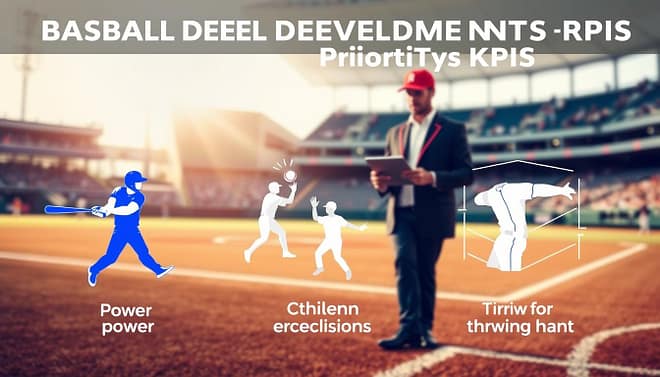
Now, we move to specific goals with clear Key Performance Indicators (KPIs). For example, if power is a goal, a KPI might be to increase exit velocity by 3 mph. If throwing health is key, a KPI could be to keep an arm slot within 5 degrees.
These KPIs turn goals into a scoreboard. They show if you’re winning the daily battles. Without them, you’re just practicing without a clear goal.
Use a structured framework to find these starting points. This isn’t about finding weaknesses. It’s about finding the most efficient path to strength.
So, how do you choose? Ask tough questions. What one fix would make the biggest difference? What is the athlete ready to tackle now? Your list should be focused and clear.
That’s it. Focus is your most valuable currency. You’re not trying to learn too much at once. Focus on a few clear KPIs to get better.
Weekly template: field work, S&C, recovery, academics, life
Most plans fail not because of bad goals, but because they lack a weekly schedule. An IDP without this is like a blueprint without a builder. This section turns dreams into daily tasks.
We’re creating a rhythm that turns your three priorities into habits. It’s not about filling every hour. It’s about strategic allocation. Think of your week as a portfolio, investing in skills, strength, health, and sanity.
The magic lies in the mix. Isolate each component, then weave them together into a sustainable pattern.
The Non-Negotiable Blocks
Field Work (Priority-Driven): This isn’t just showing up. It’s focused work on your top three priorities. For example, Tuesday’s session might be 45 minutes of pitch recognition drills, not just batting practice. Schedule these sessions when you’re most focused.
Strength & Conditioning (The Intelligent Kind): We’re building athletes, not bodybuilders. Your S&C should support your field priorities. For more power, do heavy lifts and explosive med-ball throws. For throwing health, focus on arm care and mobility. This work gets its own block, separate from skill work.
Recovery (The Secret Weapon): Recovery is often the first thing to get cut. Big mistake. It’s active, not passive. Schedule sleep and recovery activities like foam rolling and contrast baths. If it’s not on the schedule, it doesn’t happen.
Integrating the Real World
You’re not just a baseball player. You’re a student, a friend, a human. Your plan must reflect that, or it will fail.
- Academics: Block study halls before you’re desperate. Treat them like film sessions—focused and time-bound.
- Social Life: Yes, schedule it. A Friday night with friends is not wasted time; it’s mental reset. Burnout is often a social deficit.
- Mental Downtime: The white space on the calendar is not your enemy. It’s where creativity and resilience recharge. Guard an hour of “nothing” as fiercely as a training session.
| Day | Morning Block | Afternoon Block | Evening Block | Focus Theme |
|---|---|---|---|---|
| Monday | Arm Care & Mobility | Academics / Study Hall | Priority 1 Field Work (e.g., Power Swing Drills) | Initiation & Focus |
| Tuesday | Speed & Agility S&C | Academics | Priority 2 Field Work (e.g., Defensive Reps) | Speed & Skill |
| Wednesday | Active Recovery (Yoga/Light Cardio) | Academics | Full Team Practice / Scrimmage | Integration & Recovery |
| Thursday | Strength & Power S&C | Academics / Study Hall | Priority 3 Field Work (e.g., Contact Decision Sim) | Strength & Strategy |
| Friday | Skill Refinement (Light) | Academics | Social / Mental Downtime | Consolidation & Reset |
This weekly template is a starting point, not a prison. The power is in the ongoing dialogue it creates. You and your trainer should have a weekly check-in to refine the schedule. Was Thursday’s workload too heavy? Did you need more recovery after Wednesday’s scrimmage? This feedback loop is the accountability engine.
This rhythm proves a profound truth: structure doesn’t constrain greatness; it catalyzes it. By giving each priority—and each part of your life—a dedicated home in the week, you stop fighting time and start partnering with it. The goal is sustainable excellence, a pace you can maintain not for a season, but for a career.
KPI board and video tags; monthly review meeting agenda
Think of your monthly review meeting as the boardroom session for the most important company you’ll ever run: yourself. What gets measured gets managed, sure. But what gets reviewed gets improved. This section is about closing the feedback loop with precision and a little bit of flair.
We move from hopeful plans to hard evidence. Let’s build your command center.
The KPI Board is not a complex spreadsheet. It’s a simple, visual dashboard. Track your three priority metrics from Section 3. Was it exit velocity? Spin rate? On-base percentage? Plot them monthly. The goal is to see the trend line, not just a snapshot.
I’ve seen players transform when they visualize growth. A rising line on a chart is a powerful motivator. More importantly, a flat line is a silent alarm. This board makes stalls obvious, so you can fix them before the season slips away.
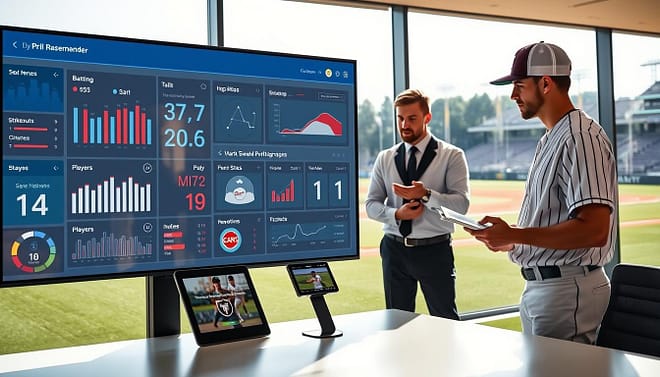
Now, for the detective work: the video tagging system. Data points are clues, but video is the crime scene. Did you actually keep your hands inside on that low-and-away slider Tuesday? Tag the clip “2-strike approach.” Did your bullpen session show cleaner arm action? Tag it “health focus.”
This creates a searchable library of evidence. You’re building a case file for your own success. Over time, you don’t just feel better; you have a highlight reel of proof. It turns subjective “I think” into objective “I know.”
So, how do you use this intel? Enter the monthly review meeting agenda. This is not a passive progress report. It’s a 45-minute, active strategy session. Here’s the playbook:
- The State of the Union (5 mins): Review the KPI Board together. Celebrate any upward trends. Acknowledge flat or dipping metrics without drama. The data is just information, not judgment.
- Evidence Review (15 mins): Dive into 2-3 key tagged video clips. This is where player, parent, and coach align on what execution actually looks like. “See here? That’s the load we worked on. It looks more controlled.”
- Root Cause Analysis (10 mins): Why did a metric stall? Was it a workload issue? A technical flaw? A competing life stressor? Diagnose like Sherlock Holmes for your own swing.
- Recalibration (10 mins): Based on the evidence, tweak the next month’s priorities. Maybe “power” shifts to “consistent contact.” Maybe “recovery” gets a higher priority. This is the strategic pivot.
- Action Items (5 mins): Assign one clear task for each person before the next check-in. Player: “Drill X three times this week.” Coach: “Send two tagged clips.” Parent: “Handle the scheduling.”
This structured review meeting transforms anxiety into action. It replaces vague worry with a clear next step. You’re not just collecting data; you’re having a board meeting for your personal corporation of one. And the dividend paid is measurable, undeniable growth.
Schedule it. Put it in the calendar. Make it sacred. This monthly rhythm is what turns a plan on paper into performance on the field.
Example IDPs for hitter and pitcher
Enough theory. Let’s dive into the blueprints. Think of this as the open-source code for your player development plan.
First, meet our prototype power-hitting corner infielder. His goal is a .300 average. He aims to crush fastballs and stop chasing sliders in the dirt. His top priorities are raw power, making good contact, and defensive footwork.
His weekly plan mixes heavy lifts with daily tee work. He tracks his KPIs closely. He wants his average exit velocity on fastballs to be 95 mph, and his chase rate to be under 25%. This is a detailed plan, not just wishes.
Now, let’s look at the starting pitcher. His plan focuses on health and command. He prioritizes a disciplined throwing progression and monitoring recovery, like sleep quality. He also tracks specific video tags for his arm slot.
His goal is to be consistent, not just fast. Each bullpen session is checked for mechanical consistency. His monthly review asks if his command improved without hurting his arm.
These examples show the system in action. They turn abstract ideas into a daily development plan. Now it’s your turn to create your own.