Watching kids play baseball is like seeing a live cartoon. Toddlers play bases like musical chairs, while teens throw curveballs that seem impossible. It’s either cute or a bit worrying, depending on your coffee.
Baseball growth in kids isn’t straightforward – it’s like a Jackson Pollock painting. From Future Stars Sports Academy’s age plans to Technique Tigers’ approach, we see patterns.
The path from diapers to driving is divided into stages. There are foundation years (3-4), sampling years (5-9), skill-building years (10-12), competitive years (13-15), and refinement years (16-18). Knowing these stages helps build baseball skills.
It’s like Moneyball for parents – we aim for fun, skill growth, and avoiding awkward moments. Like when your kid runs to third with the ball in left field.
Fundamental Skills to Advanced
Do you remember that magical moment in The Sandlot when Benny Rodriguez became “The Jet”? That moment shows how youth development in baseball works. It’s a journey from being clumsy to being very skilled, just like Roy Hobbs.
At first, kids around 3-4 years old see baseball equipment as strange things. They might think the bat is a dinosaur bone and the ball is scary. It’s like they’re in a different world.
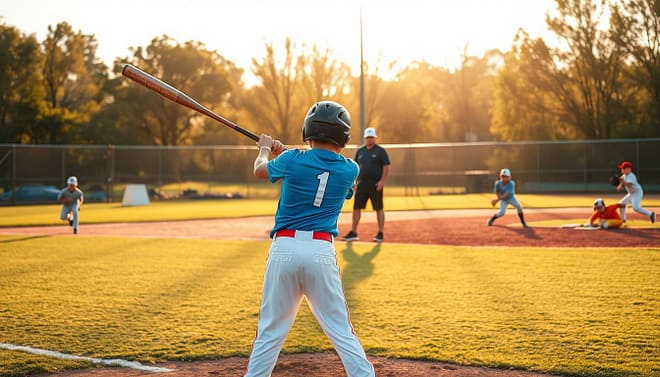
But then, something changes. Kids start to learn real skills between 5-9 years old. They learn to throw the ball to people, not just throw it away. This is the start of youth development where kids learn many things.
By 10-12 years old, kids start to get better at baseball. They learn how to hold the bat right and stand properly. It’s a big step from just playing to really playing well.
Watching a 13-15 year old pitcher throw with purpose is amazing. It shows they’ve moved from just playing to really performing. It’s like magic.
| Age Group | Development Focus | Key Skills | Parental Reaction |
|---|---|---|---|
| 3-4 years | Fundamental Movement | Basic motion awareness | “He didn’t eat the dirt!” |
| 5-9 years | Skill Development | Throwing, catching, hitting basics | “She actually caught it!” |
| 10-12 years | Technical Development | Proper mechanics, positioning | “That looked like real baseball!” |
| 13-15 years | Performance Enhancement | Specialized skills, strategy | “Is that really my kid?” |
| 16-18 years | Advanced Training | Game intelligence, refinement | “College scouts are watching!” |
The last stage of youth development (16-18 years) is the best. It’s where all the hard work pays off. Kids learn to play smart and make good decisions on the field.
This journey is not just about baseball. It’s about growing up and becoming confident. The skills kids learn on the field help them in school too. They learn to work together and solve problems.
This journey from the beginning to the end is very rewarding. It turns kids into confident athletes, one skill at a time.
Measuring Progress
Forget sabermetrics in youth baseball. The real analytics are in the smiles and cheers.
Measuring progress in youth baseball is not like MLB stats. Parents might look at batting averages, but the real signs are in the moments. Fewer tantrums after striking out and more genuine cheers between innings. It’s when kids keep their gloves on, ready for the next ball.
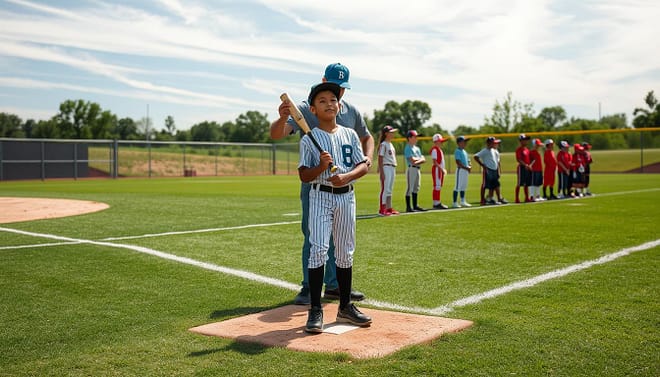
Future Stars programs focus on smiles over perfect swings. They value fun more than stats. They watch for signs of burnout, knowing a happy player is more valuable than a high batting average.
Technique Tigers look for readiness signs. They see if kids position themselves right without being told. They check during water breaks. For older players, video analysis shows growth that’s hard to see with the naked eye.
Little League’s secret is in repetition. The 20th time a kid runs to first base is a big deal.
The real progress indicators might surprise you:
| Traditional Metric | Real Youth Development Metric | Why It Matters |
|---|---|---|
| Batting Average | Smiles Per Inning | Measures ongoing engagement |
| ERA | Confidence Growth Curve | Tracks emotional development |
| Fielding Percentage | “I Have to Pee” Frequency | Measures anxiety reduction |
| Stolen Bases | Sunflower Seed Understanding | Shows cognitive development |
The biggest win is not always in the scorebook. It’s when your child wants to go to practice. Or when they learn about sunflower seeds.
These baseball skills take time to develop. But they create athletes who love the game. That’s lasting youth development.
Adapting Training
Training young athletes is not like following a single guide. Each player is unique, needing different approaches. Some are like hummingbirds, always moving. Others study each move like they’re reading the Federalist Papers.
The best programs get this. Future Stars Baseball groups players by age and offers flexible schedules. They know some kids grow faster physically, while others grow mentally first.
Technique Tigers goes further with one-on-one lessons and clinics for each position. Coaches tailor training to each player’s goals. It’s like getting a custom-made suit, not a generic one.
Little League focuses on building skills through repetition. They know mastering baseball skills needs consistent practice. But they make sure the practice fits each player’s level.
Knowing when to push and when to back off is key. Some players need challenges early, while others need patience. Others might just enjoy the snacks after the game.
Great coaches adjust their teaching like politicians adjust their messages. They know different players need different approaches. Some need detailed explanations, while others just need to see it done.
The goal is not to make players perfect. It’s to help them understand the game and build skills for life. The best training makes players think and act quickly, just like they field ground balls.
Role of Encouragement
Encouragement in youth baseball is like a delicate ecosystem. Parental cheers can either help or harm. I’ve seen dugouts turn into places where adults try out different ways to motivate kids.
Future Stars teaches kids to focus on their effort, not just winning. This isn’t about giving out trophies for showing up. It’s about teaching kids to be strong and keep trying, even when things get tough.
Technique Tigers shows how to praise kids the right way. Saying “Great hustle” is better than saying “Great hit.” It teaches kids to value their hard work, not just the results.
At times, the best encouragement is when parents stay quiet. They let the game teach kids without adding their own opinions. This helps kids learn without feeling overwhelmed.
Little League makes sure kids have fun and learn the basics. Getting an ice cream after the game teaches kids about fair play. It keeps the excitement of playing baseball alive for them.
Good encouragement is about helping kids love the game, not just play it. It’s about making sure kids enjoy playing, not just winning. The best coaches and parents focus on helping kids grow, not just play better.
Progress Tracking Tools
Modern youth baseball is like a NASA mission control. It uses swing plane analytics and velocity tracking apps to measure everything. Even how many sunflower seeds a kid spits in the dugout. Tools like Technique Tigers’ video breakdowns and Future Stars’ developmental benchmarks help in youth development.
The most accurate way to track progress is with the coach’s eyes. Does the child flinch at incoming flies? Do they round bases with excitement? Little League’s repetition tracking is less important than seeing the moment when throwing mechanics click.
Platforms like StriveOn’s athlete development system mix analytics with human observation. They automate progress reports but keep the game’s soul alive. The best baseball skills tracking combines Billy Beane’s metrics with the joy of that first successful catch.
True youth development measurement balances radar guns with the joy of improvement. The most advanced baseball skills assessment is watching children grow from confused beginners to confident athletes. They learn the pitcher’s mound isn’t for digging.