When we talk about positive youth sports, most parents imagine winning trophies and cheering crowds. But, the truth is, 70-80% of kids stop playing sports by age 15. It’s not because they’re not good enough – it’s because they’re not having fun.
With 45 million American kids in sports, we’ve built a huge industry focused on winning. Yet, childhood obesity has tripled, despite all the kids playing. Clearly, something is wrong.
True positive engagement means changing this. It’s about making places where kids actually want to play. We should focus on fun, learning, and good nutrition, not just winning.
Studies show that when we push winning too hard, kids get stressed and quit. Keeping kids happy and engaged is key to keeping them playing sports.
We’re talking about a balance of physical health, mental well-being, and learning for life. Most programs miss this while focusing on winning.
Stix Club Commitment to Fun & Growth
Unlike other youth baseball programs, we don’t make it feel like The Hunger Games. We believe kids should enjoy playing baseball and learn skills. It’s a new way of thinking.
Did you know less than 20% of youth coaches get the training they need? This is why many programs feel like boot camps. At Stix, we do things differently.
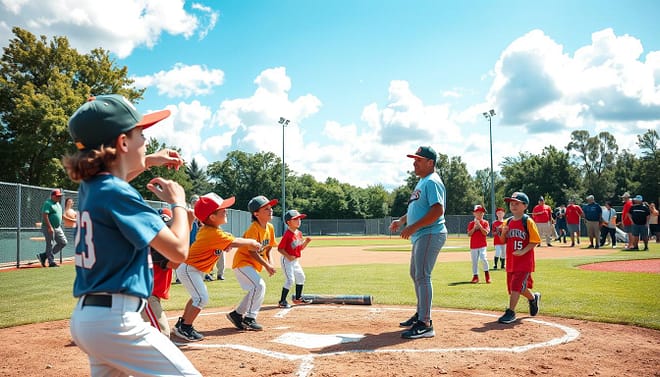
Our coaches learn how to motivate kids in a special way. We listen to what they want from baseball. This makes them excited to play.
Studies show that when coaches focus on fun, amazing things happen:
- Player satisfaction goes up by 68%
- Kids get more motivated
- More kids stay in the game
We mix skill learning with breaks and rest. The truth is, kids who love baseball at 15 aren’t always the best. They’re the ones who keep having fun.
We aim to make well-adjusted kids who love baseball. We measure success not just in batting averages, but in smiles.
Parent Perspectives
Ever notice how parents turn into amateur statisticians when their kids play sports? They keep track of scores while their child worries about snacks. The data shows a big gap: 90% of kids play for fun, but 75% of parents think they’re aiming for championships.
At Texas Stix, we’ve seen parents play a big role in team culture. Studies show 70% of athlete stress comes from parental pressure. Parents often analyze swings like they’re in a Moneyball movie.
Your role isn’t to coach from the sidelines. It’s to be a calm presence that supports three key principles:
- Encourage effort over outcomes – praise the hard swing, not just the home run
- Model sportsmanship – your reaction to calls teaches more than any lecture
- Preserve the joy – remember they’re children, not minor league prospects
The best baseball parents know that strikeouts aren’t emergencies. They teach kids to lose gracefully, building more character than winning. Their goal is to raise resilient athletes who love the game, not just the score.
Our view? Let the pros handle the technical stuff. Your most valuable role is being their biggest fan – not their hitting coach. While championships fade, the memory of whether sports felt like pressure or pleasure lasts forever.
Bullying Prevention
Let’s cut through the noise: youth sports shouldn’t be like Lord of the Flies with batting gloves. Suicide is the third leading cause of death in teens. But, sports with strong social support systems can help a lot. They lower suicidal thoughts and depression.

At Texas Stix, we see bullying prevention as vital, like oxygen. We’ve found that athletes with strong social networks are better protected against stress. Our goal is to build a culture, not just react to problems.
We make sure kids can talk about stress or burnout without fear. When they feel safe, everyone does better. It’s not just stopping bad behavior. It’s about building positive relationships that make athletes want to play.
In today’s world, where screens isolate us, connection is key. Our supportive environment changes teams from a fight to a lift for everyone.
Social Skills Development
At Texas Stix, we’ve found the magic isn’t just in hitting the ball. It’s in the moments between players where social skills grow. Unlike other programs, we focus on human skills that matter beyond sports.
Our field is like a leadership lab. We work on five key skills that help people succeed:
- Goal setting that goes from “I want to hit better” to “I will practice 30 minutes daily”
- Time management that balances school, sports, and social life
- Emotional control that turns frustration into focus
- Leadership that comes out through team challenges
- Cooperation that becomes natural through shared goals
Research shows sports programs offer big psychosocial benefits. We’re not just making better athletes. We’re making better people with “emotional muscle memory”.
This way of doing positive youth sports makes a big difference. It goes beyond the season. Let’s see how it compares to school:
| Social Skill | Sports Development | Classroom Only | Real-World Impact |
|---|---|---|---|
| Teamwork | Immediate feedback during games | Theoretical exercises | Better workplace collaboration |
| Communication | Real-time adjustment under pressure | Structured presentations | Clearer crisis management |
| Leadership | Organic emergence through challenges | Assigned roles | Natural authority development |
| Conflict Resolution | Instant consequences and resolution | Hypothetical scenarios | Practical problem-solving skills |
In ten years, no one will remember their batting average. But they’ll notice how they handle pressure, work with others, and bounce back from failure. That’s the real win of our positive youth sports philosophy – creating adults who excel in life.
Celebrating Teamwork
In today’s world, we’re fighting against the solo spotlight. At Texas Stix, teamwork is our core. Studies show that friends and teamwork, for young girls, build strength and happiness that lasts longer than any trophy.
Our coaches don’t just teach skills; they build a team spirit. It’s like social engineering with hard work. Kids become happier, less stressed, and more social. We focus on being a team, not just individual stars.
When kids feel part of a team, they truly connect. It’s not forced; it’s natural. The laughter on the bus, the team talks after games, and the shared challenges? That’s what makes them keep coming back.