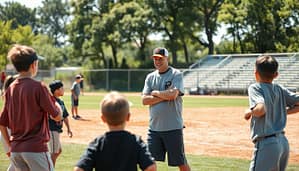
Forget the rulebook for a second. What’s the real game being played on those lined fields and echoing gyms?
The answer isn’t in a schedule. It’s in a mission statement. This isn’t dry municipal code. It’s a civic covenant for fun.
The driving idea? To forge strong community ties through diverse leisure. To enhance the quality of life for all. Think of it as the social contract, but with cleats and camaraderie instead of powdered wigs.
This philosophy is the bedrock. It’s the “why” that powers every whistle blow and after-school hustle. It transforms simple city programs into engines for youth development.
We’re here to unpack that. How does a statement on letterhead become the lived experience of a child gaining confidence? How does “diverse leisure” translate into the specific joys of local athletics?
This is the ultimate game. The score is measured in growth, connection, and community cohesion. Let’s explore the playbook.
Available Sports by Season
Bryan Parks and Rec operates on a four-season cycle, not just three. This schedule is designed to match the school year and weather. To find the best youth activities Bryan offers, just check the month.
The plan is simple: choose sports based on weather and age. Winter is for indoor activities. Spring brings out the grass and sunshine. Let’s look at the annual plan.
| Season | Program | Age Focus | Core Skill Built |
|---|---|---|---|
| Winter (Jan-Feb) | Start Smart Basketball | 3-5 years | Dribbling, Agility, Spatial Awareness |
| Late Winter (Feb-Mar) | Fundamental Football | 6-8 years | Basic Throwing, Catching, Organized Play |
| Spring (Mar-Apr) | Start Smart Soccer | 3-5 years | Kicking, Coordination, Team Movement |
| Spring (Mar-Apr) | Start Smart Baseball/Softball | 3-5 years | Batting, Fielding, Hand-Eye Coordination |
The “Start Smart” series is the foundation for young athletes. It focuses on basic skills without competition. As kids grow, programs like Fundamental Football add more structure.
This isn’t just a list of Bryan recreational sports. It’s a campaign against screen time and inactivity. It’s perfectly timed to offer a structured outlet for kids’ energy.
And for gaps between seasons? The city programs have that covered. Programs like After-School keep kids active all year. It’s a strategic plan to fight boredom.
Age Group Programming
Bryan’s sports department knows kids are unique. They don’t fit into one mold. Each age group has its own path to follow.
This approach is smart. It’s not about forcing kids into the same box. Bryan’s programs are tailored for each age group. Let’s explore this further.
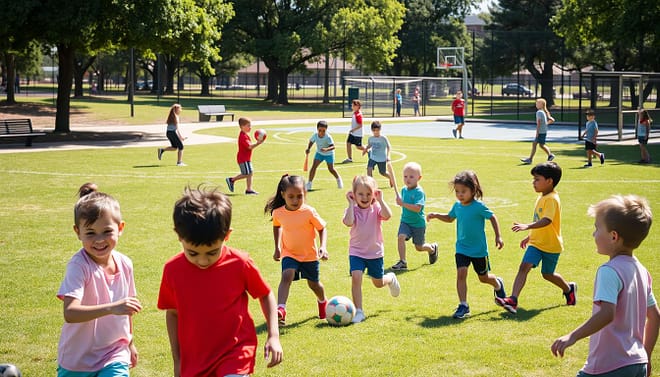
For the youngest kids (ages 3-5), Bryan offers Start Smart. It’s like preschool for sports. Kids learn basic skills like running and throwing.
Parents play a big role here. They help kids learn and grow. This helps build confidence.
Elementary school kids (ages 5-12) get into the After-School & Holiday Camp. It’s a mix of homework, snacks, and play. These activities teach kids important life skills.
For 5-7 year olds, there’s Fundamental Football. It’s all about the basics. Kids learn to play together and have fun.
Pre-teens and teens (ages 11-16) get into more serious programs. They learn first aid and how to take care of kids. This is a big step.
This isn’t just about playing games. It’s about growing into capable young adults. Bryan’s programs prepare them for life.
| Age Group | Core Program | Developmental Focus |
|---|---|---|
| 3-5 years | Start Smart | Motor skills, coordination, parent-child bonding |
| 5-7 years | Fundamental Football | Sport-specific basics, teamwork, fun introduction |
| 5-12 years | After-School & Holiday Camp | Social skills, homework support, diverse physical activity |
| 11-16 years | Babysitter’s Training & First Aid | Responsibility, life skills, professional certification |
So, how does programming change as kids grow? It shows a deep understanding of how kids develop.
Young kids explore safely. Early elementary focuses on social skills. Late elementary introduces sports basics. Adolescence focuses on practical skills and helping others.
Each stage meets kids’ needs. It’s not just about sports. It’s about growing well-rounded individuals.
This approach is thoughtful. Kids are placed in the right activities for their age. Bryan’s sports programs respect kids’ growth stages. This way, they build better kids.
Facility Locations and Features
Forget the playbook for a moment—the real game in youth sports is played on a map. The key to any city programs is not just philosophy but also geography. Bryan’s facilities are more than just addresses. They are a well-planned network to ensure everyone has access and quality.
The Neal Recreation Center is at the heart of it all. It’s not just a gym. It’s where Bryan recreational sports come alive, with after-school care, holiday camps, and indoor Start Smart sessions. When it’s too hot or rainy outside, this is where the action happens.
From the Neal Center, operations spread out to other key locations. Sam Rayburn Intermediate School is a hub for youth football on Fridays. The Bryan Regional Athletic Complex is the crown jewel for field sports, with soccer pitches and baseball diamonds.
The department doesn’t try to own everything. Instead, it works with independent leagues and facilities. This partnership model is the secret to success. For elite soccer training, Bryan Soccer Club facilities at Travis Fields are the go-to. For baseball, Bryan United Little League complexes and Pride Baseball Academy offer advanced training.
This creates a web of access points. Families on the west side might use one set of fields, while those on the east side have another nearby. This makes Youth activities Bryan incredibly convenient, removing the biggest barrier: logistics.
Let’s look at the key players in this infrastructure. The table below shows how each location serves a distinct purpose within the larger network.
| Facility Name | Primary Role | Key Sports/Programs | Unique Feature |
|---|---|---|---|
| Neal Recreation Center | Central Administrative Hub & Indoor Facility | Start Smart, Holiday Camps, After-School Care | Climate-controlled space for year-round activity |
| Sam Rayburn Intermediate School | Community Satellite Location | Youth Football, Seasonal Clinics | Utilizes existing school infrastructure for community benefit |
| Bryan Regional Athletic Complex | Premier Outdoor Competition Venue | Soccer, Baseball, Tournament Play | Multiple high-quality fields for large-scale events |
| Partner Facilities (e.g., Travis Fields) | Specialized Skill Development | Club Soccer, Advanced Baseball Training | Provides elite-level infrastructure beyond rec basics |
This geographic strategy boosts participation rates. When facilities are close, parents are more likely to say yes. Kids show up more often. The quality of the playing surfaces, the availability of lights, and amenities make community sports possible.
In the end, Bryan’s approach is simple. You can have the best coaches and mission statement. But if families can’t easily get to a field, it doesn’t matter. Bryan’s map is a blueprint for engagement, not just a layout of parks.
Volunteer Coaching Opportunities
The city’s playbook is quiet on one key role: the volunteer coach. Look through any Bryan recreational sports document, and you’ll see field sizes and registration times. But the coach’s job is missing.
Who teaches young kids not to pick dandelions during tee-ball? Who explains zone defense to third graders who’d prefer Fortnite? The city gives the setup – fields, balls, schedules. But the real work is done by volunteers.
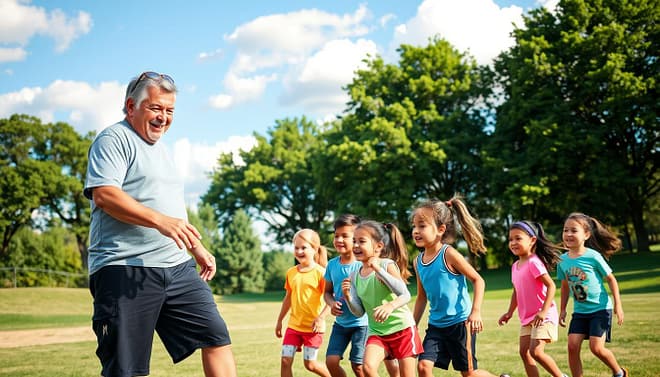
Volunteer coaches fall into three types. There’s the Parent Volunteer, who swaps board meetings for drills. Then, the College Student, getting hours while reliving high school. And the Retired Pro, sharing decades of experience.
These coaches do more than teach sports. They show kids the value of hard work, patience, and losing well. For the coaches, it’s a chance to give back and earn respect.
So, how do you become a part of this team? The city programs might not list openings, but the need is always there. Here are ways to get started:
- Direct Inquiry: Email the parks department to ask about coaching needs for youth activities Bryan offers.
- Parent Networks: Team parent coordinators know who needs help.
- Seasonal Surges: When more kids sign up, there’s a need for more coaches.
- Skill-Based Volunteering: If you can’t coach, you might help with equipment.
The city’s silence on this matter is telling. Volunteer coaching fills the gap between official plans and community needs. It’s a partnership where everyone wins.
Kids get mentors, parents get involved, and sports stay affordable. Volunteers get to be the heroes of a sports movie, minus the slow-motion.
Looking for youth activities Bryan for your child? That’s great. But also ask about volunteer opportunities. The best city programs often need people to help out.
Special Needs Accommodation
Imagine a world where “youth activities Bryan” means everyone can join. This idea shows what a community values more than any trophy. Yet, we have a blank page on how to include everyone. This empty space is where we should focus on inclusion should live.
True city programs do more than just fill fields. They build bridges to the sidelines. They ask tough questions like, “Whose needs did we design around, and whose did we design out?” It’s not about giving charity. It’s about changing the game itself.
So, what should you look for in Bryan recreational sports for inclusivity? Look beyond ramps and accessible bathrooms. The real test is on the field, court, or track.
Here’s what a truly adaptive program framework includes:
- Adaptive Equipment: This means gear that fits each athlete, not the other way around. Think lighter bats, sensory-friendly uniforms, and wheelchairs for court surfaces. The equipment should support the athlete, not the other way around.
- Trained, Not Just Willing, Staff: A volunteer’s heart isn’t enough. Coaches need training in different techniques and strategies. They should understand inclusion as well as the game itself.
- The Modified Rulebook: The best adaptations are innovations, not just changes. Maybe the bases are closer, the game clock is flexible, or scoring focuses on personal bests. The goal is to beat yesterday’s self, not just the other team.
Now, let’s talk about finding out what’s real. Don’t just look at the brochure. Your questions are a way to check.
Ask specific questions when you contact the recreation department:
- “Do you have a dedicated inclusion coordinator or policy document for adaptive sports?”
- “What training do your coaches receive for working with athletes with physical, cognitive, or sensory differences?”
- “Can you provide examples of how you’ve modified activities or rules in the past for individual needs?”
The response will show the real picture. Silence or vague answers are important too. Detailed answers with examples are even better.
This gap in our information is a starting point. It’s a chance for parents to advocate and for the department to improve. The best youth activities Bryan could offer would be transformed by including everyone. This would create a richer, more creative sporting culture for all.
A game that only some can play isn’t a community sport. It’s a private club with a long waiting list.
Community Partnerships
Think of a successful political coalition—diverse parties aligning for a common goal. That’s what’s happening in Bryan’s youth sports scene. The Parks and Recreation department is like the campaign manager, building a strong alliance.
This network turns a basic municipal service into a rich ecosystem. Why reinvent the wheel when local experts already have the best resources? The department’s partner list is a who’s who of local sports infrastructure.
We’re talking big names like the Brazos Valley Girls Softball Association, Bryan Soccer Club, and Bryan National Little League. Specialized training centers like D-Bat Aggieland and Pride Baseball Academy are also part of the mix. Even top facilities like Travis Fields play a key role.
So, what’s the real play here? It’s ecosystem building. The city acts as the central node, a trusted information hub for parents. It connects families to these specialized organizations for league play, elite training, or tournament hosting.
The benefits of this coalition are huge. For families, it means expanded offerings far beyond what any single entity could provide. Your child isn’t just limited to core city programs; they can access niche clubs and advanced academies.
It also means expert coaching. A volunteer dad might coach tee-ball, but a travel soccer club provides licensed trainers. Plus, facilities are maintained and optimized by the groups most invested in them. This relationship elevates the entire Bryan recreational sports landscape.
But let’s be analytical. No coalition is perfect. The challenges? Consistency and communication. Will the philosophy and safety standards match from one partner to the next? Is the handoff from the city’s website to the club’s registration portal seamless? These are the challenges of a distributed network.
The table below breaks down how this collaborative model functions in practice. It shows how various partners specialize, creating a seamless menu of youth activities Bryan offers.
| Partner Organization | Primary Focus / Sport | Typical Program Offerings | Integration with City Core |
|---|---|---|---|
| Bryan Soccer Club | Soccer | Travel leagues, competitive tournaments, advanced skill clinics | Feeder system for city recreational leagues; uses city fields for matches. |
| Brazos Valley Girls Softball Assoc. | Softball | All-girls fastpitch leagues, All-Star teams, seasonal play | Provides a competitive pathway for girls graduating from city co-ed baseball. |
| Pride Baseball Academy | Baseball & Softball | Year-round training, private lessons, travel team management | Offers skill development resources promoted through city program guides. |
| Travis Fields | Multi-Sport Complex | Tournament hosting, premier field rentals, facility management | Hosts city championship tournaments and provides top-tier venue access. |
In the end, this is a masterclass in public-private-nonprofit collaboration. The city’s role shifts from sole provider to strategic connector. It curates quality and provides the initial on-ramp. The partners deliver depth and specialization.
The result? A child’s athletic journey doesn’t hit a dead end. It can flow from a Parks and Rec introductory clinic to a club team to academy training—all within a coherent local system. That’s the win. Not just a list of activities, but a truly integrated sports landscape built by a community, for its youth.
Annual Events and Tournaments
Think about the School Holiday Camp. It turns ‘what do I do with my kids today?’ into ‘when’s the next one?’ These events are more than childcare. They’re fun community gatherings where everyone leaves smiling.
Single-day camps happen on holidays like February 16th and April 6th. There’s also a week-long camp from March 9th to 13th. It’s not random. It’s joy strategically placed during busy times.
That “No Camps Currently Available” notice? It’s not a sign of absence. It’s a sign of demand. These youth activities Bryan parents want are in high demand. They’re like the limited-edition sneakers of city programs.
So, what makes these events special? Let’s look at their unique mix:
- Routine Disruption: They offer new experiences outside the usual routine
- Social Intensification: Kids make friends quickly in these immersive settings
- Gateway Function: They’re a first step into Bryan recreational sports for many families
Holiday camps solve a specific problem. Schools are closed, but work isn’t. The city fills the gap with fun, structured activities.
These events are a big deal for the community and parents. They turn casual players into fans and lonely playdates into communities. The week of March 9-13 is more than just five days. It’s the start of a child’s sports journey.
Think of these events as the highlight of the year. They’re the must-see season finales of youth activities Bryan. Everyone talks about them, and attendance soars.
The temporary nature of these events makes them even more appealing. Scarcity builds anticipation. It turns regular activities into special events. It’s not just oversight; it’s smart community psychology.
For parents, these city programs are more than convenient. They’re genius. They turn empty days into memorable ones. That Tuesday in February? It becomes Tournament Day.
These events show that Bryan recreational sports is more than just learning skills. It’s about rhythm, excitement, and turning challenges into lasting memories. The camp may be short, but the stories last forever.
Program Evaluation and Feedback
How does a city measure the heartbeat of its youth activities Bryan? It’s not just about winning games. The real metrics are often quiet.
Registration numbers for Bryan recreational sports are like a direct vote. Full teams say yes with their fees. Empty spots tell a different story. This data shapes next season’s plans.
The system wants to hear from you. Call 979-209-5528 to share your thoughts. A simple comment to a coach is valuable feedback.
These city programs grow thanks to your input. Your feedback about a muddy field or scheduling issues is key. It helps keep things running smoothly.
You’re more than just a customer. You’re a key player and a co-creator. Your family’s involvement helps shape Bryan recreational sports. The aim is to always improve.
So, please share your thoughts. The future of youth activities Bryan relies on this ongoing dialogue. Your feedback is the guide for tomorrow’s success.