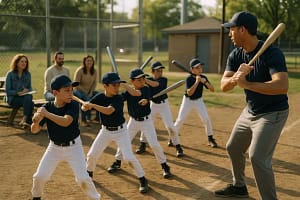
Let’s be honest. Your kid has moved past the basics. They can throw, catch, and maybe even hit a fastball from a machine. So what’s the next play?
The generic “baseball camp” that treats every player like a blank slate is a waste of time. It’s like teaching a budding guitarist nothing but “Smoke on the Water.” We believe there’s a smarter path.
Our philosophy is simple, almost heretical in youth sports: specialization is powerful, but only after a rock-solid foundation. Think of it like a political analyst. They can’t master Senate races without first understanding the entire electoral college.
We take a page from the Houston Astros Youth Academy’s proven manual. Their practice is a sacred, segmented ritual: throwing, fielding, hitting, and running. We apply a laser focus to each one.
This isn’t about creating a jack-of-all-trades. It’s about forging a master of one. We answer the “why” before we drill the “how.” Welcome to the curated masterclass. Welcome to real progress.
Why Specialize (Lightly) After Fundamentals
The 2006 Detroit Tigers’ World Series loss is a lesson in baseball. It shows the dangers of too much pitching specialization too soon. The team made five key errors, and the manager pointed out the flaws. A young star realized he wasn’t ready for the game’s demands.
This wasn’t just about talent failing. It was a breakdown in how the team was taught to play.
The Houston Astros have a guide that’s key for every player. It says every player must learn to Throw, Field, Hit, and Run. No one can skip these basic skills. These are the building blocks of the game.
Our approach to specialization is a bit different. We don’t aim to make kids into one-inning closers right away. We want them to know the why behind their skills. Why does a hitter’s top hand lead the swing? Why must a pitcher be good at fielding?
This is about learning, not just doing the same thing over and over.
Let’s look at two ways to develop players:
| Development Approach | Primary Focus | Athletic Outcome | Long-Term Risk | Mental Engagement |
|---|---|---|---|---|
| Early, Hard Specialization | Single position mastery | Skilled but limited athlete | High (burnout, injury) | Drill memorization |
| Light Specialization After Fundamentals | Fundamental literacy across all four pillars | Complete baseball athlete | Low (adaptable foundation) | Conceptual understanding |
| Example: Young Pitcher | Only throwing mechanics | Power arm, poor fielder | 2006 Tigers scenario | “Do this because coach said” |
| Example: Light Specialization | Throwing + fielding drills + situational IQ | Pitcher who fields bunts, covers first | Resilient to rule changes | “I field because I’m an athlete first” |
The last row is key. A pitching camp that only focuses on arm action is not enough. The 2006 Tigers learned this the hard way. They were not prepared for the National League’s small-ball tactics.
Justin Verlander didn’t just regret his fastball. He regretted not being a complete athlete on the mound.
This is where our approach stands out. We add a story to the Astros’ four pillars. We teach kids to field not just because it’s a skill, but because it’s part of being a complete player. We connect drills to the game’s bigger picture.
A good pitching camp is more than just building speed. It’s about building speed plus fielding skills plus bunt defense plus covering first base. It’s about making pitchers into all-around athletes.
This approach prepares athletes for the future. If a pitcher becomes a first baseman, they have hitting skills. If a shortstop has a strong arm, they can pitch. The foundation is strong, and the athlete comes first.
This isn’t against specialization. It’s for smart development. Before building skill, you need solid basics. Then, you can add specialized skills. When choosing a pitching camp, ask about the athlete, not just the arm.
Hitters’ Lab: Contact, Power, Plate Discipline
In this lab, we don’t just swing bats. We work on making contact, building power, and improving plate discipline. It’s like starting a new business for young hitters. We’re not just fixing swings; we’re writing new code for the body.
The Astros manual introduces us to the High Tee drill. This drill isn’t about hitting a ball that doesn’t move. It’s about keeping the hands up, fighting gravity’s pull. If you fail, you’ll hit ground balls forever.
The Low Tee drill is our answer to the pitcher’s favorite pitch. We teach hitters to hit low pitches with an upward swing. It’s like solving a physics problem with a baseball bat.
Plate discipline is like playing chess. We consider the count, who’s on base, and the score. A 3-1 fastball is more than a pitch; it’s a negotiation. We teach hitters to see the difference between a friendly offer and a threat.
Our situational drills turn mechanics into mental training. The Hit & Run drill is about connecting at all costs. The Sacrifice Fly teaches us about launch angles and team goals.
This is where physical homework shows who’s serious. The Resisted Separation Drill, from The Hitting Vault, looks simple. But it teaches the body about cause and effect.
The Full Turns Drill is the final lesson. Seeing a kid master it is a small victory. It’s like watching them learn a new language.
This detailed focus on hitting fundamentals is like the specialized training for catching fundamentals. Each position has its own rules. In our lab, making contact, building power, and being strategic are key.
We’re not just making hitters. We’re creating tacticians who see every swing as a decision. Our goal is to make these decisions automatic.
Pitching for Kids: Safe Mechanics & Velocity Building
Teaching kids to pitch is not about making them human cannons. It’s about teaching them to be experts on the mound. We focus on building power and safety, like balancing rights and responsibilities.
While kids might go to a hitting clinic for their swing, our pitching is different. It’s all about the right techniques.
Our throwing system is like what the Astros would approve of. We start with the One-Knee drill. It’s not a simple step; it’s a way to focus on the upper body.
This drill helps the pitcher use their core and shoulders. It’s done without worrying about footwork.
Then, we add more steps like building a skyscraper:
- Squared Position: Feet planted, for stability
- Power Position: Ready to throw, with energy stored
- Crossover Step: The whole body moves, from back foot to hand
Each step gets more complex but builds on what’s learned before. We’re not just teaching mechanics. We’re building muscle memory for safety.
Most programs just focus on throwing. But we teach PFP—Pitcher’s Fielding Practice. We want our pitchers to be good at fielding too.
Drilling the basics makes them better. Covering first base is like a dance. And bunts are like secret signals.
Backing up bases is like being a Secret Service agent. We teach them to think ahead and be ready for anything.
Now, about velocity. We build it up slowly with long toss. It’s like saving money for your arm. Our program has three main points:
- Distance before intensity: Start with long throws, then get intense
- Arc, not line drives: Teach the body to throw naturally
- Recovery as priority: Always take care of your arm
This way, we build strength without losing good mechanics. The goal is to have a strong arm and a smart pitcher.
This pitching education goes well with what they learn at a hitting clinic. It helps them understand the game better.
We’re making pitchers who think like quarterbacks. They manage the game and play well on defense. They’re not just arms; they’re athletes.
When you mix this with what they learn at a hitting clinic, you get a baseball genius. They see the game in a whole new way.
This is the real win. Not just a fast pitch today, but a smart and healthy pitcher for the future.
Catcher’s Toolbox: Receiving, Blocking, Throws
In our pitching camp, we teach catchers to be more than just players. They become the game’s strategists, guiding the team with every pitch. Catchers are like field generals, making quick decisions and controlling the game.
Many youth coaches see catching as a punishment. But we see it as a chance to grow. Catching is the most challenging role on the field. We equip young catchers with the skills to handle this responsibility.
Receiving isn’t catching. It’s about framing pitches to get an edge. A good receiver can steal strikes. We use simple tools like plastic lids to teach this skill.
Coaches throw these lids at catchers to practice not moving. The goal is to let the lid come to you and catch it softly. This drill teaches catchers to let the ball come to them, a key skill in framing.
Former MLB catcher Tyler Flowers was a master at framing. He knew framing wasn’t about pulling pitches. It’s about presenting them confidently. Our drills aim to teach this skill.
Blocking is an act of sacrifice. It’s about protecting the plate when it matters most. Our drill trains catchers to become human barriers.
Catchers start in a deep squat and block six balls in a row. This drill is tough but builds their strength and focus. It trains them to handle chaos without hesitation.
Throws to second base are a kinetic chain explosion. It starts with footwork and ends with a strong arm. We focus on each step to make the throw powerful and precise.
Good footwork can make all the difference in throwing out base runners. We practice the “jump turn” and “shuffle” until they’re second nature. A strong foundation is key for a quick release.
We also have catchers catch bullpens. This is essential. It’s where they learn each pitcher’s style and tells. Knowing this helps them make better calls during games.
A catcher who doesn’t know their pitcher’s best swing-and-miss pitch is just a backstop. But a catcher who does is a true strategist. This partnership is the heart of any successful pitching camp.
| Catcher Skill | Key Drill | Mental Aspect | Physical Demand |
|---|---|---|---|
| Receiving/Framing | Plastic Lid Frisbee Drill | Subtle Persuasion, Pitch Presentation | Wrist Flexibility, Core Stability |
| Blocking | Walking Squat to Six Balls | Sacrifice, Crisis Management | Leg Strength, Reaction Speed |
| Throw to Second | Footwork & Transfer Sequences | Calculated Aggression, Timing | Explosive Power, Kinetic Chain Efficiency |
| Game Calling | Catching Live Bullpens | Strategic Forecasting, Pitcher Management | Endurance, Focus Over Extended Periods |
This table is more than a checklist. It’s a guide to creating complete catchers. Each skill builds on the last, making catchers better at framing and blocking. Strong framing leads to more strikes, which means fewer wild pitches to block.
Our approach is holistic. We’re not just teaching skills. We’re building a defensive identity from the ground up, starting with the player who sees the entire field.
Watching a young catcher grow is rewarding. They start as backstops and become quarterbacks. They learn their value is in controlling the game, not just making hits.
Infield Mastery: Footwork, Transfers, Quick Release
Infield mastery is not about fancy dives. It’s about solving math problems fast. It’s like a ballet in a minefield. Every ground ball is a unique challenge of speed, spin, and hop.
Your child is learning to solve these problems, not just field. It’s not about arm strength. It’s about the silent talk between feet and hands.
We start with the Short Hop Drill. Players kneel, gloves off. A coach fires short hops at them. It’s raw and humbling.
This drill separates skill from tool. It builds trust in one’s reactions. A glove can later enhance this trust.
Then, we debate funneling or not. The traditional “funnel” brings the ball to the chest. The “reverse funnel” guides it out toward the throwing hand.
Our principle is to work from the ground up. A hop that jumps is easier to adjust to. This approach gives players control over chaos.
The Double Barrel Fielding Drill combines theory with chaos. It simulates infield scenarios like the 5-3 groundout to third.
Players must field, pivot, choose the right arm angle, and throw accurately. Then, they reset fast. It’s not just about hands. It’s about quick decision-making.
We’re not just teaching kids to stop grounders. We’re programming them to read hop, calculate footwork, and execute a transfer fast. That’s infield mastery.
Outfield Skills: Reads, Routes, Communication
The outfield is like parkour, testing your skills in anticipation and communication. It’s not just about catching fly balls. It’s about processing many things at once: the sound of the bat, the ball’s path, wind, and your teammate’s call.
Communication in youth sports is often overlooked. In the outfield, it’s key to avoid accidents. Our Triangle Drill uses tennis balls to teach teamwork.
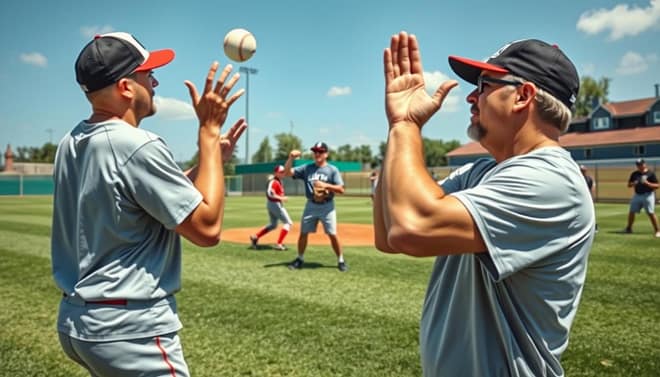
Three players form a triangle. A coach hits unpredictable lobs into the middle. It’s not about catching the ball. It’s about who calls out first.
The read is critical. Kids often watch the ball too long before running. We teach them to sprint first, then look up to track the ball.
Think of it like intercepting a pass. You read the quarterback’s shoulders, not his eyes. This approach adds distance to your catches.
Catching the ball should be athletic, not static. We teach players to “come through the ball” with momentum. This makes catches more effective.
Shagging flies in batting practice is helpful but limited. Reading a fungo bat is easier than tracking a live pitch. Our sessions simulate real game conditions.
We mix in tough situations to make players uncomfortable. This prepares them for the real game.
Failure in the outfield is serious. There’s no one to back you up. But this pressure makes players better.
Parents ask if outfield specialization is worth it. The answer is yes. Watch any highlight reel. The best plays happen in the outfield.
We’re not just making outfielders. We’re making thinkers. Players who listen before they move. They make big plays with their quick thinking and loud calls.
Strength & Mobility for Each Position (age-safe)
Think a pitching camp is just about throwing harder? You’re missing the point. It’s not about being the strongest. It’s about being smart and building the athlete for the position, not just training for it.
Building a strong foundation is key. It’s like preventive medicine for athletes. For pitchers and catchers, we follow the Astros’ shoulder exercises. These include arm circles, anterior raises, and prone “T”s and “Y”s. They protect the rotator cuff before the intense throwing starts.
At a pitching camp for young hurlers, this is non-negotiable. The “suitcase lift” drill isn’t just for biceps. It teaches the shoulder to stabilize, like during a pitch. We focus on safety and speed.
Hitters have their own plan, thanks to The Hitting Vault’s SwingFit. The key is rotation. A strong swing comes from the hips and spine, not just arm strength. This makes the swing powerful.
Arms are just the start. We focus on the torso and core for real bat speed. This “physical homework” turns power into speed.
It’s all age-safe. No heavy lifting for kids. Our progress is smart and safe. We aim for long-term success, not just a quick fix.
| Position | Primary Physical Focus | Signature Exercises & Drills | Age-Safe Modification Key |
|---|---|---|---|
| Pitcher | Rotator cuff resilience, hip/shoulder separation, deceleration control | Prone “Y” raises, Arm Circles (forward/back), Suitcase Holds, Hip Mobility Rotations | Focus on form & endurance over weight/resistance. Use bands instead of dumbbells for youth pitchers at camp. |
| Catcher | Lower body explosiveness, hip & ankle mobility, core bracing | Hip Bridges, Ankle Mobility Drills, Medicine Ball Rotational Throws (light), Wall Sits | Limit repetitive heavy squatting. Emphasize quick, explosive movements from stance. |
| Hitter | Rotational power, hip & thoracic spine mobility, grip/forearm stability | Knee-to-Wall Ankle Drills, Banded Rotations, Wrist Rollers, Single-Leg RDLs (bodyweight) | Resistance bands only for rotational work. Prioritize mobility range over added load. |
| Infielder/Outfielder | Lateral agility, first-step quickness, deceleration/change of direction | Lateral Lunges, Carioca Drills, “Quick Feet” Ladder Drills, Deceleration Hops | Keep ground reaction forces low. Use agility ladders & cones over plyometric boxes. |
Every athlete is different. Infielders need quick stops, while outfielders need fast starts. Catchers need power from a squat. A generic workout won’t do.
Choosing a pitching camp or hitting lab means looking for specific training. Ask about “physical homework.” The right answer includes “prehab,” “mobility,” and “foundation.” The wrong answer is just “harder, faster, stronger.”
We’re building a complete athlete, safely and smartly. The wins and losses are just the bonus.
Video Breakdown Sessions & Feedback Loops
Imagine analyzing a baseball player’s mechanics like a political pundit. Every detail is important. In today’s world, coaching without video is outdated and wrong.
We’re not just filming swings for fun. We’re doing deep analysis. We watch each movement with players, like solving a puzzle. “See here? Your front hip is opening late. That’s why you’re all arms on this pitch.”
This way of teaching is clear and direct. Instead of vague advice, we show specific examples. “Watch how your elbow drops here, compared to Verlander’s delivery.” It helps players understand and see the problem for themselves.
We learn from the best, like the Astros’ shoulder health resources. Their method of showing proper mechanics helps us. It’s about understanding through evidence, not just trying to make players better fast.
The feedback loop is key to getting better. Players perform, we record, and then analyze together. They make changes and we record again. This keeps improving their skills.
For catchers, this method is very effective. Catching fundamentals like receiving and throwing become clear under video analysis. They can see how their glove changes pitch to pitch. They can watch their footwork during throws.
This technology makes top coaching accessible. It’s not about the camera, but the conversations around it. The questions and patterns we find together are what matter.
This isn’t about watching. It’s about learning. Players get clear feedback on their movements. They learn to understand their own body in motion.
The session has three parts:
- Capture: High-quality video from different angles during drills
- Compare: Analyzing side-by-side with model mechanics
- Correct: Finding one thing to change for the next session
We focus on one thing at a time. Too many changes confuse. A single, clear correction is what sticks. It could be anything from hip rotation to glove position.
Players become active in their own growth. They’re not just listening. They’re analyzing and making their own improvements. The coach guides them through the data.
This method shows respect for young athletes. It proves that seeing is believing. When players see their own mechanics improve, the lesson sticks. It helps their muscle memory and mental understanding.
Video breakdown sessions show how coaching has changed. We’re not guessing anymore. We’re using evidence to build skills. The feedback loop helps everyone see the game in a new way.
Equipment Fit & Care by Position
We treat equipment sizing like a science because it’s a mix of biomechanics and performance. Wearing the wrong gear is like using the wrong tool for the job. It’s not just bad, it’s dangerous and can lead to bad habits.
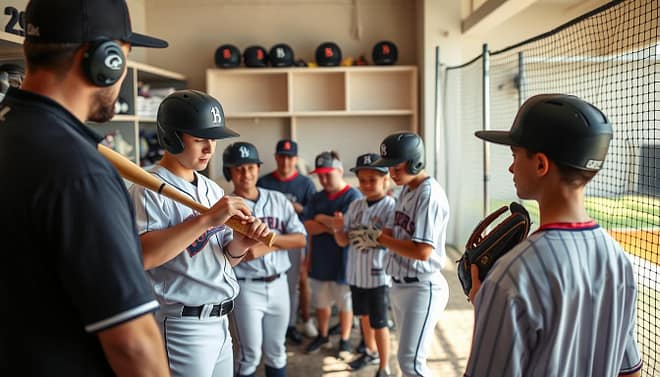
The Houston Astros’ Equipment Sizing Charts are strict. They’re not just suggestions, but engineering specs. The bat chart is a formula that balances mass, length, and swing speed. If you get it wrong, you lose power or control.
In a hitting clinic, small changes in grip and bat length make a big difference. A helmet that moves during a swing changes how you see the ball. A glove that’s too big can make catching hard.
Let’s look at the must-haves. These charts help you choose the right equipment without guessing.
| Player Height | Bat Length (inches) | Drop Weight (length minus weight) | Primary Use Case |
|---|---|---|---|
| 48″-54″ | 26″-28″ | -10 to -12 | Youth beginners, contact focus |
| 54″-60″ | 29″-31″ | -8 to -10 | Developing hitters, balanced approach |
| 60″-66″ | 32″-33″ | -5 to -8 | Advanced youth, power development |
| 66″ + | 34″-34″ | -3 to -5 | High school players, maximum leverage |
The “drop weight” is key. A -10 bat means a 30-inch bat weighs 20 ounces. This ratio affects bat speed. Too heavy, and your swing slows. Too light, and you lose power.
| Position | Glove Size (inches) | Web Style | Break-in Method |
|---|---|---|---|
| Pitcher | 11.5″-12″ | Closed web | Pocket focused, firm wrist |
| Catcher | 32.5″-33″ | One-piece closed | Deep pocket, stiff hinge |
| Infield | 11″-11.75″ | Open web | Soft palm, flexible fingers |
| Outfield | 12″-13″ | Open or closed | Large pocket, moderate stiffness |
| First Base | 12″-13″ | Single post web | Wide opening, deep pocket |
A pitcher’s glove breaks in differently than a first baseman’s mitt. The former needs a tight pocket to hide grips. The latter needs a wide, deep pocket to scoop throws. Treating them the same undermines their functions.
| Head Circumference | Helmet Size | Fit Check | Safety Standard |
|---|---|---|---|
| 20″-21.5″ | Small | No front-to-back rock | NOCSAE certified |
| 21.5″-22.5″ | Medium | Snug without pressure points | NOCSAE certified |
| 22.5″-23.5″ | Large | Cheek pads contact face | NOCSAE certified |
| 23.5″ + | X-Large | Doesn’t obstruct vision | NOCSAE certified |
At a quality hitting clinic, coaches should spot equipment issues before swing flaws. A helmet that rocks can cause head movement during the swing. Worn-out batting gloves can change grip pressure without you realizing it.
Care is key to making equipment an extension of the player. A bat is not a toy, but a tuned instrument. Leaving it in a car trunk warps the barrel. Hitting rocks or other bats creates micro-fractures. Clean it with a damp cloth, store it at room temperature, and rotate it to distribute wear.
Glove maintenance is like positional medicine. Pitchers need firm lacing across the palm. Infielders benefit from flexible finger stalls. We teach kids how to relace a glove, condition the leather properly, and store it with a ball in the pocket. This isn’t just about the gear; it’s about being ready to perform.
Whether at a weekend hitting clinic or regular practice, equipment should disappear. When it fits perfectly and functions smoothly, the player focuses on performance, not gear. That’s when real development happens. The right gear doesn’t make a player great, but the wrong gear absolutely holds them back.
Think of it as giving them the proper tools for their craft. You wouldn’t send a carpenter with a dull saw or a surgeon with blunt instruments. On the diamond, precision equipment is equally non-negotiable.
Mini-Showcase Scrimmages & Evaluation
Welcome to the proving ground, where specialized training meets the chaotic beauty of live baseball. Theory is academic. Application is everything. Our mini-scrimmages serve as the final exam—no multiple choice, just raw, unscripted baseball IQ.
We borrow the “Team Infield/Outfield” structure from elite training environments. Picture this: outfielders aren’t just shagging flies. They’re making precise throws to cut-off men, hitting relays, and learning when to unleash the cannon to home plate. Infielders work through the “long-short” drill. They charge slow rollers like detectives on a case, then pivot to turn lightning-fast double plays.
Then we crank up the pressure with the “Seven and Ones” drill. It’s a rapid-fire sequence of seven different game situations. Bunts. Double play feeds. Comebackers to the mound. Each scenario forces pitchers and infielders to communicate under fire. Think of it as baseball’s version of speed chess.
This is where your child’s specialized training synthesizes. The hitter from the Hitters’ Lab applies his two-strike approach with a live runner on second. The catcher from the Toolbox calls the game, framing pitches and blocking dirt balls. The pitcher from our pitching camp doesn’t just throw. He fields a bunt and makes the split-second decision: first, second, or home?
We make practice competitive and game-like. It’s not about winning a scrimmage. It’s about winning each mental and physical rep. The chaos is the point. Can they execute when the pressure is on and the coach is yelling?
After the dust settles, we don’t hand out participation trophies. We provide a written evaluation. Think of it as a corporate performance review for 12-year-olds. It’s a cold, analytical breakdown of strengths and, more importantly, actionable gaps. What did the radar gun say? How was the footwork? Did the player’s baseball IQ shine or short-circuit?
The table below shows why our approach differs from a standard Saturday scrimmage:
| Element | Traditional Scrimmage | Our Mini-Showcase Scrimmage | Player Benefit |
|---|---|---|---|
| Primary Focus | Playing a full game, winning | Executing specific, high-pressure situations | Builds game IQ under controlled stress |
| Feedback Type | General coaching tips during play | Written, analytical evaluation post-session | Provides clear, actionable development roadmap |
| Drill Integration | Minimal; game flow dictates action | Structured drills like “Seven and Ones” forced into live play | Bridges the gap between isolated practice and real games |
| Position-Specific Focus | Limited; player rotates positions | High-intensity reps at player’s specialized position | Maximizes development time for core skills |
| Outcome Measurement | Final score | Individual performance metrics & decision-making log | Shifts focus from team result to personal growth |
This evaluation is the real takeaway. For a pitcher from a dedicated pitching camp, it might note: “Fastball showed late life, but fielding mechanics on bunts to the third-base side need deliberate practice.” For a catcher: “Pop time improved, but receiving stance on outside corner pitches became lazy in the 5th inning.”
It’s honest. It’s specific. It turns a fun scrimmage into a legitimate developmental tool. The goal isn’t to crown a champion for the day. It’s to give every player—and their parents—a crystal-clear picture of where they stand and what comes next.
In the end, these mini-showcases reveal truth. They separate practiced skill from performative skill. They show if the training stuck. That written report? That’s the trophy. It’s data. It’s direction. It’s the blueprint for the next step in their baseball journey, whether that’s back to our pitching camp for refinement or onto the next challenge.
How to Pick the Right Clinic for Your Child
Choosing a youth baseball clinic is like picking a political candidate. Everyone says they’ll do great things, but not all follow through. First, think about what the clinic values. Does it focus on the basics or push for too much speed too soon? A clinic that emphasizes speed over basics for young players is a warning sign.
Look for clinics that really know their stuff. Good programs teach different skills for different positions. They have special classes for catchers, focusing on catching fundamentals as a key skill. The number of coaches to players is more important than fancy equipment. Real coaches teach the science behind a good swing or catch, not just shout commands.
Choosing a clinic is like finding a good doctor for kids. You check out local options, read what others say, and make sure they’re qualified. Use online tools to find a good pediatric clinic, just as you would for a baseball program. Look for clinics that teach game strategy and put safety first in every drill.
Trust your instincts. Does the clinic feel like it’s about growing your child’s skills or just about winning? The best clinic will help your child love the game, learn the basics, and grow as an athlete. It’s not just a cost; it’s an investment in their future.