Summer programs for kids often bring to mind popsicles, friendship bracelets, and arts and crafts. It’s a nostalgic feeling.
But for kids aged 7 to 12, these experiences are much more than that. They are a critical time for developing important skills. It’s when they start to build the software of success.
The real magic happens in the chaos of learning. Kids learn to build a raft with their team, not just follow instructions. This is true experiential learning.
That “play” is actually practice for life. It helps kids develop essential skills like resilience, communication, and problem-solving. A good program changes how a child sees themselves. They become “I am a problem-solver, a teammate, a capable human.”
The right environment, whether it’s youth development baseball or other activities, is key. It’s not just childcare. It’s a place where kids can grow and develop.
The Golden Years of Skill Acquisition (7-12)
Think talent is what makes young athletes special? Think again. Between ages 7 and 12, it’s all about the brain and the game. It’s not about finding the next MLB star. It’s about how the brain and baseball meet.
Forget the 10,000-hour rule. We’re talking about the 10,000-try rule. Every throw, catch, and swing builds the brain. The brain is like clay, ready to be shaped.
When a 9-year-old catches a fly ball for the first time, it’s more than just an out. They’re creating strong neural connections. These connections become the foundation for future skills. It’s like learning Spanish in school versus struggling with it later.
Practice builds competence, as one study says. Kids at this age believe they’ll get better with effort. Their failures are short-lived, and their curiosity is endless.
These years are golden for three reasons:
- Failure has no sting: Missing a catch is forgotten quickly. There’s no fear of failure, just learning.
- The learning curve is vertical: Skills that take adults months can be learned in weeks through fun repetition.
- Everything is hands-on: Kids explore and develop their passions through interactive activities. Baseball is all about learning through doing.
This window is golden because kids are teachable. Their brains are ready to learn, not perfect. Every repetition makes skills more automatic and easier.
Think of it as laying the foundation for future athletic growth. Skills learned early become the basis for later abilities. This is where true youth development baseball programs shine.
The ability to improve during these years is steep and joyful. It’s not about making all-stars by 12. It’s about creating athletes who love to improve.
We’re building brains for a lifetime of physical skills. Baseball at this age improves coordination, timing, and spatial awareness. These skills help in many sports and activities.
This window closes as kids get older. The brain’s ability to change starts to fade. But during 7-12, effort feels like play. And play builds champions.
Foundational Skills: Throw, Catch, Hit, Run, Slide
Forget the idea of ‘fundamental skills’ as just a list. We’re building a child’s physical vocabulary for life. Throw, catch, hit, run, and slide are more than sports skills. They’re the basics for how a kid interacts with the world.
This is where long-term athlete development starts, but it’s more than sports. Studies show exercise helps the brain grow stronger neural networks. It builds motor skills, like coding for coordination.
A proper throw isn’t just about getting the ball from point A to point B. It requires cross-body coordination. Your left foot plants, your torso rotates, and your arm follows through. This isn’t just athletic training; it’s neurological integration. You’re teaching the brain to communicate across hemispheres.
Catching a ball is applied physics in action. A child tracks a moving object, calculates its path, and positions their body to catch it. They learn spatial awareness and risk assessment. Missing the catch? That’s data for the next try.
Hitting a ball with a bat is timing and coordination at its finest. But it’s more than baseball. It teaches cause and effect, consequence, and controlled aggression. Running and sliding teach body control, balance, and when to commit fully versus when to pull back.
These fundamentals create what experts call physical literacy. Just as reading literacy lets you navigate books, physical literacy lets you navigate the world. It’s why these skills transfer to swimming, lacrosse, soccer, football, and beyond. A physically literate kid doesn’t just play sports better—they move through life with more confidence.
| Foundational Skill | Physical Development | Cognitive/Neurological Benefit | Real-World Application |
|---|---|---|---|
| Throw | Cross-body coordination, shoulder stability, core engagement | Neurological integration across brain hemispheres, planning and sequencing | Throwing anything accurately (bags, packages), understanding force and trajectory |
| Catch | Hand-eye coordination, reaction time, soft hands | Visual tracking, spatial calculation, risk assessment | Catching falling objects, judging distances, quick reactions in crowded spaces |
| Hit | Timing, rotational power, bat/ball coordination | Cause-effect understanding, focus under pressure, controlled aggression | Timing movements in traffic, understanding consequences of actions |
| Run | Cardiovascular endurance, leg strength, proper form | Pacing, energy management, goal-oriented movement | Running for transportation, endurance in daily activities, pace judgment |
| Slide | Body control, balance, risk management | Calculated risk-taking, knowing when to commit fully versus pull back | Navigating slippery surfaces, controlled falls, understanding physical limits |
Notice something about that table? Only one column mentions sports. The rest are about building a competent human. That’s the secret sauce of proper long-term athlete development.
When we strengthen these fundamentals, we’re not just creating better athletes. We’re building stronger neural networks. We’re developing fine and gross motor skills that will serve kids in the classroom as much as on the field. We’re constructing the musculoskeletal framework that will carry them through adulthood.
The beauty of this approach? It turns mundane drills into developmental gold. That repetitive throwing practice isn’t boring—it’s wiring the brain for complex coordination. That catching drill isn’t just about gloves—it’s teaching real-time physics.
This is how we move beyond sports-specific training to genuine human development. The fundamentals become the foundation not just for athletic success, but for physical confidence that lasts a lifetime. And that’s the real win in long-term athlete development.
Age-Appropriate Drills & Game IQ Building
At this age, Game IQ is like watching puppies solve puzzles. It’s messy, joyful, and works well. We’re not teaching Moneyball analytics to fourth graders. Instead, we’re helping them see patterns and make quick decisions during play.
When you call it “the game,” not just “practice,” magic happens. A drill that tests throwing accuracy is work. But a drill where hitting a target earns points and missing means doing a silly dance? That’s a game. These are the basics of athletic smarts—the true fundamentals.
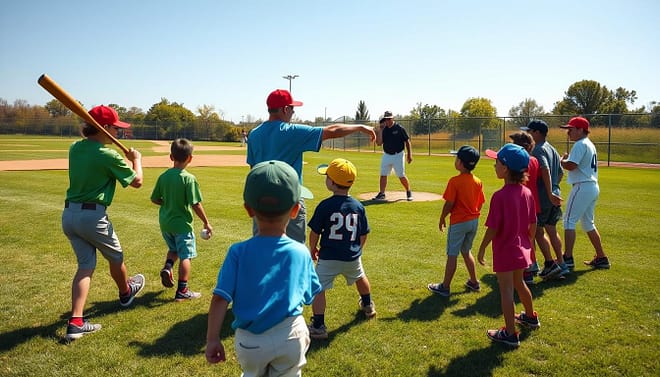
It’s like building cognitive scaffolding. Start with a simple skill: “Hit the ball off the tee.” Master it. Then, add a twist: “Hit the ball off the tee, then run to the blue cone.” Now, they’re combining hitting with baserunning.
Next, add another level: “Hit the ball, then run to the cone I point to.” They’re not just reacting; they’re reading the coach’s signal. This is where Game IQ starts.
This method turns repetition into decision-making. It’s basic logic: If the ball goes here, then I run there. If my teammate is in trouble, then I go to the backup base. This way, they learn to think and act.
Studies show that fun, easy activities teach more than just sports skills. They build critical thinking, communication, teamwork, and creativity. Solving these small puzzles boosts confidence.
So, what’s a good drill for kids? For 7-8 year-olds, “Color Cone Chaos” is great. It’s about listening, agility, and fun. For 9-10 year-olds, “Coach’s Choice Hitting” is perfect. They learn to adjust to different pitches on the fly.
For 11-12 year-olds, “Situational Scrimmage” is ideal. It starts with a scenario, like runners on base. The defense must execute the play. It’s a game within the game that encourages thinking ahead.
The goal is not to add complexity. It’s to make learning fun and clear. They enjoy playing without realizing they’re learning. They’re becoming athletes who can think.
Teamwork, Confidence, and Sportsmanship Outcomes
For kids aged 7-12, the real excitement is in teamwork, not just hitting home runs alone. It’s about working together to make a play. They learn that their actions affect others.
At this age, teamwork isn’t about complex plans. It’s about the thrill of a successful throw or catch. It’s the joy of working together that matters, not just winning alone.
Confidence isn’t about being arrogant. It’s knowing you belong and can help. It grows from small successes, like making a good pass or backing up a throw.
This feeling of belonging is key in youth development baseball. It helps kids feel more confident and ready to try new things. They’re more likely to play a new position or take a big at-bat.
Sportsmanship teaches kids about emotional control. It’s about handling wins and losses with grace. Shaking hands after losing is more than a tradition; it’s about empathy and staying strong.
Teamwork, confidence, and sportsmanship are the real benefits. They help kids develop social skills, make friends, and stay active. These skills are essential for a happy life.
Coach-to-Player Feedback: Positive and Specific
Coaching is like a culinary art. Most feedback given to young athletes is like empty calories. It might satisfy them for a moment but doesn’t really help them grow. The real growth comes from feedback that is so specific, it feels like it was made just for them.
“Good job” is like a participation trophy. It doesn’t really help. But saying something like “I saw how you stepped toward your target before releasing that throw” is like a blueprint for success.
This isn’t just about words. It’s about building a mindset. When praise focuses on talent, it tells kids their abilities are fixed. But when it focuses on effort, it shows them they can improve through hard work. This is what experts call long-term athlete development.
Source 3 says it best: “Win or lose, always appreciate the effort.” Notice how it focuses on effort, not just winning. This kind of feedback helps athletes grow over time. It turns coaching into a journey of discovery.
So, what does this specific feedback look like in real life? Let’s break it down:
- The “I Saw” Framework: Start with observation, not judgment. “I saw you watching the ball into your glove” teaches what to repeat.
- Effort Over Outcome: “I noticed you sprinted to back up that throw” matters more than whether the runner was safe. You’re reinforcing the controllable behavior.
- Process Praise: Highlight the strategy or technique. “The way you kept your weight back on that pitch gave you time to decide” builds baseball IQ more than “Great take.”
The magic happens when you combine this specificity with the Socratic sideline. Instead of just giving orders, the coach becomes a curious guide. Ask questions. “What did you feel when you made that throw?” “Where were your eyes when you made contact?” “What do you think you could try differently next time?”
This questioning does two powerful things. It makes athletes think about their actions and connects them to their mental awareness. It also builds self-reliance, as Source 3 warns that too much help can hurt confidence. Asking questions like “What’s your plan if the ball is hit to you here?” builds more mental readiness than just telling them what to do.
The tone must always be positive. This isn’t about criticizing. It’s about creating a safe space for trying new things. A kid who fears mistakes will stop trying. But a kid who hears “Interesting! What made you choose that spot?” after a missed throw will keep trying.
This feedback philosophy is an investment in the athlete’s future. It’s not just about fixing today’s mistakes. It’s about giving them tools to improve on their own. This is the foundation of long-term athlete development. It turns coaching into a journey of discovery, where the coach guides but the athlete learns to navigate.
When done right, kids stop playing for approval and start playing because they can. This shift from needing external validation to finding joy in their own growth is the real win. It’s the protein that builds athletes for the long haul.
Measuring Growth: Skills Checklists & Report Cards
We live in a world where we track everything. We count steps, screen time, and stock prices. We also measure our kids’ sports by wins, losses, and batting averages. But, we’re focusing on the wrong thing.
For a 9-year-old, winning or losing doesn’t show their true growth. It’s like measuring popularity. The real journey is hidden.
The right way to measure is through fundamentals. We should use a “Skills Checklist” and a “Report Card.” It’s not about being the best today. It’s about improving every day.
Instead of asking if we won, we should check if our child can throw correctly. Can they listen well in team meetings? Do they help without being asked? These are signs of growth.
This change is huge. It makes growth visible to everyone. It turns vague “getting better” into a clear path. The focus shifts from comparing to mastering skills.
Think of it as a tool for long-term growth. It shows what we’re building. We’re building skills, one box at a time. The report card tells a story of progress, not just grades.
This method sparks interest through detailed learning. A child sees their growth clearly. They learn to love the game by mastering core skills, not just winning.
Let’s forget about the scoreboard for now. The real game is in small victories. Improved skills, focus, and understanding of fundamentals are what truly matter.
Building Healthy Practice Habits at Home
The secret to youth development baseball isn’t just about long camps. It’s about making the most of every moment at home. Think of camp as the basics, and home as where you apply them. This is where you learn by doing, through stealth practice.
It’s not about extra, hard practice that feels like homework. Instead, turn everyday moments into learning games. Remember, curiosity is key for kids’ growth. Ask questions at home, like “Why do you think the shortstop stands there?”
Make practice a fun habit. No need for rewards. When playing catch becomes as normal as brushing teeth, you’ve succeeded. You’ve linked baseball to joy, not duty. This builds strong neural pathways through fun repetition.
So, what does stealth practice look like? It’s all about using your imagination.
- The Post-Dinner Toss: Keep a glove and ball by the back door. Catch for 10 minutes after dinner. This strengthens your arm and improves communication.
- The Backyard Obstacle Course: Use cones, hula hoops, or socks. Create a course for running bases and fielding. It’s fun and builds agility.
- The Question Game: Pause during TV games and ask, “What would you do if you were the runner on first?” This boosts your game IQ without leaving the couch.
A great youth development baseball program doesn’t stop at camp. It’s in the daily moments. You’re not forcing better baseball skills. You’re teaching kids to see challenges as puzzles to solve.
The backyard becomes a place for experimentation. A missed catch is just data, not failure. This approach turns your home into the real practice field for life.
Camp gives the basics, but home makes them personal. It’s where kids learn to adapt and own their skills. They start to see challenges as opportunities, not just obstacles.
Healthy practice habits are about fun, not pressure. When kids start their own practice or quiz you, it’s working. They’re motivated from within. You’ve made the youth development baseball journey a part of daily life, long after camp ends.
Parent Role: Encouragement vs Pressure
Your main job is not to make a star. It’s to keep your child safe from sports injuries. The sideline is a delicate balance. On one side, there’s real support; on the other, harmful pressure.
It’s not just about cheering louder. Your words and actions shape your child’s long-term athlete development. Be supportive, and you’ll lift them up. Be too critical, and you’ll weigh them down.
The line between encouragement and pressure is clear. It’s the difference between being curious and judgmental. Saying “I love watching you play!” builds confidence. But saying “Why can’t you hit like the Johnson kid?” can hurt self-esteem.
Here’s the stark contrast, broken down:
| Encouragement (The Safe Harbor) | Pressure (The Judgment Booth) |
|---|---|
| “Great effort on that slide!” | “You need to be faster.” |
| “What was the most fun part today?” | “How many hits did you get?” |
| “I’m proud of how you helped your teammate.” | “Your teammate’s dad says she practices an hour every day.” |
| “It’s okay to strike out. What did you learn?” | “We paid for this camp, you need to perform.” |
Pressure can come from wanting to relive your own sports dreams through your child. It’s important to manage your own expectations first.
Don’t push your child to grow up too fast. This can damage their confidence. The key is to not compare them to others.
Your role is to support your child, not add to their stress. Home should be a place where they can be themselves, without fear of judgment.
This is essential. Kids stay in sports when they feel supported and loved, not when they’re constantly compared. Be the calm in their storm. Let them enjoy the game, and they’ll grow into true athletes.
Balancing Multiple Sports & Burnout Prevention
The path to a child’s burnout is often paved with early, intense sports focus. We’re creating young athletes with packed schedules, thinking it’s a full childhood. But, for kids aged 7-12, “sampling” sports is better than “specializing.”
This isn’t about making a child a jack-of-all-trades. It’s about building a strong, flexible athlete. The fundamentals of movement—like running and throwing—are key for all sports. For example, soccer players get better at agility from playing basketball.
Specializing too early limits a child’s skills. It’s like learning just one language dialect. The camp model is better, as it lets kids explore without fear of failure.
Burnout isn’t just being tired. It’s feeling drained from a joyless, focused effort. When kids focus too much on winning, they lose the fun of playing. The pressure can make them hate the game.
Here are the benefits of playing multiple sports:
- Reduces Overuse Injuries: Different sports work out different parts of the body.
- Enhances Overall Athletic IQ: Learning new sports boosts brain flexibility.
- Preserves Intrinsic Motivation: Trying new things keeps things exciting.
- Reinforces Core Fundamentals: Each sport teaches essential movement skills in a new way.
The aim isn’t to make a young sports star. It’s to help kids enjoy moving for life. We should be patient and let them explore. The specialized path can wait; now is the time to build a strong foundation of movement fundamentals.
Safety, Rest, and Recovery for Kids
What if I told you that the most productive part of athletic development happens when the glove comes off?
The modern youth sports machine often treats downtime like wasted time. That’s a rookie mistake. True long-term athlete development isn’t built on endless reps alone. It’s built on the foundational commitment to safety and recovery that lets those reps actually stick.
Let’s break down safety first. Physical safety goes beyond the obvious helmet and cup. It’s about hydration strategies that beat the summer heat. It’s teaching kids to listen to their bodies—that sharp pain in the elbow isn’t “toughness,” it’s a warning sign for overuse. Our staff is trained to spot the difference between good fatigue and bad pain.
Then there’s the psychological safety net. This is where our nurturing environment pays dividends. A kid who’s afraid to miss a catch or swing at a bad pitch is a kid who won’t learn. We create security through consistent, positive coaching. The message is clear: It’s safe to fail here. That’s how you learn.
Now, let’s talk about the magic of rest. Sleep isn’t laziness; it’s the body’s repair shop and the brain’s filing cabinet. During deep sleep, muscle fibers knit themselves back stronger. The day’s lessons—how to time that swing, where to position the glove—get consolidated into memory. Skimp on sleep, and you’re literally throwing away the day’s training.
Recovery for a 10-year-old looks different than for a pro. It might be 30 minutes of unstructured play, reading a book, or just being bored. This isn’t wasted time. It’s the nervous system resetting. It’s creativity recharging. Sustainable growth in any long-term athlete development plan requires these psychological brakes as much as the physical ones.
Think of it this way: you can’t pour more water into a cup that’s already full. The vigorous activity of camp fills the cup. Safety, rest, and recovery create the space for more. They transform a single summer of skill-building into a lifetime of athletic confidence.
This holistic approach—mixing vigorous skill sessions with intentional downtime—is what separates a transformative experience from just another week of drills. It’s how we nurture well-being and growth every step of the way, ensuring the fun of today doesn’t become the burnout of tomorrow.
How RoughRiders Designs 7-12 Camps & Enrollment Tips & Sample Progress Timeline
Ever wonder how quality youth baseball camps are made? At RoughRiders, we mix joy, fundamentals, and expert coaches. It’s a recipe for success.
Our camps are a step-by-step journey. We start with the basics: throwing, catching, and footwork. It’s like learning music scales before playing a symphony. This foundation is key for athletes to grow.
Our team, often University of Rochester students and alumni, creates a safe space. They give specific, positive feedback. Drills are more than just practice; they’re about building friendships and skills.
When choosing a camp, ask about their approach to playing time and feedback. Look for a place that teaches through encouragement, not fear. This builds confidence.
Progress isn’t just about stats. It’s about how much kids engage. Imagine a summer where kids start to participate, then ask questions, and eventually cheer from the dugout. That’s real success.
Our goal is to help kids master skills and grow in confidence. With the right support, they can achieve amazing things. It’s a life-changing experience.