Let’s talk about a number that should worry every parent: over a million. That’s how many young athletes get a concussion each year. It’s a serious issue, not just a number.
Middle school athletes are at high risk. Their brains are developing, making them more likely to get hurt. The NFL is investing in research because we’re playing with a fragile rulebook.
There’s a big gap between knowing the problem and taking action. We have the data and the scary stories. But our current safety measures are often weak.
This isn’t about making kids too safe. It’s about finding a balance between being tough and being safe. We need to make “Safety First” more than just a slogan.
We need a cultural overhaul. We must find a way to keep the competitive spirit alive while protecting our young athletes. The game has changed, and so must our safety measures.
Comprehensive Safety Philosophy
Forget everything you know about safety checklists; we’re about to upgrade from bureaucratic compliance to cultural intelligence. The real game-changer in youth sports isn’t another laminated protocol sheet. It’s rewiring the collective subconscious of an entire league.
Teaching proper tackling technique is tactical. Creating an environment where dangerous play becomes socially unacceptable? That’s strategic genius. This is where the socio-ecological model enters the stadium.
Picture the sports safety butterfly effect. A parent’s sideline rant influences a referee’s hesitation. That hesitation normalizes a player’s decision to hide a possible concussion. Suddenly, we’re not dealing with isolated incidents but systemic failures. The public health model gets this intuitively, layering defenses like a championship defense scheme.
Primary prevention stops the hit before it happens—proper conditioning, rule enforcement, equipment checks. Secondary prevention spots the injury the moment it occurs—trained eyes on the field, immediate response protocols. Tertiary prevention manages the recovery—rehabilitation, gradual return-to-play, psychological support.
Most leagues focus myopically on just one layer. They’ll buy fancy helmets (primary) but have no concussion protocol (secondary). Or they’ll have great emergency plans (secondary) but ignore strength training (primary). True injury prevention requires all three working in concert.
Here’s the uncomfortable truth: culture eats policy for breakfast. You can have perfect rules on paper, but if the underlying culture glorifies “playing through pain,” those rules become decorative. Source 3’s framework nails this—safety behaviors flow from values, norms, and daily interactions, not from memos.
Consider these cultural levers:
- How coaches talk about “toughness” in practice
- What parents cheer for from the stands
- How teammates react to someone sitting out with pain
- Which plays get replayed on the team highlight reel
Each interaction either reinforces safety or subtly undermines it. This is why isolated education fails. You can’t PowerPoint culture into existence. It emerges from consistent, aligned behaviors across every level of the system.
The injury prevention philosophy transforms from a department to a mindset. It’s the difference between having a safety officer and having every stakeholder become a safety sensor. When the waterboy knows the concussion symptoms, when the scorekeeper notices limping patterns, when the team mom questions return-to-play timing—that’s philosophy in action.
Systems thinking for the sideline strategist means connecting dots others miss. It recognizes that equipment budgets affect coaching decisions, which affect player psychology, which ultimately determines injury outcomes. The chain is only as strong as its most neglected link.
So before we dive into screenings, protocols, and emergency plans, let’s establish this foundational truth: safety isn’t something you add to sports. It’s the invisible field everyone plays on. Get the philosophy right, and the protocols write themselves.
Pre-Season Health Screenings
Imagine trying to fix a system crash without knowing its original setup. That’s what happens when a young athlete gets concussed without a pre-season check. We’re navigating a storm without a map.
For middle school athletes, their brains are like construction sites. Between ages 7 and 13, their brain wiring is being set up. It’s a time when their brain’s insulation is being built.
A pre-season check gives us a baseline. It’s like the original code we can compare to when things go wrong. Without it, we’re just making guesses about symptoms. We might overlook serious brain injuries thinking they’re just minor.

So, what should these checks measure? It’s more than just blood pressure and heart rate. We need to understand how their brain works.
First, we check cognitive function. How does this 11-year-old process information? What’s their reaction time and memory like? These tests aren’t about IQ. They’re about knowing their baseline performance.
Next, we look at balance and coordination. The brain’s balance system is often hit first in head injuries. Knowing how well an athlete balances is key for comparing after an injury.
Lastly, we document any past symptoms. Has this child had concussions or migraines before? Learning differences? These aren’t reasons to keep them out of sports. They help us manage their health better.
| Screening Component | What It Measures | Why It’s Critical | Age-Specific Considerations |
|---|---|---|---|
| Cognitive Baseline | Memory, reaction time, processing speed | Provides objective data for post-injury comparison | 7-13 age range needs age-appropriate tests (not adult norms) |
| Balance Assessment | Vestibular function, coordination, stability | Balance issues are early concussion indicators | Developing brains have different equilibrium than mature systems |
| Symptom History | Previous injuries, headaches, learning patterns | Identifies risk factors and recovery patterns | Children often under-report or misunderstand symptoms |
| Physical Examination | Neck strength, vision, neurological signs | Rules out underlying conditions affecting performance | Growing bodies need different strength benchmarks |
The table above isn’t just a list. It’s a tool for diagnosing. Each part helps us understand child athlete health better.
Think of this: a 10-year-old soccer player falls hard. She seems fine but struggles in math later. Without a baseline, it’s hard to know if it’s the concussion or just a tough math unit. With the right data, we can make informed decisions.
This approach makes youth sports safer. We’re not just reacting to injuries. We’re creating profiles to spot problems early.
The cost is small—just 30 minutes at the start of the season. The reward? We might prevent long-term brain problems. That’s not just good medicine. It’s smart parenting and coaching.
Remember, these screenings aren’t about finding reasons to bench kids. They’re about understanding where they start. Every young athlete deserves this brain check before the season begins.
Proper Equipment Fitting and Maintenance
Most youth sports gear doesn’t fit right. I’ve seen helmets that look like hats, shoulder pads that move around, and cleats that are too big. This is a big problem for youth sports safety.
Badly fitting equipment can cause serious issues. A helmet that moves when hit can block your view. Shoulder pads that don’t fit right can hurt more places. And cleats that are too big can lead to ankle sprains.
Fitting equipment right is easy. Helmets should sit level, with the front edge just above your eyebrows. The chin strap should be tight, with just one finger between it and your chin. Shoulder pads should cover the right spots without limiting your arms.
Keeping gear in good shape is key. Helmets should be checked for cracks and padding damage. Mouthguards need to be replaced when they get worn out. Cleats should have studs that aren’t too worn down.
But, some kids don’t get the right gear because of money. Rich areas often have better equipment. Poor areas might use old, worn-out gear. This is unfair and can be dangerous.
The NFL wants better equipment for kids. They know youth sports safety is important. But, the quality of gear often depends on how much money a community has.
Some kids get to play with safe gear, while others don’t. This is because of money. It’s not fair.
Keeping gear in good shape is hard for some teams. They might not have the right storage or cleaning supplies. This means helmets that should be replaced might not be.
To fix this, we need to focus more on fitting equipment right. We should also share gear between teams. And we need to make sure safety comes first, not just for the NFL but for all kids.
Ignoring equipment fitting is a big mistake. Even with the best safety plans, bad gear can ruin everything. Protective gear that fits and works is essential for keeping kids safe.
Concussion Awareness and Protocol
The gap between knowing concussion signs and admitting them is huge. We’ve made progress in awareness. Posters are everywhere, and parents know the symptoms. But, surprisingly, 35% to 62% of concussions are not reported.
This shows that knowing is not enough. It’s like having information that no one uses. This is a big problem in injury prevention.
Why don’t athletes report concussions? It’s like trying to fight a fire without instructions. They are in the heat of competition. This is a big failure in injury prevention.
The real protocol is not just in a book. It’s in the locker room. An athlete’s decision to report symptoms depends on what they feel is okay. Teammates play a big role in noticing and reporting symptoms.
The Popular Opinion Leader (POL) idea is smart. It uses team leaders to spread safety messages. This way, when a star player talks about safety, everyone listens.
Coaches also play a big role. A coach who values safety sets a good example. They show that it’s okay to take a break for health.
So, what makes a good concussion protocol? It’s a mix of things:
- Education 2.0: Teach the “why” of reporting, using real stories and scenarios.
- Norm Shifting: Use leaders to change the team’s view on reporting.
- Coach Accountability: Train coaches to show they care about safety.
- Bystander Empowerment: Teach teammates to speak up for their friends.
Managing concussions is a social challenge, not just a medical one. The key moment is when an athlete decides to speak up. We need to make this moment common and informed. That’s how we prevent injuries for the long term.
Emergency Action Plans
When a child gets hurt on the field, time is of the essence. Your Emergency Action Plan is put to the test. It’s a plan you hope never to use, but it’s essential for safety.
Unfortunately, many schools lack a full-time athletic trainer. This means kids play without a medical expert to help them. It’s like sending them onto the field without a translator for their body’s signals.
An EAP isn’t about having a neurosurgeon on the sidelines. It’s about making sure the coach knows what to do. This plan is key to preventing serious injuries.
So, what does a good EAP look like for a small league? It’s not about being a doctor, but about being prepared. It’s like a well-practiced dance that happens automatically when needed.
The core parts of a good EAP are simple but often missing:
- Clear Roles: Everyone knows who does what, like calling 911 or getting the AED. It’s not a group project where everyone waits for someone else.
- Accessible Equipment: The AED and first-aid kits are in easy-to-reach places. They’re not hidden away or hard to find.
- Practiced Execution: You practice the plan with everyone at the start of the season. A plan that’s just on paper is useless; a practiced plan can save lives.
The lack of trainers is a big problem. For over half of young athletes, the first medical help might come from an ambulance. This delay can be critical for their health.
A good EAP knows its limits. It doesn’t expect the coach to be a doctor. Instead, it trains them to call for help when needed. This turns chaos into a coordinated effort, giving time for professionals to arrive.
Coach and Staff Training
In youth sports, coaches are more than just leaders. They are the moral compass for the team. A single misstep can ruin the whole season’s safety efforts. It’s not just about the game plan; it’s about setting the right mood for sixty minutes of action.
Current training methods often feel like watching old driver’s ed videos. They’re right, but not real. A single online course is not enough. It’s like giving someone a map of Rome without showing them the traffic.
Source 3’s “System I” thinking is key here. Coaches don’t think like philosophers during games. They react with their emotions. This is why coach training must focus on how they feel and react.
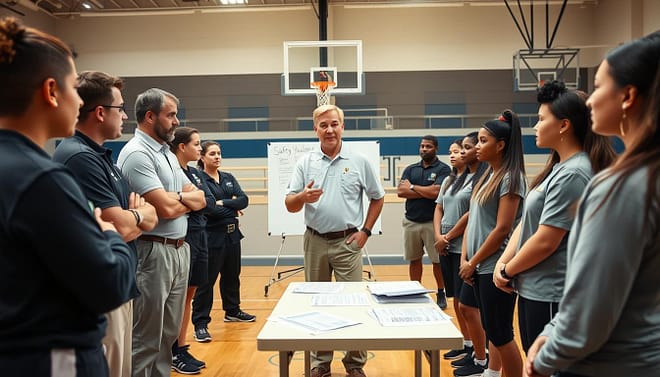
Effective training goes beyond just knowing the rules. It’s about behavioral modeling. How does a coach handle a bad call? Do they stay calm or let frustration take over? This moment teaches players more about youth sports safety than any rulebook.
Research shows coaches set the team’s culture. Source 3’s “One Team” study found that pre-game huddles can change behavior. It’s not about adding more rules. It’s about making safety a part of the team’s identity.
So, what should training include? Let’s look at it:
- Psychological Preparedness: Scenarios that simulate high-pressure game situations where safety decisions must be made instantly.
- Subtle Symptom Recognition: Going beyond the obvious “knockout” to spot the concussed player who’s just “a little off.”
- Culture-Building Techniques: Practical methods for making safety a team value, not just a rule.
- Emotional Leadership: Training on managing one’s own competitive impulses to prioritize player wellbeing.
Let’s compare traditional and effective training:
| Traditional Training | Effective Training |
|---|---|
| One-time certification course | Ongoing, embedded development |
| Focuses on rules and compliance | Focuses on decision-making under pressure |
| Siloed approach (coaches only) | Integrated with team culture building |
| Cognitive knowledge transfer | Addresses emotional/System I thinking |
| Generic, off-the-shelf content | Context-specific to actual game situations |
Source 1’s POL framework is spot on. It trains opinion leaders, like coaches, to spread safety messages naturally. It’s about creating safety advocates, not safety police.
The real impact of a coach goes beyond safety checks and concussion protocols. They teach through every action, every word, and every speech. Proper training gives coaches the emotional tools to make the right call when it counts.
In the end, the most important call a coach makes isn’t on the field. It’s choosing a child’s safety over winning. This requires training that goes beyond quizzes.
Parent Education on Safety
Source 3’s research shows parents play a big role in sports culture. It’s not just about handing out pamphlets. It’s about navigating the emotional side of sports.
Every parent has two brains at the field. One is rational and knows about injury prevention. The other is emotional and worries when kids get hurt. We teach both.
The NFL’s “Play Smart. Play Safe” program gets it right. It teaches parents to make smart choices when emotions are high. This is important because adults can greatly influence a child’s safety.
We aim to inform without scaring parents. Knowing about concussions is good, but not every bump is a big deal. Parents need to know when to pull their kids from play.
Parent behavior is key to safety in sports. Some parents push too hard, while others worry too much. Both can hurt safety efforts.
Good parent education sets the stage for safety. We talk about:
- Normal versus concerning pain in growing athletes
- The difference between playing hurt and playing injured
- How to communicate concerns without becoming “that parent”
- When to trust professionals versus when to advocate fiercely
This isn’t about making parents passive. It’s about making them informed advocates. Parents who know about equipment and emergency plans help a lot.
When parents act calmly, kids learn to assess risks better. Respecting referees helps too. This builds a strong safety culture.
Our best programs use behavioral psychology. We don’t just give facts. We help parents make choices that protect their kids.
Parents who learn about safety become injury prevention leaders. They correct misconceptions and encourage caution. This helps everyone stay safe.
The goal is to raise healthy kids, not just athletes. Parent education makes safety a shared value. It turns the sideline into a supportive place.
When parents understand their role in injury prevention, everyone feels better. Coaches can focus on coaching. Referees can do their job. And kids can play without worry.
Facility Safety Inspections
The playing field is a silent opponent. A pristine turf or a cracked asphalt court tells a story about priorities. Our forensic audit begins here, where the rubber meets the road—or doesn’t.
Consider the hardness of the surface. A rock-hard baseball infield turns a slide into a concussion risk. An uneven soccer pitch invites ankle rolls. This isn’t about obsessive neatness. It’s hazard mitigation for child athlete health.
Source 1 notes a stark truth: youth sport settings in affluent communities often boast higher quality facilities. The playing surface is a prime example of this equity gap. A community’s resource allocation, as Source 2 implies, directly shapes these physical standards. The goalpost’s stability, the clearance of debris, the distance to the water station—these are the unglamorous checkpoints.
We inspect everything. Is that sprinkler head flush? Are the basketball rims secure? Is there shade available? Each item on the checklist is a layer of protection. The most technically perfect tackle fails if a child lands on a rogue sprinkler.
Think of the facility as the stage. If the stage is rotten, the performance is doomed. A safe environment is the non-negotiable foundation for all other protocols. It protects child athlete health before the first whistle blows.
Our final analysis? The field of play must be a partner, not an adversary. Inspecting it isn’t paperwork. It’s the first, best defense.