So, you’ve volunteered for duty. Your mission, should you choose to accept it, involves a map dotted with dusty diamonds and a schedule written in Gatorade and sunscreen.
Welcome to the ecosystem of youth baseball tournaments. It’s a world where local Little League® district brackets coexist with the travel ball circuit’s weekend warrior ethos.
What are you actually signing up for? Let’s call it the “double-elimination emotional rollercoaster.” One minute you’re up; the next, you’re calculating tie-breaker scenarios in pool play purgatory.
The time commitment is the first reality check. A deep run can evaporate an entire summer. The travel circuit often mandates two or more tournaments per month.
Structure is everything. Recreational models might use a straightforward round-robin. The competitive arena thrives on hybrid formats: pool play followed by single-elimination brackets.
Then come the high-stakes qualifiers and national events. This is the big league of youth competition.
Consider this your briefing before the campaign. We’ll explain the map, the likely battles, and why your weekends are about to become a montage of sunflower seeds and sunburn.
How to Prepare Your Child
Getting your kid ready for a tournament is more about understanding the system than perfecting their swing. Your first parent tips should be about gathering information, not just practicing drills.
Start by learning about the All-Star selection process. Each league has its own secret criteria. Ask league officials directly: “What are the actual benchmarks?” This helps manage your child’s expectations.
Travel ball is a bigger step. It’s like joining a team, but you need to do your homework. The costs can be high, so you need to be careful.
This is your chance to do a thorough background check. Treat it like a scout evaluating a team:
- Coaching Philosophy: Is it positive and focused on development, or is it all about winning? Choose a philosophy that won’t stress your kid out.
- The Financial Reality: The initial fee is just the start. Uniforms, travel, and tournament fees add up quickly. Get a detailed breakdown in writing.
- Location Logistics: How far are you willing to drive for games? Be honest. The commute in July will be tough.
- Organizational Mission: Read the team’s mission statement. Is it about “life lessons” or concrete goals? The mission statement is the team’s constitution.
- Playing Time Promises: Will your child play a lot or sit on the bench? Get clear answers upfront. Vague promises can fall apart under pressure.
- Skill Level Alignment: Is your kid ready for a challenge or developing basics? Placing them with the wrong team can be harmful.
- Team Goals vs. Family Goals: Does the team aim for championships or local exposure? Your family’s schedule and budget must match these goals.
- The Parent Culture: Watch how parents behave at practices. Are they supportive or too intense? This shows the team’s atmosphere.
This careful selection process is key. It turns you into a partner in your child’s baseball journey. Once you’ve chosen the right team, you can focus on the game. Learn the official tournament rules to understand the game better.
These parent tips aren’t about making your child a superstar. They’re about creating a supportive environment for their athletic growth. You’re the manager of this important part of their life.
Packing and Planning Tips
Forget Normandy; the real D-Day logistics happen in a youth baseball tournament parking lot. Victory isn’t just about sports skills. It’s also about winning the competition against the sun, hunger, disorganization, and bad luck.
Think of it as a three-pronged effort. Each group—Player, Parent, Coach—needs a specific kit. Leave out one item, and your whole plan could fail.

This isn’t just a gym bag. It’s a critical arsenal. Every item has a special purpose, beyond its obvious use.
- The Gamer Bat & Backup: Your main weapon and its backup. One for glory, the other for when things get tough.
- Glove & Break-In Ball: Always be ready. The break-in ball helps keep your skills sharp between games.
- Extra Socks (Multiple Pairs): Prevent blisters. Dry feet are happy feet. Happy feet can steal bases.
- Dirty Laundry Bag: Keep wet, muddy gear separate. It keeps everyone’s spirits up and the car clean.
The Parent’s Basecamp
While kids play, you create a base in the stands. Your stuff turns the bleachers into a cozy spot.
- Canopy Tent: Essential shade. It’s your own space, free from the sun.
- The Cooler: Keeps everyone hydrated and energized. Choose snacks wisely for lasting energy.
- Folding Chairs & Wagon: Comfort and convenience. The wagon moves everything easily.
- First-Aid Kit & Portable Toilet Seat Covers: Stay clean and safe. Public restrooms can be a challenge.
The Coach’s War Chest
The coach’s gear is more than just sports equipment. It’s the team’s backbone.
- Fungo Bats & Extra Balls: For quick warm-ups and drills between games.
- Medical Release Forms & Rulebook: Legal protection and strategy. Knowing the rules can win games.
- Lineup Cards & Strategy Notes: Keep the team focused. Organized plans are key.
- Team First-Aid Kit (Advanced): More than just band-aids. Includes cold packs, tape, and wipes.
Don’t forget the car tune-up. A well-checked vehicle is essential. A breakdown means you’re out of the game.
Mastering this logistical challenge is a silent victory. It sets the stage for a successful tournament, where skills truly matter.
Sportsmanship at the Tournament
Think of the chain-link fence as a mental barrier, not just a physical one. It separates you from the dugout. This fence is more than just wire and posts; it marks the edge of your influence during the game.
The tournament’s “In-Game Access” rules are your guide. Dugouts are off-limits, with only three coaches allowed inside. Your role is to support and cheer from outside the fence. This is key for parent tips on surviving the tournament.
Your job is to watch the game, not to coach or officiate. This creates a unique social scene on the sidelines. We see different parent types emerge under pressure.
There’s the Live-Stat Scout, analyzing every pitch on their phone. The Vicarious Competitor sees their child’s at-bats as a personal achievement. And then there’s the Conspiracy Theorist, doubting umpires and the game’s fairness. Knowing these roles helps you stay sane on the sidelines.
The “Rumor Mill” spreads anxiety through social media. Rumors about the pitcher’s arm or the shortstop’s family leaving early are just gossip. Ignore it and focus on the game.
The Zen Sideline Sentinel is the ideal parent. They watch the game calmly and cheer for both teams. Their calm presence helps the team stay focused. This is the best parent tips for sportsmanship.
Your behavior sets an example for your child. Yelling at umpires teaches them to disrespect authority. But applauding effort and accepting outcomes teaches them emotional intelligence. This lesson is more valuable than any trophy.
Remember, you’re not just watching the game. You’re showing your child how to behave under pressure. Your example is more important than any fence.
Dealing With Wins and Losses
The travel ball paradox is real. You want better competition for your child, but it brings emotional ups and downs. The scoreboard shows only wins or losses. But the real growth is in the complex lessons learned.
In elite youth baseball tournaments, the best players get the most playing time. This isn’t bad; it’s just the way high-stakes competition works. But it makes parents and players think differently about their roles.
Imagine winning a championship but your child didn’t play much. Or losing early but they played their heart out. The scoreboard doesn’t tell the whole story.
Understanding your child’s role on the team is key. Were they the ace reliever or the defensive star? Evaluating their performance based on their role helps. It focuses on their contribution, not just stats.
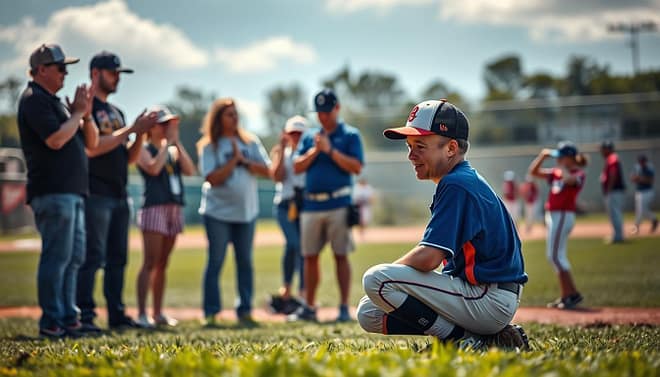
The Stoics taught us to focus on effort, not results. A smart play or a good baserunning move is something you can control. The final score isn’t.
Think like the Moneyball team. They looked beyond just home runs and fastballs. They valued walks and on-base percentages. You should do the same for your child’s experience.
Here’s the truth: if your team wins but you don’t play much, the victory is the team’s. Your growth was in being a good teammate. If you play hard but lose early, the loss is just a result. It shows what you need to work on, not your worth.
The real growth from travel ball isn’t in trophies. It’s in the lessons learned on the way home. Did they support their teammates? Did they learn from mistakes? Did they respect the opponent?
Redefine what makes a successful youth baseball tournament weekend. It’s not just about wins and losses. It’s about resilience, leadership, and how you approach the game. That’s true success, no matter the score.
Making the Most of the Weekend
The secret to surviving a youth baseball tournament isn’t in the dugout; it’s in the downtime between games. Your role shifts from analyst to cultural tour guide. This is where the real parent tips come into play.
Think of the tournament not as a purely extractive experience, but as a chance for community and exploration. The memories you create will outlast the final score.
Sitting through four games in a day can feel like a corporate retreat gone wrong. The key is to transform dead time into dream time. Your charcoal grill isn’t just for cooking. It’s a social hub.
Organize a team potluck. It turns a parking lot into a banquet hall. Parents bond over burgers, not batting averages. This is diplomacy, and the grill is your negotiation table.
Another pro tip? Use the map of a local college campus. This isn’t just a geography lesson. It’s a dream-building exercise.
Walk the quad with your player. Point out the library, the dorms, the baseball field. You’re not just killing time. You’re planting seeds for the future. Travel itself is an eye-opening benefit.
Forced proximity with other parents is a feature, not a bug. A simple deck of cards is your greatest tool. A game of Spades or Uno during a rain delay builds more camaraderie than any post-game speech.
It breaks down cliques and forges real connections. These are the actual wins of the weekend.
Smart planning off the field reduces stress on it. Book a hotel with a pool. Arrange for a pet sitter well in advance. These logistics aren’t chores. They are investments in your sanity.
They transform a potentially stressful trip into a mini-vacation, where the ballpark is just one of the stops.
| Aspect | Extractive Tournament Mindset | Experiential Weekend Mindset |
|---|---|---|
| Primary Focus | Wins, losses, and player stats | Community, exploration, and shared memories |
| Key Activities | Scouting opponents, analyzing errors | Team potlucks, local college tours, parent card games |
| Social Dynamic | Transactional, focused on the team’s performance | Relational, focused on building connections |
| Defining Tool | Stopwatch and scorebook | Charcoal grill and deck of cards |
| Long-term Outcome | Burnout and forgotten scores | Stronger bonds and stories that last |
The table above isn’t just theoretical. It’s a blueprint for anti-burnout. Adopting the right-hand column is the ultimate parent tip.
It acknowledges that the tournament is a marathon, not a sprint. You need to pace your emotional energy.
So, pack your sense of adventure alongside the sunflower seeds. The best parent tips remind us that we’re not just raising athletes. We’re raising well-rounded humans. And that happens as much in the hotel pool as it does on the field.
The weekend is what you make it. Make it about more than baseball.
Conclusion: Tournaments as Growth Experience
So, what’s the final score after a weekend of youth baseball tournaments? The ledger shows a clear deficit in cash and sleep. But there’s something more valuable in the pros column.
These events are a masterclass in real-world competition. They teach resilience far beyond the diamond. The time and cost are real, but they’re the tuition for an education in grit.
Think of it as a condensed coming-of-age story. The plot has unexpected twists, dramatic tension, and a supporting cast of families in matching t-shirts. The trophy is just a MacGuffin. The real prize is the forged character.
Your child won’t just remember who won. They’ll remember how they played, how they rallied, and the shared exhaustion with teammates. That’s the growth no one can budget for.
Youth baseball tournaments are a microcosm. They’re structured chaos that reveals core truths about effort and camaraderie. The grass stains fade. The maturity, forged in the heat of competition, does not.