When you hear “academy,” you might think of fancy schools or sports highlights.
But what if the most important training happens outside of classrooms or sports fields?
This isn’t your average sports camp. It’s more like a place where people learn to make a difference. Think of the Delta Student Police Academy, where students try on the shoes of future officers. Or the Enrichment Academy, which focuses on Achievement, Access, Community, and Discovery.
The goal is to help people find their true selves and feel empowered. It’s not just about winning games. It’s about making a positive impact in your community.
This is where community outreach really starts. It’s about creating leaders who make a difference, not just on the field. The diamond becomes a place to learn valuable life lessons.
So, let’s forget the old ways. The next stars might be those who bring new ideas and change the game.
Community Programs and Partnerships
Let’s get real about CSR: true community partnerships are more than just giving. They’re about investing in social capital. It’s like a complex dance, not just a simple handout. The Academy doesn’t just write checks; it builds entire ecosystems.
This is where the real community outreach happens. It’s a dance with local businesses, nonprofits, and civic groups. Everyone contributes something. The result? Much more than a line in an annual report.
The Delta Police Foundation’s sponsorship is a great example. A grateful participant says: “Thank you, Delta Police Foundation, for sponsoring such a rewarding program for students in Delta!” But there’s more. The Foundation doesn’t just give money. It provides context, mentorship, and a link between civic duty and youth development. That’s value you can’t buy.
So, what do these partners really get? It’s not just good PR. It’s about investing in the neighborhood’s future workforce. It’s a form of leadership that builds a pipeline of local talent. They’re helping weave the social fabric tighter. That’s a return that grows over time.
Donors are key, as the Academy notes. “We are appreciative of those who have contributed in helping us to accomplish our mission.” This isn’t just empty thanks. It’s recognition that these partnerships power the mission. The mission needs more than just money.
Behind the scenes, internal stakeholders are the real choreographers. “With the help of key internal stakeholders, we’re able to bring the Enrichment Academy to life.” They turn vision into real programs. They make sure partnerships are deep, not shallow. This leadership turns abstract ideas into real community impact.
In the end, these programs show the power of mutual benefit. The Academy gets resources and credibility. Partners get a deeper connection to the community. It’s a strategic alliance where everyone learns, grows, and leads. That’s the real story of modern community outreach.
Volunteering Experience
If you think youth baseball is just about sports, you haven’t seen a shy teenager find their voice while coaching a bunt drill. This isn’t fetching coffee or making copies. The academy’s volunteer program is a gritty, open-air laboratory for human development. It’s where theoretical leadership concepts from a seminar meet the unpredictable chaos of a sun-baked field.
Manraj, a returning volunteer, puts it bluntly: “This academy is more than a summer program. It’s a step toward a lifelong dream.” That dream isn’t always about playing professionally. For many, it’s about leading. Cade, another volunteer, found a strange joy in the grind. “You learn presence running a drill,” he says. “You even start to enjoy the push-ups. They’re not punishment; they’re building resilience.”
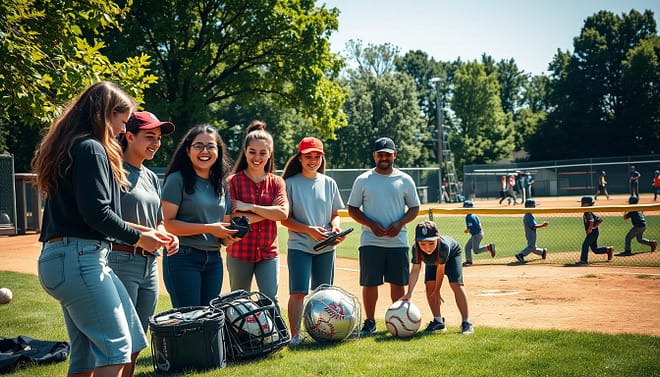
Seamus and Amitoj echo the sentiment. The magic isn’t in the lectures. It’s in the application. Explaining the infield fly rule to a confused seven-year-old forces a clarity of thought no textbook can provide. Correcting a kid’s batting stance becomes a lesson in empathetic communication. You’re not just teaching a slider; you’re learning how to guide, encourage, and connect.
So, what does this transformation actually look like? It’s less “The Intern” and more “The Breakfast Club” meets a leadership seminar. Shy kids on day one become vocal leaders by week’s end. The program forces a confrontation with core soft skills in the hardest way possible: in real-time, with real stakes.
| Phase | On-Field Challenge | Leadership Muscle Built | Participant Insight |
|---|---|---|---|
| Initiation | Overcoming personal shyness; introducing oneself to a group. | Self-confidence, Initial Rapport | “You have to just step forward. The kids are waiting for you to lead.” – Amitoj |
| Immersion | Running repetitive skill drills; maintaining energy and focus. | Resilience, Patience, Presence | “The drill practice teaches you how to be ‘on’ even when you’re tired.” – Cade |
| Command | Managing a small group independently; explaining complex rules simply. | Decisiveness, Adaptive Communication | “When you see the lightbulb moment in a kid’s eyes, you find your own voice too.” – Seamus |
Constable Nathan Porter, who sees the program yearly, observes this arc from the sidelines. “It’s a highlight of the year,” he notes. “It’s great seeing students who are usually shy on day one grow in confidence and find their voice.” That external validation is key. It shows the process isn’t just felt by the volunteers; it’s visible.
The final product? A brand of leadership that’s authentic and dirt-stained. It’s earned through sweat, failed explanations, and small victories. These volunteers aren’t just assisting a youth baseball clinic. They’re undergoing a boot camp for the soul, where the ultimate skill isn’t a perfect throw, but the ability to lift others up. And that’s a lesson that sticks long after the cleats come off.
Leadership Training for Players
What do a community organizer’s playbook and a third-base coach’s signals share? More than you’d think, when building character off the field. The diamond is a classroom for civic engagement. Training here goes beyond batting averages and stolen bases.
It’s intellectual analysis disguised as sport. Players learn that real leadership isn’t about barking orders. It’s about accountability after a wild pitch and empathy for a struggling teammate. This is where community outreach philosophy gets its cleats dirty.
Let’s apply some wisdom to the game. Take those ten steps for community leaders—we’ll focus on five that translate perfectly. “Understanding Your Community” becomes knowing your opponent’s lineup and your team’s hidden strengths. “Fostering Open Communication” mirrors the continuous, supportive chatter of an infield anticipating the next play.
The table below breaks down how core leadership principles operate in the context of youth baseball:
| Community Leadership Principle | Baseball Analog & Player Lesson |
|---|---|
| 1. Understand Your Community | Scouting reports meet team dynamics. Knowing who thrives under pressure and who needs encouragement is half the game. |
| 2. Foster Open Communication | The non-stop infield chatter isn’t noise—it’s a web of support and situational awareness, building trust one call at a time. |
| 3. Practice Integrity & Accountability | Calling your own strikes and owning errors builds more respect than any game-winning hit. The scorebook doesn’t lie. |
| 4. Lead With Empathy | Seeing the slump from your teammate’s eyes, not just the stat sheet. It’s the quiet talk after a strikeout that matters most. |
| 7. Be Adaptable & Open-Minded | Rain delays, shifted lineups, bad calls. The game teaches you to pivot your strategy without losing your cool. |
Notice principle three: Practice Integrity and Accountability. On the field, this means a player admitting they missed the cutoff man, costing a run. Off the field, it’s the same muscle—owning your mistakes in a group project or community clean-up. The diamond is just the training ground.
Then there’s empathy. Leading with it means recognizing when a pitcher has lost their stuff and knowing what to say. Is it a technical tip or just a pat on the back? This discernment, learned through sport, is pure social intelligence. It’s the heart of effective community outreach.
Adaptability might be the most critical transferable skill. A rainout forces a schedule change. A key player gets sick. The game teaches young athletes to adjust the plan, not abandon it. This open-mindedness is what allows youth baseball programs to evolve and meet their community’s real needs.
This isn’t accidental. Many forward-thinking academies structure this training intentionally. For those looking to formalize this approach, exploring an official leadership curriculum can provide the framework to move from instinct to instruction.
So, while they’re learning to turn a double play, they’re also learning to navigate group dynamics. While they’re studying signs from a coach, they’re learning to read non-verbal cues in any team setting. The final score is one thing, but the real victory is in the leadership template these players carry long after the season ends.
Annual Academy Events
Imagine a drill that combines discipline with teamwork, turning leadership into a full-body experience. The Academy’s events are not like usual charity dinners. They are exciting productions that bring community outreach to life.
Picture a drill practice where every step is a statement. Now, imagine this on a baseball diamond. Day one is about push-ups, not speeches. It’s about working together and overcoming challenges.
These events mix boot camp with think tank. After working out, people study together. They discuss strategies and teamwork. The aching muscles remind everyone of their hard work.
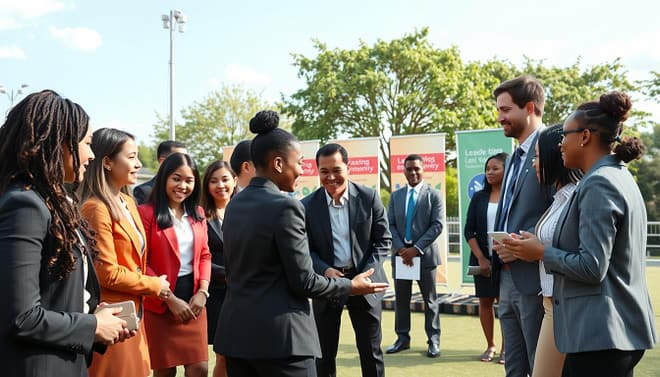
The Academy’s events show its values in action. Community outreach here means joining the effort. Locals participate in drills and workshops, feeling part of a team.
To understand these events, let’s look at their parts. Each part makes a concept real.
| Event Component | Physical Manifestation | Leadership Lesson | Community Role |
|---|---|---|---|
| Drill Formations | Synchronized movement, precision timing | Discipline, unit cohesion, following and leading | Participant in squad exercises |
| Strategy Workshops | Focused study sessions, play analysis | Critical thinking, communication, tactical planning | Contributor of local insights and scenarios |
| Physical Training Circuits | Push-ups, agility drills, endurance tests | Resilience, personal accountability, supporting peers | Motivator and witness to personal triumph |
| Integrated Scrimmages | Live gameplay applying drills & strategy | Adaptability, decision-making under pressure | Engaged audience, creating game-day atmosphere |
The genius is in combining physical and mental challenges. The drills make strategies stick. Scrimmages show who steps up. This is where leadership becomes real.
These events are more than dates on a calendar. They show the Academy’s value. They prove that building character and community outreach can be exciting. It’s where leaders are made, step by step.
Alumni Giving Back
Forget the trophy case; the most compelling success metric is a self-perpetuating cycle of mentorship. The real legacy of a youth baseball program isn’t engraved on plaques. It’s walking back through the gate, wearing a coach’s cap instead of a player’s jersey.
Consider Alex T., a former student guide. His reflection cuts to the core: “It was such a privilege to work with the Equity & Outreach folks on something so important. My time with the students has reaffirmed my interest in pursuing a career as a teacher, and I would not have had the opportunity without your support.” This isn’t just a thank-you note. It’s a receipt. Proof of purchase for a transformative experience.
So, why do they come back? Is it just nostalgia for the smell of fresh-cut grass and leather? Hardly. The former camper who returns as a coach, or the scholarship recipient who becomes a donor, is engaging in a profound act of ratification. They are validating the program’s impact on their own journey. Their return signals, “This thing works. Let’s keep it going.” It’s the program, quite brilliantly, eating its own tail.
The skills pipeline here is fascinating. The perseverance learned from a hitting slump, the strategic thinking from a rundown play, the pure teamwork of turning a double play—these aren’t just athletic competencies. They are the raw materials for civic-minded leadership. The diamond becomes a training ground for community investment. The desire to “lift the next cohort” isn’t charity; it’s the logical next play.
This engine runs on different fuels. Let’s break down the roles alumni assume, creating a sustainable ecosystem for youth baseball and beyond.
| Alumni Role | Primary Contribution | Skill Utilized from Playing Days | Impact on Program Cycle |
|---|---|---|---|
| Volunteer Coach | Hands-on skill development & mentorship | Technical knowledge, communication under pressure | Directly shapes the next generation of players; provides relatable role models. |
| Program Donor/Fundraiser | Financial support & resource networking | Strategic planning, understanding team value | Ensures accessibility and longevity; funds scholarships and facility upgrades. |
| Guest Speaker/Workshop Leader | Career inspiration & life-skills education | Public speaking, composure, storytelling | Broadens players’ horizons beyond sport; connects baseball to real-world leadership. |
| Board/Committee Member | Governance & long-term vision | Big-picture thinking, collaborative decision-making | Steers the program’s future direction; ensures the mission stays true. |
This table isn’t just a list of jobs. It’s a blueprint for a virtuous circle. Each role leverages a specific set of honed skills to feed back into the system that developed them. The volunteer coach isn’t just teaching a slider; he’s modeling resilience. The donor isn’t just writing a check; she’s investing in a proven leadership factory.
Alex T.’s pivot to teaching is the ultimate endpoint of this cycle. The academy didn’t just create a better baseball player; it helped forge a community-oriented educator. That’s the final, powerful out. The program’s influence extends far past the foul lines, creating leaders who understand that the most important game is the one we play for each other.
Conclusion: The Academy’s Local Influence
So, what’s the final box score? The Academy’s work isn’t measured in wins and losses. It’s tallied in the softened metrics of a community’s health.
Constable Porter nailed it. Kids leave with more confidence and new friendships. They gain unforgettable memories. That personal growth is the real trophy. This model of community outreach proves a point. Lasting value is never built by one person working alone.
Think about the threads we’ve followed. The partnerships with local police. The volunteer journeys that transform bystanders into coaches. The intentional leadership training for players. The annual events that galvanize the neighborhood. The alumni who return to guide the next generation.
This isn’t a quick-fix summer camp. It’s a long-term strategic play. Investing in youth baseball and character is an investment in the soul of the community itself. It builds social cohesion. It elevates career aspirations. It forges a network of local leaders.
The game, it turns out, is always on. The Academy’s ripple effect is the ultimate proof.