Ever been to a youth baseball game that felt like a chaotic social mixer? You’re trying to watch the game, but the real excitement is in the stands. A neighbor’s vacation plans often overshadow the game’s sounds.
This isn’t just background noise. It shows our family time has become a spectator sport. Attention is the most valuable thing at the field, and it’s always being sold to the highest bidder.
What if we could change this? Imagine the diamond as a place where every sibling has a role in the story.
We believe in making every moment count. At the Texas Rangers Youth Academy, we see baseball as a way to improve family bonds, not just a setting for them. We aim for real involvement for siblings in youth baseball, where the joy comes from participating, not just watching.
Welcoming Siblings of All Ages
In today’s youth sports, a big problem is often overlooked: neglected-sibling syndrome. It’s when younger siblings get left out because of the focus on the older athlete.
Sports psychologist Jim Taylor and researchers like Jordan Blazo have studied this issue. They found that families often give all their time and praise to the athlete. This leaves the younger siblings feeling left out and unhappy.
Younger siblings feel like they’re always in their older sibling’s shadow. Their achievements are ignored because of the focus on the older sibling’s sports wins.
This isn’t just bad parenting. It’s a result of a competitive culture that makes family sports a zero-sum game. It’s all about getting the most attention from parents.
Our Academy is a different approach. We create programs that work for all ages and skill levels. We focus on making sure every child feels valued, not just the athlete.
The table below shows how we’re different:
| Aspect | Traditional Youth Sports Model | Academy’s Inclusive Model |
|---|---|---|
| Primary Focus | Elite skill development for the “talented” child. | Shared experience and foundational fun for all skill levels. |
| Sibling Dynamic | Creates rivals competing for limited parental bandwidth. | Fosters co-participants in a collaborative family sports tradition. |
| Parental Role | Hyper-specialized chauffeur and critic for one. | Engaged facilitator for multiple children simultaneously. |
| Long-Term Outcome | Strained sibling bonds, burnout, and sport abandonment. | Strengthened family bonds, positive athletic identity, and lifelong activity. |
We make sure every child gets the same recognition. Imagine celebrating a ten-year-old’s bunt just as much as a teen’s curveball. They’re not rivals; they’re teammates in family fun.
Programs like the Rangers Youth Academy show that baseball can be for everyone. It’s not just about money or location. It’s about breaking down barriers in families.
Our goal is to change the way families spend their time. We’re not just teaching sports. We’re rebuilding the bonds between siblings that get broken by too much focus on one child.
How Games Can Involve Everyone
Imagine a game where everyone plays a part. The scorekeeper is six, the strategist is sixteen, and the historian is sixty. This is our idea of family baseball. We don’t just sit and watch; we all play a role.
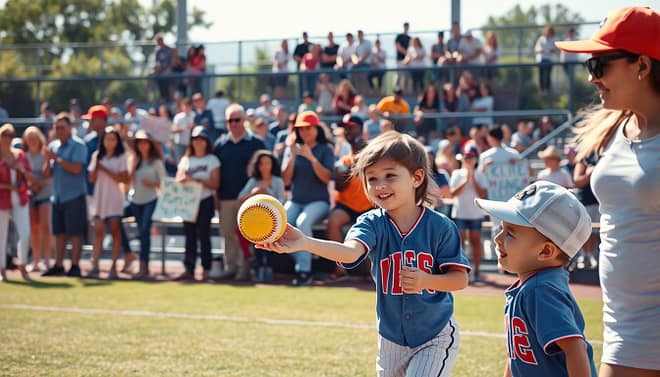
Think of family time like a stock portfolio. Putting all your effort into watching the game is risky. We mix things up by adding layers of fun for everyone.
So, what does this look like in practice? It’s a suite of activities running parallel to the action on the field:
- For the Little Sluggers (Ages 4-8): We make it simple. Color-coded scorecards and bingo cards make watching the game fun.
- For the Teen Analysts (Ages 13-18): We challenge their minds. They analyze pitches and debate strategies. It’s like baseball meets game theory.
- For the Adult Enthuasiasts: We connect the sport to history and culture. They talk about the Negro Leagues and the physics of a curveball. It’s sport as social commentary.
This isn’t about making things easy for some and hard for others. It’s a system that works for everyone. The six-year-old records runs, the sixteen-year-old debates, and the sixty-year-old shares stories. Everyone is in the game.
The result? Everyone focuses on the game, not distractions. The chatty neighbor fades into the background. We use family-wide FOMO to keep everyone engaged. When everyone is included, no one wants to miss out. That’s the real win.
Tips for Cheerful Competition
Let’s face it. The usual way siblings in youth baseball compete often feels more like a stressful draft than fun. It turns into endless planning and sacrifices. This is the youth sports world we’re sold, where winning is everything.
We aim to change this. We want to remove the harmful focus on winning. Instead, we aim for a fun, competitive spirit.
Cheerful competition isn’t about not wanting to win. It’s about changing what winning means for families. It’s about improving together, not just one sibling winning.
To achieve this, we need a plan. Here are our main strategies to turn rivalry into bonding.
First, focus on personal bests, not just winning. Celebrate every small victory. If your daughter hits the ball three times, that’s a big deal. This shift helps siblings grow individually, not just compare.
Make “Encouragement Only” a rule. No trash talk allowed. We teach kids and parents that supporting each other is key. This makes trying new things safe and encouraged.
Design family-team challenges. Instead of competing against each other, work together. Try team drills that require cooperation. This way, everyone is on the same side against the challenge.
Focus on effort, not just results. Praise hard work, teamwork, and focus. Analyze what went wrong calmly after the game. This way, kids learn from mistakes without feeling bad about them.
This approach makes youth sports less stressful. It turns the game into a time for family bonding, not just winning. Laughter and inside jokes become common again. You’re building a strong family, not just athletes.
When siblings in youth baseball compete in a cheerful way, everything changes. The car ride home is filled with laughter and stories, not just questions about winning. Isn’t that the real victory we’re after?
Creating Family Traditions
In today’s fast-paced world, it’s easy to get caught up in busy schedules and screens. But, the real connection comes from shared experiences, not apps. An athletic sibling can be a key to bringing a family together, creating a bond that lasts.
Think about the memories made on family trips, the laughter in a crowded minivan, and the jokes that only you understand. These moments are the foundation of family traditions.
But, waiting for these moments to happen naturally isn’t enough. In a world filled with distractions, you need to create these moments. The Texas Rangers Youth Academy is a perfect example. It’s not just a place to play sports; it’s a generational heirloom where memories are made.
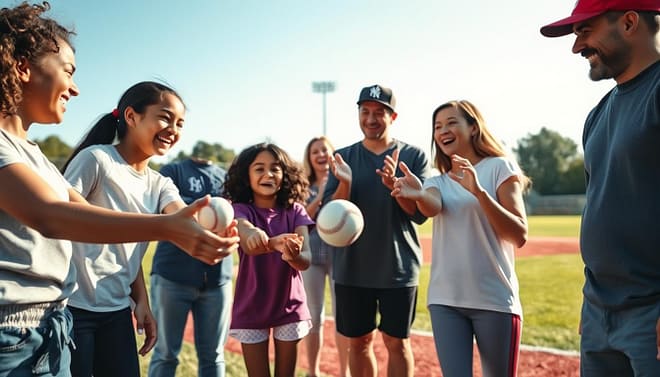
Imagine an annual Family Skills Challenge where everyone looks forward to it. It’s a time for grandparents to share their wisdom and for kids to show off their skills. A game night under the stadium lights adds to the fun, where laughter is the only thing that matters.
A multi-generational tournament is the ultimate experience. Teams are mixed, and everyone cheers each other on. The memories made are priceless, creating a sense of belonging that lasts a lifetime. In a world obsessed with digital connections, we offer a physical and communal anchor.
Let’s look at how traditions differ from spontaneous moments. The table below shows the difference between fleeting moments and the lasting traditions that define a family’s story through sports.
| Aspect | Spontaneous Family Moment | Cultivated Family Tradition | Role of the Academy |
|---|---|---|---|
| Frequency | Occasional, unpredictable | Annual, anticipated event | Provides the reliable setting and framework |
| Emotional Impact | Short-term fun | Deepens sense of shared identity and history | Facilitates meaningful, structured interaction |
| Family Roles | Passive spectatorship | Active, multi-generational participation | Creates roles for all ages (player, coach, cheerleader) |
| Memory Creation | Fuzzy recollection | Clear, storied narrative repeated over years | Serves as the consistent “stage” for the story |
| Long-term Value | Minimal | Becomes a core pillar of family culture | Transforms a sport into a family heirloom |
This isn’t just about family sports. It’s about creating joy. The Academy is a place where memories are made, turning Saturday afternoons into family legends.
By doing this, you create a history that’s shared by all. The diamond becomes your family’s gathering place. In the end, that’s the real victory.
Testimonials from Parents
The proof is in the pudding, or in this case, the voices of parents and siblings. We can talk about methods all day. But the real evidence is in the stories of real people. Let’s look at the before-and-after picture.
First, the ‘before’ picture. It’s a common American story. A mother talked about how soccer fees took the place of family vacations. The sport took over weekends and drained family resources. The emotional cost was even higher.
A younger sibling’s quote shows the heart of the issue: “It kind of ate me up because of all the attention that she would get.” This is what happens when youth sports become too much. It’s a game where one child’s joy can turn to another’s sadness. The family feels stressed, not stronger.
Now, let’s look at the ‘after’ picture. Families in our academy model have a different story. The change is big and real. A father said, “I used to cheer for one kid. Now I cheer for three. My sons are now each other’s biggest fans.”
This shows the power of a well-designed environment. It’s not about focusing on one ‘star.’ The main goal is inclusivity. A mother of a less athletic daughter said, “Here, she found her own ‘good.’ She’s building confidence, not dealing with comparison.”
This is the better side of things. Siblings aren’t jealous; they support each other. Vacations are funded for real family time, not just one sport. The family schedule is balanced, not all about one sport.
These stories are a strong argument against the old model. They show that a program based on inclusivity can make better athletes and better siblings. Parents are happy, not stressed. They get to enjoy the game, not just watch.
The data is clear. When everyone is included, there are no accidental rivals. It’s a team where every name on the jersey is important. That’s true family success.
Conclusion: Family Bonding at the Academy
So, what’s the final score? The modern youth sports machine often runs on a hidden fuel: family stress. It’s the silent stressor in the minivan, the source of quiet jealousy between siblings in youth baseball.
At the Texas Rangers Youth Academy, we saw that game film and called an audible. Our mission isn’t just to develop athletes. It’s to engineer an ecosystem for joy. We build family sports experiences where inclusivity is the rule, not an afterthought.
This is the intellectual intervention. We take the data—the real costs of fractured schedules and the profound benefits of shared purpose—and turn it into practice. Siblings cheer from the dugout, not from the parking lot. Competition becomes a cheerful glue, not a wedge.
Choosing the Texas Rangers Youth Academy isn’t merely signing up for drills. It’s a strategic play for your family’s long-term cohesion. You’re investing in shared memories, inside jokes born on the baseline, and a tradition that actually sticks. The deep benefit of true family sports is a team that lasts long after the final out. Ready to bring your whole squad?