Welcome! You’re about to see how the Texas Stix softball club picks its team. This club focuses on growing players and being competitive.
Understanding evaluations is key to doing well. It helps players focus and families know what to expect. This turns a stressful day into a chance to show off skills.
We’ll show you what coaches look for during assessments. You’ll also learn how to get ready, both in body and mind.
Think of this as your guide to success. You’re ready to step onto the field with confidence and skill.
What Coaches Measure: arm strength, speed, fielding, hitting, baseball IQ, coachability
At Texas Stix, player evaluations cover both physical and mental skills. It’s not just about throwing hard or running fast. Coaches look at how you put it all together.
This approach helps place players fairly. It makes sure everyone is on a team where they can grow and succeed. Let’s explore the six key areas of your tryout.
Coaches check how fast and accurate you are. It’s not just about how far you throw. They look at carry, velocity, and a quick release.
You’ll show your arm in drills like long toss and infield grounders. A strong, accurate arm is key for any position.
Speed: Your First Step and Your Full Sprint
Speed is measured in two ways: straight-line and functional baseball speed. Functional speed includes quick reactions and first steps.
Timed sprints are common. But coaches also watch your hustle on routine plays. Showing consistent effort shows your athleticism and grit.
Fielding: Technique Under Pressure
Fielding is all about the basics. Coaches look at your footwork, glove presentation, and how you field the ball.
Can you make every routine play? Do you stay calm on tricky hops? Smooth, confident fielding shows you have reliable hands.
Hitting: Contact, Power, and Approach
In batting practice and live pitching, coaches judge several things. They look at your swing mechanics, bat speed, and ability to make solid contact.
They also note your plate discipline and situational awareness. A player who can adjust their swing and hit to all fields is very valuable.
Baseball IQ: The Game Between Your Ears
This is your understanding of game situations. Do you know where to throw the ball with a runner on second? Do you take the extra base when it’s smart?
Coaches might set up scenarios during baseball drills to see your decision-making. A high baseball IQ means you play faster and smarter than your physical tools alone suggest.
Coachability: Your Willingness to Learn
This is perhaps the most important soft skill. Coachability is how you receive feedback. Do you listen intently? Do you apply a tip on your next rep?
Coaches look for players who are respectful, engaged, and positive with teammates. A coachable player is a coach’s dream and a key part of team placement criteria.
| Evaluation Area | What Coaches Look For | How It’s Measured | Impact on Placement |
|---|---|---|---|
| Arm Strength | Velocity, accuracy, carry, quick release | Long-toss drills, infield/outfield throws | Determines suitability for key positions (SS, CF, C) |
| Speed | 60-yard dash time, first-step quickness, hustle | Timed sprints, baserunning, defensive range | Affects lineup construction and defensive role |
| Fielding | Clean footwork, soft hands, confident transfers | Ground ball/fly ball drills, live defensive reps | Shows defensive reliability and versatility |
| Hitting | Solid contact, bat speed, plate discipline | Batting practice, live at-bats vs. pitchers | Directly influences batting order spot and role |
| Baseball IQ | Situational awareness, smart decisions | Scenario-based drills, coach questions | Indicates a player who can execute complex game plans |
| Coachability | Receptive to feedback, positive attitude | Observation of player-coach interactions | Crucial for team culture and long-term development fit |
Each area is important for the final decision. A player with great hitting but lower coachability might be placed differently than a solid all-around player who listens well.
The best baseball drills at tryouts test these areas together. By understanding what’s measured, you can prepare to showcase your full self. Remember, coaches are building complete teams, not just collecting stats.
This holistic view ensures the team placement criteria work for everyone. It matches your skills with the right level of competition and coaching.
The Day‑Of Flow: check‑in, warm‑up, timed drills, live reps, safety brief
Walking onto the field for your Texas Stix tryout can feel like a big moment. Knowing exactly what to expect turns that nervous energy into focused readiness. Let’s walk through the evaluation day timeline together, so you can move from station to station with confidence.
Your first stop is the check‑in table. Coaches or staff will greet you, confirm your registration, and give you a numbered pinnie to wear. This simple process gets you into the system smoothly and lets everyone know you’re ready to go. There’s no need to wonder where to start.
Next, the entire group begins a structured warm‑up. This isn’t just about getting loose—it’s a crucial step for peak performance and injury prevention. You’ll go through dynamic stretches, light jogging, and arm circles. Coaches pay attention here, noting players who prepare their bodies properly.
After warming up, the timed drills begin. This is where raw athleticism is measured. The classic 60‑yard dash is a standard test. You’ll also see shuttle runs and other agility tests. Coaches use stopwatches to record your times, assessing the pure speed and quickness discussed earlier.
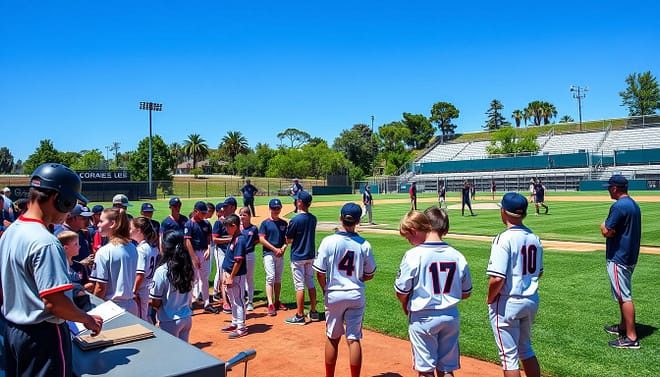
Then, you’ll rotate through skill‑specific baseball drills. Infielders will field ground balls and make throws to first. Outfielders will track fly balls. Each repetition is watched closely. Coaches evaluate your footwork, glove technique, and, most importantly, your throwing arm strength and accuracy.
The hitting station brings live pitching or batting practice off a tee. Here, the focus is on your swing mechanics, bat speed, and ability to make consistent contact. It’s not just about power; coaches look for a balanced, repeatable swing and how you adjust to different pitches.
Throughout these live repetition sessions, your baseball IQ and coachability are on display. How do you listen to a quick tip from a coach? Do you apply it on the next rep? This interaction is a key part of the assessment.
Before any activity begins, and often reiterated between stations, there will be a safety briefing. The Texas Stix prioritize player well‑being above all. This talk covers proper hydration, reporting any discomfort, and respecting equipment and space. It’s a reminder that we’re here to evaluate talent in a safe, positive environment.
By understanding this flow—check‑in, warm‑up, timed tests, skill stations, and safety reminders—the evaluation day becomes a series of familiar tasks. You can focus on performing your best at each step, without worrying about what comes next.
Placement Criteria and Roster Balance: skill bands, age cutoffs, pitcher/catcher needs
Creating the final team rosters is a detailed process. Coaches and directors work hard to make teams that are competitive, fair, and fun. They follow team placement criteria to ensure every player has a great experience.
Our system uses “skill bands” to group players. These bands are based on their overall score. We then draft from these bands to form teams within an age group. This approach helps maintain parity and makes games more exciting for everyone.
Age divisions are key to fair play. Teams are formed based on league-mandated age cutoffs. This way, players of similar ages and maturity compete together. We stick to these age divisions to keep the game fair.
Specific roster needs also play a big role. Positions like pitcher and catcher are critical. A team needs enough skilled players in these roles to function well. Coaches might choose a player for their skills in these areas, even if they’re not the highest scorer.
Team formation is like solving a puzzle. We use player skills, ages, positions, and personalities as the pieces. The goal is to create balanced rosters where every child can contribute and grow. Our focus on parity and development makes the Stix experience special for every family.
How to Prepare the Week Before: sleep, hydration, light reps, mindset
This week is about getting ready, not pushing too hard. You want your athlete to feel rested and sharp, not tired or sore. These parent tips will help you prepare them well.
Prioritize Sleep Like It’s Part of the Drill. Good sleep is key for athletic performance and quick thinking. Aim for 8-10 hours of sleep each night before tryouts. A regular sleep schedule helps your body recover and your mind stay focused.
Start a calming bedtime routine. Try to avoid screens an hour before bed. This can really improve your sleep and energy for the next day.
Hydration is a Daily Mission. Drinking enough water starts well before tryouts. Encourage your player to drink water all week. Dehydration can weaken strength, slow down, and cause cramps.
Stick to water as your main drink. Avoid sugary drinks and energy drinks, which can make you crash. Always have a water bottle with you, even during light activities.
Swap Heavy Practice for Light, Sharp Reps. Don’t overdo it the week before. Too much practice can lead to tiredness, injuries, or mental burnout. Instead, focus on short, quality sessions.
Plan light throwing, fielding, and batting practice. These sessions should be fun and keep your player’s skills sharp. The goal is to stay loose and confident, not to exhaust every skill.
Build a Confident Mindset. It’s normal to feel nervous, but you can manage it. Talk to your athlete about focusing on what they can control. Remind them that hard work and a positive attitude are what coaches look for.
Encourage visualization. Imagine making a great throw, hit, or fielding play. This mental practice helps build success pathways. View tryouts as a chance to show what they can do, not a test to pass.
These parent tips are about setting your young player up for success. Your help with sleep, hydration, light activity, and mindset is a big advantage. It reduces stress and lets their skills stand out on evaluation day.
What Parents Can Expect After Tryouts: timelines, communication, feedback options
The wait after tryouts can be nerve-wracking, but knowing what’s next can make it exciting. Stix values players and keeps families informed every step of the way.
We know you’ve put in a lot of work. We promise to be open and clear from start to finish.
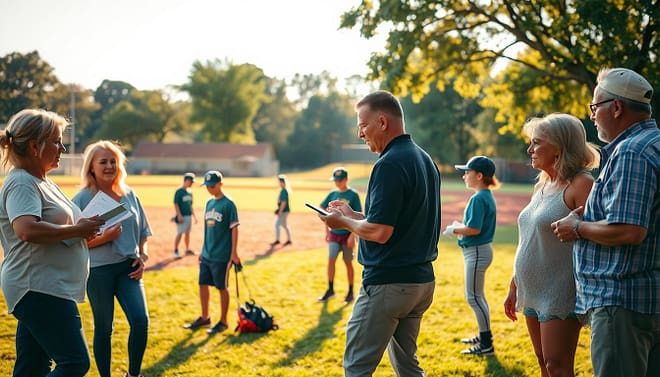
We have a clear plan for what happens after tryouts. Below is a table showing the main steps, how long they take, and how we’ll let you know.
| Phase | Typical Timeline | How We Communicate | What You Should Do |
|---|---|---|---|
| Initial Review & Deliberation | 24-48 hours after tryouts | Internal coaching staff meetings. | No action needed. This is our internal evaluation period. |
| Formal Offer Period | Within 3-5 days of tryouts | Direct phone call or email from a team coach or director. | Check your provided contact methods. Be prepared to discuss next steps. |
| Roster Finalization & Welcome | Within 1 week of offers | Official welcome email with team details, schedule, and registration link. | Complete registration promptly to secure your player’s spot. |
| Feedback Request Window | Up to 10 days after offers are sent | Initiated by parent via email to the tryout coordinator. | If desired, send a concise request for constructive player feedback. |
Understanding our feedback policy is key. We focus on growth. If your player doesn’t get into their first choice, you can ask for feedback.
Just email our tryout coordinator within the given time. A coach will give you specific, helpful feedback to help your player improve.
We make every decision with the team’s balance and your player’s future in mind. This careful thought is part of our family-focused culture that values everyone.
The best advice we can give is to trust the process, keep an eye on your messages, and celebrate your player’s hard work. The time after tryouts is just the beginning of an exciting journey.
Common Myths and Fairness Policies
Building a fair team starts with a clear process. We aim to clear up myths that might confuse things. Knowing how we ensure objectivity helps everyone feel more confident on tryout day.
Let’s debunk some common myths:
- Myth: “The coach’s kid always makes the team.”
Reality: We use multiple, independent evaluators for each player. No single coach decides who makes the team. We also disclose family ties to avoid bias. - Myth: “It’s all about who you know.”
Reality: Community is valued, but spots are earned on the field. We look at skills and coachability. A player’s past with the club is just one factor. - Myth: “One bad drill ruins your chances.”
Reality: We consider the whole picture. Everyone has a bad moment. We focus on overall performance across all drills, not just one. It’s about consistency and ability.
We have strict fairness policies in place. Every tryout has a diverse team of evaluators who score players on their own. Then, we combine these scores to find clear skill bands.
This system ensures true parity and fair placement. It makes sure the most skilled and dedicated players join the right team, no matter their background.
This fairness is key to our club’s mission to offer a positive, competitive environment. Trust in the process is vital for everyone involved.
We aim to build teams where every spot is earned. By using objective data and clear policies, we reward hard work and talent. Our commitment to parity makes our teams strong and our community united.
Next Steps if You Don’t Make Your First‑Choice Team
Not making your first-choice Texas Stix team can be tough. Many players face this challenge. Remember, one tryout result doesn’t decide your baseball future.
See this as a chance to find a new path. Accepting a spot on another Stix team could be a good move. It might offer more playing time and better competition to improve.
Look into other quality programs in your area. The right team is more important than its name. Your goal is to get consistent, high-level game experience to boost your skills.
Make a plan to improve your skills. Focus on areas like arm strength or hitting. Work with your coach to set goals for the next season. Staying dedicated to this plan is key to success.
Reading advice from an experienced baseball community can help. Many players have been in your shoes before.
Keep loving the game. Your journey is about persistence and growth, not just one day. Stay committed to your plan and keep working hard.