For Texas baseball families, youth baseball tournament nutrition is less about special products and more about steady habits that hold up through early arrivals, warmups, multiple games, and the ride home. Young athletes need enough fuel for competition, enough fluid before they feel thirsty, and enough recovery time after the last out. Parents do not need to make the plan fancy. They need to make it repeatable.
A tournament weekend can expose gaps that are easy to miss during a normal practice week. A player who skips breakfast may look fine in the first game, then fade later. A player who drinks water only after feeling tired may already be behind. A player who eats a heavy meal too close to first pitch may feel slow or uncomfortable. None of that means the athlete lacks toughness. It usually means the day needed a better plan.
Build A Youth Baseball Tournament Nutrition Plan
Set The Meal Window Early
The main pre-game meal should be planned around the game schedule, not squeezed in during the drive. Research-based youth athlete guidance recommends a meal rich in carbohydrates and moderate in protein about 2–3 hours before competition, with examples such as whole-grain pasta with grilled chicken or a turkey sandwich on whole-grain bread young athlete nutrition tips. For baseball families, that means checking the first game time the night before and deciding when the player will eat before uniforms, bags, and travel take over the morning.
That meal should be familiar. Tournament day is not the best time to test a new sauce, spicy food, or a large serving of something the player rarely eats. Young athletes also need to avoid meals that are too high in fat right before competition because fatty foods can slow digestion and may lead to discomfort during play. A practical pre-game plate might include a carbohydrate base, a moderate protein portion, and enough fluid to start the day in a good place.
Keep Carbohydrates Simple And Familiar
Carbohydrates help meet the energy demands of training and competition while still supporting normal growth. Whole grains, fruits, and starchy vegetables can fit well across the week. The goal is not to overload a player with food right before the game. The goal is to prevent the athlete from arriving under-fueled, especially during tournament formats with more than one game.
For players who get nervous before games, smaller servings may work better than a large plate. A turkey sandwich on whole-grain bread may be easier than a full hot meal. Fruit, yogurt, or a simple snack can help if the player ate early and has a long gap before first pitch. Parents should watch how their own athlete responds. Some players handle a bigger breakfast well. Others compete better when the last pre-game food is lighter.
Hydration And Recovery Between Games
Start Water Intake Before Arrival
Hydration should begin well before game time. A general guideline from youth recovery guidance is drinking about half of body weight in ounces of water daily, with intake increased on training and competition days youth nutrition and recovery guidance. That is a guideline, not a one-size rule for every child, but it gives families a starting point for planning the day instead of reacting after a player already looks drained.
Parents can help by making water visible and routine. Put the bottle in the same place in the gear bag. Remind the athlete to sip before leaving home, during warmups when allowed, and between games. Dark urine or unusual fatigue can be signs that hydration may be lagging. If a player has medical concerns, special dietary needs, or has been told to manage fluid intake differently, the family should follow the advice of the player’s qualified care team.
Use The First Hour After Play
Post-game recovery should not wait until the family finds a restaurant hours later. Guidance in the research notes points to a combination of carbohydrates and protein within 30–60 minutes after competition to help muscle repair and replenish energy stores. Options listed in the research include chocolate milk, a smoothie, or a balanced meal.
This matters most when the player has another game later the same day or another tournament game the next morning. The recovery snack is not a reward for playing well. It is part of preparing for the next baseball task. A player who struggled at the plate still needs recovery. A pitcher who threw fewer innings than expected still needs recovery. Parents can keep this routine neutral so food does not become tied to statistics or playing time.
Training Week Habits That Carry Into Tournament Play
Do Not Treat Training Nutrition As Separate
The best tournament plan usually starts during the training week. Regular meals and snacks help young athletes keep energy more stable across practices, lessons, strength work, and games. Skipping meals on training days can make it harder to judge what the athlete actually needs on the weekend. A player who eats inconsistently from Monday through Thursday may be more likely to overeat, under-eat, or rely on random snack choices on Saturday.
Protein also works better as a daily habit than as one large serving after competition. The research notes recommend spreading protein intake throughout the day to support muscle repair and recovery, using foods such as eggs, yogurt, or lean meats. For a young baseball player, that could mean protein at breakfast, a simple protein-containing snack after school, and a balanced dinner after practice. The exact foods can vary by family budget, culture, allergies, and the athlete’s preferences.
Protect Sleep Like A Practice Slot
Sleep belongs in the same planning conversation as meals, water, and training. The research notes list sleep targets of 9–12 hours per night for young athletes ages 6–12 and 8–10 hours for ages 13–18. Families cannot always control late game times, travel, homework, or early report times, but they can protect the nights they do control.
A player who is short on sleep may have a harder time recovering between sessions. Parents can help by packing earlier, setting uniforms and gear out the night before, and avoiding a rushed morning that cuts into rest. This is especially useful for younger players who may not yet connect bedtime with how they feel in the batter’s box or on the mound the next day.
Parent Logistics For Texas Tournament Days
Pack For Multiple Games
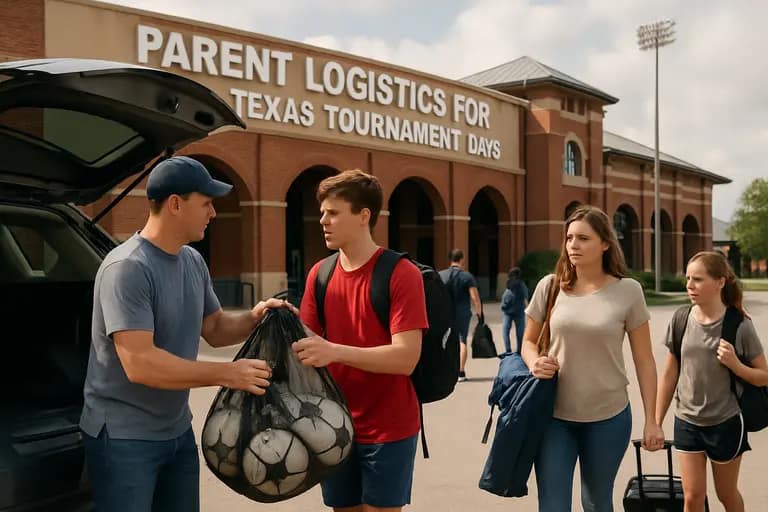
Tournament days with multiple games call for small, frequent carbohydrate-rich snacks between games to help maintain energy. The best choices are usually simple, familiar, and easy to eat in small amounts. Parents should think in terms of access: what can the player eat quickly, what will stay usable in a cooler, and what will not create stomach discomfort before the next game?
- Water bottle, plus a plan to refill it during the day.
- Carbohydrate-rich snacks such as fruit, whole-grain options, or starchy choices the player already tolerates.
- Protein options such as yogurt, eggs, lean meat, or another familiar choice that fits the family’s needs.
- A recovery option for the first 30–60 minutes after play, such as chocolate milk, a smoothie, or a balanced meal.
Parents should also be realistic about appetite. Some athletes eat well during long breaks. Others can only handle a few bites. The plan should keep food available without turning every break into a negotiation. If the player is old enough, give them responsibility for part of the routine, such as finishing a water bottle by a certain point or choosing between two approved snacks.
Keep Food Separate From Performance Pressure
Young players already deal with enough noise around lineups, results, and roles. Food should not become another scoreboard. A parent can say, “You need to recover because you played,” rather than, “You need this because you went hitless,” or, “You earned this because you had two hits.” That tone helps the athlete understand that nutrition is a body-care habit, not a judgment of the stat line.
Coaches can support the same message by giving families clear timing when possible. If players know whether the break is short or long, parents can choose between a quick snack and a more complete meal. Even without perfect timing, a consistent routine gives the athlete a better chance to stay steady through the day.
How Texas Families Can Keep Tournament Days Steady
A good youth baseball tournament nutrition plan should be simple enough to repeat under pressure. Eat a carbohydrate-rich, moderate-protein meal 2–3 hours before competition when the schedule allows. Start hydration before arriving at the field. Use small, familiar snacks between games. Get carbohydrates and protein back in during the first 30–60 minutes after play. Protect sleep during the week so the athlete is not trying to recover from a deficit on game day.
Parents do not need to chase perfection. They need a calm plan that fits their player, their budget, and the tournament schedule. If the family reviews what worked after each weekend, the routine can improve without blame. That steady approach gives young baseball players a better chance to compete, recover, and keep developing through a long Texas tournament season.