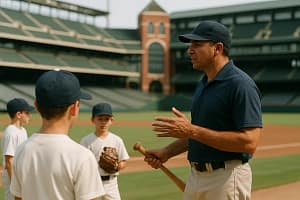
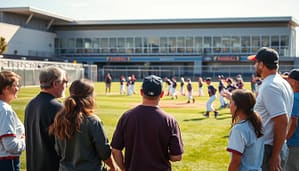
The Rangers Youth Academy gives North Texas baseball and softball families a clear example of resilience built through structure, access and repeated challenges. Established in December 2017, the Academy offers free year-round baseball and softball instruction for athletes ages 7-18, according to the Texas Rangers Youth Academy. That matters because resilience in player development is not a slogan. It is the ability to keep working after a strikeout, handle a new position, accept coaching, stay committed to school and return to the field with better habits.
The available research does not document one specific youth championship team or a verified title run tied to the Academy. The supported story is broader and still valuable: the program creates championship-type pressure through skills competitions, summer leagues, advanced development opportunities and community support. For Texas players, coaches and families, those pieces offer practical lessons that reach beyond a single bracket result.
What Rangers Youth Academy Teaches About Resilience
Rangers Youth Academy Lessons Start With Access
Resilience starts with showing up often enough for training to take hold. Free year-round instruction lowers a common barrier for families, especially when players need steady repetitions rather than occasional private work. A young hitter does not build confidence from one good weekend. A catcher does not learn leadership from one bullpen. Players grow when they return to the same standards across weeks and months.
That is where the Academy model fits a development-focused view of Texas elite baseball. The goal is not only to produce better swings and cleaner footwork. The program’s stated focus on creating “Major League Citizens” connects baseball training with perseverance, dedication and character. Those traits show up in small moments: sprinting through the bag, listening after a mistake, respecting teammates and staying committed when progress slows.
Skill Tests Create Manageable Pressure
The Rangers Youth Academy also hosts competitions such as MLB’s Jr. Home Run Derby and Pitch, Hit & Run. Those events give young athletes a useful pressure setting without turning every evaluation into a permanent judgment. Pitch, Hit & Run is built around skills testing, and research notes from MLB’s program described a pathway for youth ages 7-14 to advance toward National Finals at the 2026 World Series. Families should always verify current dates and advancement rules through official event information before planning travel.
For player development, the lesson is simple: pressure can be practiced. A player who takes a timed swing, throws with accuracy on demand or runs with a crowd watching learns how the body responds when the moment feels bigger. Coaches can use those events as teaching points rather than scouting labels. What did the athlete control? What routine helped? What adjustment is needed next week?
Development Support Beyond The Field
Academic Help And Family Coaching
The Academy’s partnership with Buckner International expands the support system around players. The research identifies academic assistance, life skills programs and family coaching as part of that work. It also notes adult programs in English and Spanish, including job skills training and financial empowerment courses. Those details matter because youth baseball development is shaped by the home schedule, transportation, school workload and family stability.
A player trying to keep up with practices, games and school assignments needs more than batting cage time. Academic support can protect eligibility and build better planning habits. Life skills instruction can help a player communicate with coaches, manage frustration and take ownership of daily choices. Family coaching can help parents understand how to support effort without making every at-bat feel like a referendum on the player’s future.
Character Work Gives Training A Stronger Base
The Academy’s broader educational mission is also reflected in structured learning and storytelling through the Texas Rangers Heritage Center’s Academy page, which describes teaching moral values and personal responsibility through the club’s story and community programs at the Academy program. For young athletes, that kind of message can make competitive baseball healthier. It reminds players that talent is only one part of the profile.
In practical terms, resilience is learned when players connect effort with responsibility. They learn to be ready for practice, care for equipment, communicate absences, respect instruction and support teammates who are struggling. Those habits help in tournaments, school seasons and showcases because the athlete is not relying only on mood or recent performance.
Facilities That Shape Daily Standards
Indoor And Outdoor Repetition
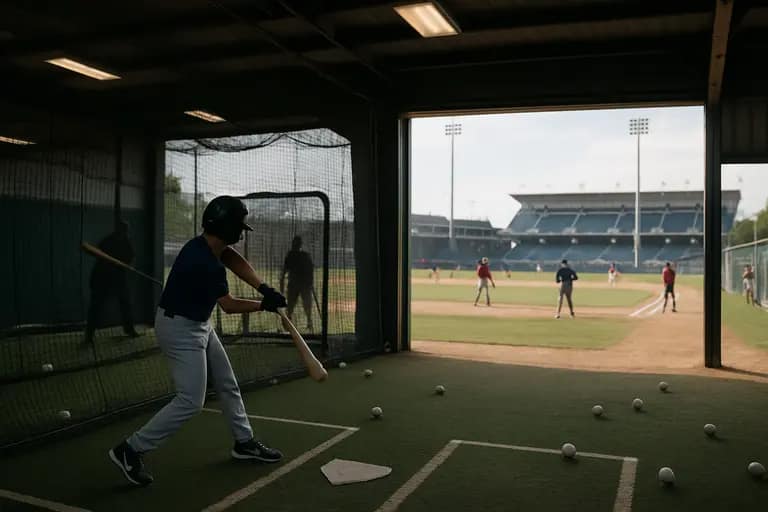
The Rangers Youth Academy facility includes the indoor Globe Life Training Center and five outdoor fields. Research also names resources such as Adrián Beltré Field and the Rougned Odor Weight Room. Specific spaces do not develop players by themselves, but they can create a better training rhythm. Indoor work protects instruction from weather interruptions. Outdoor fields allow defensive work, baserunning, live repetitions and team situations to stay connected to real game movement.
Texas baseball families know how weather, traffic and field access can shape a week. Having an organized facility helps athletes stack repetitions. That matters for resilience because steady standards reduce guesswork. A player knows where to report, what type of work is expected and how to measure progress through effort and adjustment.
Competition Without False Rankings
The Academy’s Nike RBI League offers summer baseball and softball for athletes ages 13-18. Research notes that the league emphasizes teamwork and academic success, with two graduating athletes each year receiving $5,000 college scholarships. Top-performing athletes may also be invited to MLB Develops events such as the Breakthrough Series and Elite Development Invitational.
Those opportunities should be framed carefully. They are not proof that every participant is on a professional track, and they should not be treated as a ranking system. Their value is developmental. Players see stronger competition, learn how they respond to higher standards and gain exposure to coaching environments that reward preparation.
What Texas Families Can Take From This Model
Practical Habits For Players And Coaches
Texas families do not need to copy every part of a Major League-backed academy to learn from it. The key is to build a development plan that treats resilience as a daily skill. A good plan gives players enough structure to grow, enough competition to be tested and enough support to stay grounded.
- Use skills competitions as feedback, not as a final label on a player’s ceiling.
- Pair baseball goals with school routines, sleep habits and clear family communication.
- Give players chances to lead, fail, adjust and return to work with a specific plan.
- Track effort-based goals such as practice attendance, coachability and routine execution.
For coaches, the lesson is to make pressure useful. A timed defensive round, a situational hitting station or a team academic expectation can teach players how to respond when standards rise. For parents, the lesson is to support the full athlete. The ride home after a tough game can either build resilience or make the next game feel heavier.
Why The Rangers Youth Academy Model Matters Locally
The Rangers Youth Academy matters because it connects baseball instruction, softball instruction, school support, family programming and community outreach in one local setting. Research notes back-to-school distributions and holiday celebrations among its community outreach initiatives, which shows that the program is not limited to practice plans and fields. It is also a neighborhood resource for families connected to the game.
For Texas elite baseball, that is an important reminder. Player development is not only about showcases, radar readings or tournament schedules. The strongest youth pipeline gives athletes room to compete while teaching them how to handle responsibility. If a player can learn that lesson early, every future step becomes more manageable: high school tryouts, summer league pressure, college interest, position changes and the everyday challenge of staying ready.