Elite youth training gets attention whenever recent MLB Draft picks trace part of their background to national development programs, but parents need a grounded way to read those examples. A first-round selection is not proof that any one camp, team, or coach creates professional players on its own. It is better evidence that structured competition, quality instruction, maturity, health planning, and repeated exposure to strong players can help serious athletes learn what the next level requires.
For Texas baseball families, that distinction matters. The state has year-round training options, frequent tournament travel, and plenty of showcase pressure. Families can spend heavily without getting clearer development. The better question is not, “Which program gets players drafted?” The better question is, “What habits, feedback, competition, and support does this environment provide over time?”
What Elite Youth Training Shows In The Draft
Elite Youth Training Is A Filter, Not A Promise
The strongest recent examples come from national development settings tied to MLB. In the 2023 MLB Draft, five first-round picks were alumni of MLB Develops initiatives, and the Breakthrough Series had produced 22 first-round picks since its inception, according to MLB Develops draft coverage. That is a meaningful signal, but it should be read correctly.
Those numbers do not mean every participant becomes a high pick. They show that high-level training environments can bring together advanced players, experienced instructors, and competitive evaluation settings. Players who succeed in those environments often already have strong tools, strong habits, or both. The program can sharpen those traits, but the player still has to handle pressure, feedback, failure, school demands, and physical growth.
That is the practical value of elite youth training for families. It can reveal whether a player responds to better velocity, faster game speed, direct coaching, and daily standards. If a young athlete only enjoys baseball when success comes easily, a demanding setting may expose that. If the player grows from challenge, asks better questions, and competes without panic, the setting has real development value even if no draft outcome ever arrives.
Why Draft Examples Need Context
Recent draft stories can be inspiring, but parents should avoid turning one player’s path into a family blueprint. Eli Willits, the No. 1 pick in the 2025 MLB Draft, began his professional career at 17 with the Class A Fredericksburg Nationals, as reported by The Washington Post. That is an uncommon path. Most serious youth players, including many strong Texas players, will need more time, more physical development, and possibly a college route before any professional opportunity is realistic.
The lesson is not that every talented teenager should rush. The lesson is that advanced players need training environments that match their pace without skipping key steps. A player may have draft-level athletic ability but still need better strike-zone control, stronger recovery habits, cleaner throwing routines, or more emotional control after failure. The best programs do not just promote the most talented players. They help families see which parts of the profile are still incomplete.
How Parents Can Judge A Development Setting
Look For Teaching Before Exposure
Exposure has value only when the player is prepared for it. A weekend full of scouts or college coaches does not help much if the athlete has not built a repeatable routine. Parents should ask how a program teaches throwing progressions, hitting approach, defensive footwork, baserunning decisions, strength work, nutrition basics, and recovery. The answer should be specific enough to show a plan, not just a schedule.
A strong training environment should also separate short-term performance from long-term growth. A hitter may go hitless while improving swing decisions against better arms. A pitcher may lose velocity for a short period while cleaning up command or learning a safer workload rhythm. A defender may make mistakes while playing a harder position against faster runners. Parents need coaches who can explain those tradeoffs honestly.
Ask What Gets Measured And Why
Measurement can help, but only if it supports development. Radar readings, exit velocity, run times, and strength numbers can provide useful feedback. They should not become the whole identity of the player. Families should ask how often testing occurs, how results are explained, and what training changes follow the data.
The best answer connects numbers to baseball actions. If a hitter’s exit velocity rises but chase decisions get worse, that is not a complete win. If a pitcher throws harder but cannot recover between outings, the program needs to slow down and address workload. If a catcher improves pop time by rushing footwork and losing receiving quality, the metric is driving the wrong behavior.
- Ask coaches to explain the player’s current strengths and two clear development priorities.
- Review how throwing volume, tournament innings, and recovery days are tracked.
- Look for instruction that carries from practice into games, not just workout clips.
- Make sure the player still has time for school, sleep, family, and unstructured recovery.
Texas Family Logistics That Affect Development
Travel Can Help Or Hurt The Plan
Texas families often face long weekends, hotel stays, late games, and early report times during tournament seasons. Those demands can build independence and toughness, but they can also drain a young player. Parents should treat travel as part of the development plan, not just a cost attached to it.
Before committing to a heavy schedule, families should ask whether each event has a clear purpose. Is the player facing better competition? Is the team using the weekend to prepare for a specific level? Is the athlete healthy enough to play multiple games? If the answer is mainly “everyone else is going,” that is a weak reason to add more stress.
Communication With Coaches Matters
Good programs make room for parent questions without letting parents run the team. Families should expect clear policies on playing time, pitcher use, practice expectations, tournament communication, and injury reporting. They should not expect guarantees about positions, batting order, college interest, or draft attention.
For a young player, the adult circle matters. Private instructors, team coaches, strength coaches, and parents can accidentally give conflicting messages. A hitter may be told to simplify by one coach and add movement by another. A pitcher may be told to rest by one adult and throw through fatigue by another. Parents can help by asking the lead coach how to align feedback so the player is not carrying five different plans at once.
Balancing Ambition With Health And Maturity
The Player Has To Own The Work
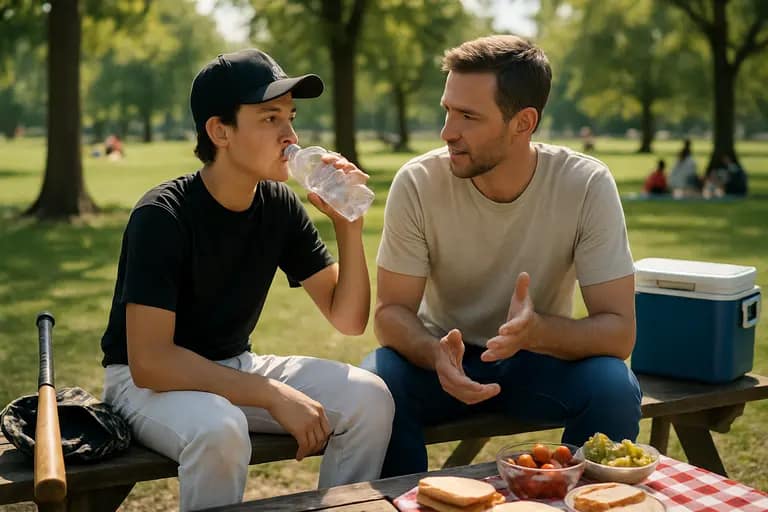
Elite youth training works best when the player wants the standard, not just the attention. Parents can pay fees, drive to practices, and schedule lessons, but the athlete has to own warmups, sleep, nutrition, coachability, and focus. If the parent is always more invested than the player, the family should pause and reassess the schedule.
This does not mean a young athlete must act like a professional. It means the player should show age-appropriate responsibility. A middle school player can pack gear, track homework, and learn a warmup routine. A high school player can communicate soreness, review practice goals, and understand why rest days matter. Those habits may not show up in a box score, but they affect how well the athlete handles harder baseball later.
Recovery Is Part Of Development
Families sometimes treat rest as lost opportunity. In reality, training only helps if the body can absorb it. A player who is always tired may look less athletic, learn slower, and compete with less confidence. Parents should watch for changes in mood, sleep, arm soreness, appetite, and enthusiasm. Those signals do not replace medical care, but they can tell a family when the schedule is too crowded.
For pitchers, this is especially important. Throwing intensity, bullpen work, lessons, showcases, and tournament innings can stack up fast. Parents should know who is tracking throws and who has the authority to shut a player down. A coach who respects health may cost a player one appearance in June, but that decision can protect months of development.
What Elite Youth Training Means For Texas Families
The clearest takeaway from recent MLB Draft examples is that development environments matter, but they are not magic. Elite youth training can place a serious player around better instruction, better competition, and clearer standards. It can also expose gaps that regular local success may hide. Both outcomes are useful if the family is willing to listen.
Texas parents should evaluate programs by the quality of teaching, the honesty of feedback, the care around workload, and the fit for the player’s maturity. A strong program should help the athlete become a better baseball player and a steadier young person. If it only sells exposure, status, or fear of falling behind, keep asking questions.
The draft names are worth studying, but the family goal should be steadier than chasing a headline. Build the routine. Protect the arm. Seek real coaching. Choose competition with purpose. If those pieces are present, elite youth training becomes a tool that supports development instead of a label that drives the family schedule.