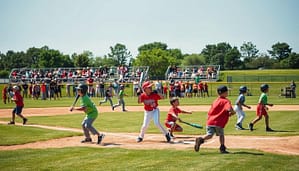
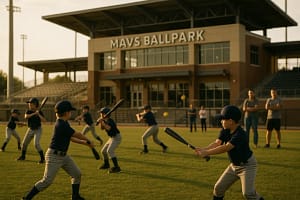
Rocker B Scouting should be viewed through a development lens first. For Texas youth baseball families, the value of a tournament weekend in Graford is not only who might be watching. It is the chance to measure how a player handles travel, pace, stronger competition, defensive decisions, pressure at-bats, and recovery across multiple games.
Rocker B Ranch has become a relevant tournament destination because its event calendar gives teams several entry points for competition. The research available points to week-long experiences, fall tournaments, age-group variety, posted game minimums, and a venue built around youth baseball. That mix can help families plan a season with clearer goals, but it should not be mistaken for a guaranteed scouting appointment.
How Rocker B Scouting Fits The Texas Development Calendar
Rocker B Scouting Starts With Schedule Fit
For players in the 10U to 16U range, the first question is not whether an event sounds big. The better question is whether the event fits the athlete’s current development stage. A 10U player needs clean routines, confidence in game speed, and base-level defensive habits. A 14U or 16U player needs stronger game planning, better recovery between games, and evidence that skills hold up against deeper pitching and more athletic defenses.
The Ripken Experience at Rocker B Ranch is scheduled for June 17-21, 2026, with age groups listed from 10U to 13U. The event page lists a five-game guarantee, opening day, a skills competition, team and individual awards, and MLB tournament ambassadors through the official Ripken Experience page. Those details matter because a five-game setting gives coaches and families more than a one-day snapshot. Players have to adjust after failure, compete on tired legs, and show whether their routines are repeatable.
That is where Rocker B Scouting becomes a planning term rather than a promise. The official event information in the research does not provide a public list of scouts scheduled to attend. Families should treat the setting as exposure-friendly because of the competition structure and ambassadors listed for the Ripken event, while still understanding that real evaluation starts with how the player performs and what can be documented after the weekend.
Why Repeat Games Matter More Than One Loud Tool
A single loud swing, hard throw, or diving play can draw attention, but player development is built on repeatable skill. Tournament formats with multiple games give coaches a better read on plate discipline, strike throwing, defensive communication, baserunning choices, and emotional control. Those traits become clearer when a player has to respond after an error, a strikeout, or a short night of rest.
Texas families comparing tournament options should also think about the larger calendar. A team may use a June event for a mid-summer test, then use later events to check whether training adjustments carried into competition. For families building a broader schedule, our look at Texas baseball tournaments for player growth connects well with this type of planning.
What The 2026 Tournament Schedule Supports
Age Groups And Game Minimums
The Rocker B Ranch tournament search information in the research lists multiple 2026 tournaments from July through November, with age groups ranging from 8U to 16U. One example listed is a July 10-12 tournament for 10U to 16U teams with a three-game minimum. The same official Rocker B tournament search page lists baseball tournament pricing tied to game minimums: a three-game minimum at $795 and a four-game minimum at $1,295. The research also lists softball tournament pricing at $595 for a three-game minimum.
| Event Type | Supported Planning Use | Development Question |
|---|---|---|
| Week-long 10U-13U experience | Extended competition and team routine building | Can the player adjust across several games? |
| July-November tournament options | Season checkpoints for 8U-16U teams | Did training gains transfer into games? |
| Three- or four-game minimum formats | More innings for evaluation and coaching notes | Are skills repeatable under schedule pressure? |
Those posted structures help teams make smarter choices. Younger clubs may value a three-game minimum because it keeps the weekend manageable and gives players enough reps without stretching pitching too far. Older teams may prefer four-game formats when roster depth, pitcher usage, and defensive versatility are part of the evaluation plan.
Why Venue Logistics Affect Player Performance
The research describes Rocker B Ranch as a 325-acre youth baseball complex in Graford, Texas, with four baseball fields and onsite lodging options that include cabins, casitas, and a lodge. It also lists two swimming pools, a fishing pond, and courts for volleyball, basketball, and tennis. Those amenities can matter for families, but coaches should keep the baseball priority clear: sleep, hydration, pregame timing, and recovery habits often decide whether a player shows his true ability by the final game of the weekend.
A comfortable trip does not replace development work. It supports it. If a player arrives late, skips a warmup, eats poorly, or treats downtime like a distraction, the event can expose those habits quickly. If a player uses the setting to prepare well, compete, recover, and reset, the weekend becomes more useful for both the athlete and the coach.
How Families Can Prepare For Evaluation Settings
Build A Player Profile Before Arrival
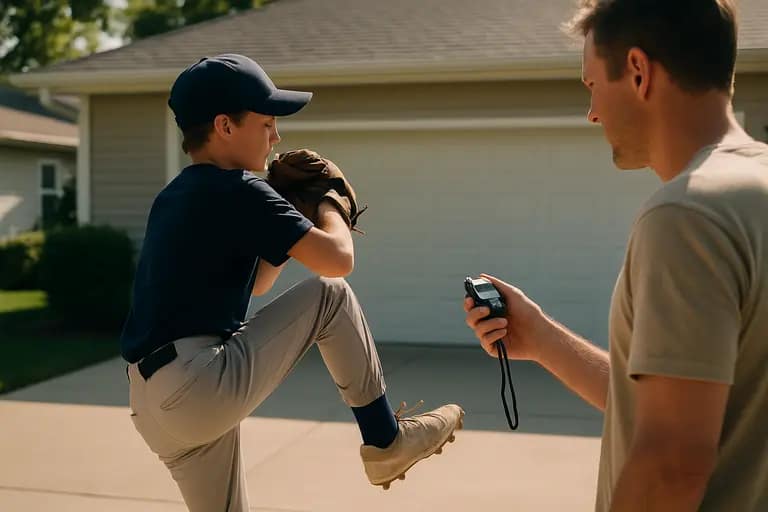
Families often wait until after a strong weekend to organize video and notes. That is backwards. Before a tournament, parents and coaches should know what they are trying to learn. For a pitcher, that may include first-pitch strike rate, ability to hold runners, breaking ball command, or fastball control to both sides. For a catcher, it may include receiving, blocking effort, mound visits, and throwing accuracy. For hitters, it may include swing decisions, two-strike approach, contact quality, and how the player responds to better velocity.
Rocker B Scouting works best when families bring a simple plan. Record short, clear game video from a useful angle. Track the context of each clip. Note the opponent level if known, the count, the situation, and the result. A hard-hit groundout with a strong decision may be more useful than a bloop hit on a poor swing. Coaches and evaluators want context, not just highlights.
- Set two or three measurable goals before the event, such as quality at-bats, strike throwing, or clean defensive communication.
- Keep video short and organized by skill area rather than posting every pitch or every swing.
- Review the weekend within 48 hours while game situations are still clear.
- Turn the review into a training block instead of chasing another tournament immediately.
Keep Exposure Claims Realistic
The presence of MLB tournament ambassadors at the Ripken Experience is a notable event feature from the official listing. It does not mean every player is being formally scouted, and it should not create pressure for a young athlete to perform like a college recruit. For 10U to 13U players, the priority should remain skill growth, body control, baseball IQ, and learning how to compete across a long event.
Older players in the 14U to 16U range can use Rocker B Ranch events as part of a larger development record. That record should include game video, coach feedback, strength and movement progress where appropriate, and academic habits as players get closer to high school recruiting conversations. A family comparing event types may also find value in our Baseball Youth All-American Games family guide, especially when thinking about week-long baseball events and player readiness.
What Coaches Should Track During Rocker B Scouting Events
Turn Tournament Reps Into Training Direction
A useful Rocker B Scouting plan is coach-led, player-owned, and simple enough to execute during a busy weekend. Coaches should track the patterns that show up more than once. Did the lineup chase breaking balls with runners in scoring position? Did pitchers lose the zone from the stretch? Did infielders rush throws after bobbles? Did outfielders communicate early on balls in the gap? These notes create the next training block.
Teams should avoid treating the weekend as a pass-fail test. Tournament baseball can be affected by weather, matchups, roster absences, and short rest. The better use is to collect evidence. If a player shows improved swing decisions across five games, that is meaningful. If a pitcher competes well but loses command late, that points toward stamina, delivery consistency, or between-inning routine work.
For Texas elite baseball families, the best outcome is clarity. Rocker B Ranch events can place players in competitive settings with real schedule pressure and visible performance stakes. The development value comes from how teams prepare, how players respond, and how coaches use the information after the last game. That is the practical standard for Rocker B Scouting: not hype, not assumptions, but better baseball decisions built from tournament evidence.