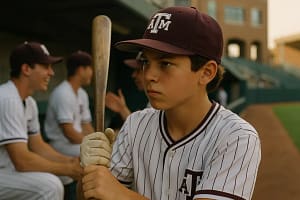
Rocker B Scouting should be viewed as a preparation target, not a promise that a specific evaluator will be behind the backstop. For Texas youth baseball families, the value of Rocker B Ranch in Graford is the tournament setting: multiple age groups, scheduled event windows, extended stays, and enough game volume to let players show habits beyond one good at-bat or one clean inning.
The supported facts are clear. Rocker B Ranch has tournament dates listed for the remainder of 2026, with divisions ranging from 8U through 16U across different weekends. The venue is also tied to a June 2026 Ripken Experience week for 10U through 13U teams. Those details matter because scouting exposure, especially at youth ages, depends less on hype and more on repeatable chances to be seen in real game situations.
Rocker B Scouting Starts With Schedule Fit
Dates That Create Evaluation Windows
The first step for families is matching the player age, team calendar, and development goals to the right event. Rocker B Ranch lists July 10-12 for 10U to 16U divisions, July 17-19 for 8U to 16U divisions, August 28-30 for 9U to 14U divisions, September 4-7 for a Labor Day Tournament, and November 13-15 for a Fall Tournament on its official tournament search. Those windows give coaches different types of looks: mid-summer competition, late-summer roster checks, a holiday weekend test, and a fall setting after many players have gone through a full season of reps.
| Event Window | Listed Age Range | Development Use |
|---|---|---|
| July 10-12 | 10U to 16U | Summer performance check against tournament competition |
| July 17-19 | 8U to 16U | Broad age-group weekend with younger and older divisions |
| August 28-30 | 9U to 14U | Late-summer evaluation before fall routines begin |
| September 4-7 | Labor Day Tournament | Longer weekend that can test pitching plans and roster depth |
| November 13-15 | Fall Tournament | Offseason checkpoint for skills carried into fall play |
What Rocker B Scouting Can And Cannot Promise
Rocker B Scouting is best understood as exposure through structure. A tournament can put players in front of opposing coaches, travel ball directors, private instructors, and possibly evaluators from different levels, but families should not treat any event as a guaranteed recruiting stop. For younger players, the main return is feedback: how they compete, how they respond after mistakes, and whether their skills hold up across several games. For older players, the return can include clearer video, game notes, and performance context to share with coaches later.
Families comparing Rocker B Ranch with other Texas event options should keep the same standard they would use for any schedule decision: age fit, game volume, rest time, opponent quality, and what the player needs most. A useful comparison point is our breakdown of Texas baseball tournaments for player growth, which frames tournaments as development checkpoints rather than trophy-only weekends.
Age Divisions And Evaluation Context
Younger Divisions Need Skill Markers
At 8U through 12U, scouting should not be treated like college recruiting. The better lens is skill foundation. Coaches can watch whether a player controls the strike zone for his age, throws with safe mechanics, moves his feet on defense, and handles team instruction between innings. These are not rankings. They are observable behaviors that help families decide what to train next.
For younger players at Rocker B Ranch, a productive weekend might mean cleaner pre-pitch movement, better two-strike contact, or a pitcher showing more consistent direction to the plate. Parents should write down two or three takeaways after each day instead of building a large highlight file from every swing. The best youth development records are simple and honest: what showed up in games, what broke down under pressure, and what needs focused work before the next event.
Older Divisions Need Repeatable Habits
For 14U to 16U players, the evaluation standard becomes more demanding. The athlete is closer to high school roster decisions, showcase conversations, and summer schedules that may shape future opportunities. In these divisions, coaches can track whether a hitter keeps an approach against better velocity, whether an infielder makes the routine play on time, or whether a pitcher lands his secondary pitch when behind in the count.
This is where Rocker B Scouting can help if families prepare the right materials. A player does not need a polished recruiting package at 14U, but he should know his primary positions, recent training focus, and what his coach wants him to execute. Older players also need to manage body language. Evaluators and coaches notice how players respond to an error, a bad call, or a rough inning. Those moments can say as much as a loud double.
Preparing Players For Tournament Exposure
Build A Simple Pre-Event Plan
Preparation should start before the drive to Graford. Coaches can assign each player a narrow game goal: improve first-step reads in the outfield, stay through the middle with two strikes, control the running game, or throw first-pitch strikes. The goal should match the player’s development stage and should be reviewed after the weekend.
- Bring updated player information: name, graduation year if relevant, positions, team, and coach contact.
- Keep video short: game swings, defensive reps, or pitching sequences are more useful than edited music clips.
- Track workload: innings caught, pitches thrown, and recovery needs should guide the next week of training.
- Ask for coach feedback: one technical note and one competitive note are enough for a clear follow-up plan.
The June 2026 Ripken Experience at Rocker B Ranch adds another kind of development setting. Ripken Baseball lists a 10U to 13U week with a 5-game guarantee, skills competitions, MLB tournament ambassadors, and resort-style amenities including lodging, dining, swimming pools, and recreational activities on the Rocker B Ranch Ripken Experience page. A 5-game format can be useful because players have more than one chance to adjust after failure, which is a core part of player growth.
Use Photos And Video As Support, Not The Main Product
Families often focus on action photos and highlight clips because they are easy to share. Those tools can help, but they should support the development record rather than replace it. A clean game clip of a catcher receiving, blocking, and throwing between innings may be more useful than a single long home run angle. A pitcher clip that shows the full sequence to several hitters gives better context than one strikeout pitch.
Players should also learn to separate performance from identity. A tournament weekend can expose weaknesses. That is not a setback if the family and coach use the information well. A player who struggles with offspeed recognition can train pitch tracking. A pitcher who loses command late can review delivery direction, tempo, and recovery. The tournament only matters if the next training block answers what the games revealed.
Travel, Recovery, And Family Planning

Graford Trips Require Energy Management
Rocker B Ranch is a destination event site, and that can help families stay near the fields for multiple games. It can also create long days. Players who want to be evaluated well need sleep, hydration, meals that fit game timing, and quiet time away from the field. Tournament exposure drops in value if a player is worn down before bracket play starts.
Coaches should plan pitching usage with the full weekend in mind, especially during longer event windows. Catchers need similar attention. A player who catches multiple games in Texas heat should not be judged the same way late on Sunday without noting workload. Smart families keep the development record honest by writing down fatigue factors along with performance notes.
For families with younger players, tournament travel should still feel age-appropriate. The goal is not to rush a child into recruiting talk. It is to build comfort in competitive settings. That same principle appears in youth-focused event planning, including our family guide to the Baseball Youth All-American Games, where shared baseball weeks are framed around development, schedule fit, and family experience.
Rocker B Scouting Takeaways For Texas Families
The best use of Rocker B Scouting is to connect tournament reps with the player’s next training step. Families should choose events that fit the age division, prepare simple player information, capture useful game video, and ask coaches for direct feedback after the weekend. None of that requires inflated claims about rankings or guaranteed scout attendance.
Rocker B Ranch gives Texas players a setting where tournament competition, travel routines, and age-group context come together. That setting can create useful exposure, but the player still has to show repeatable baseball skills. For a serious youth athlete, the goal is clear: compete well, learn what the games reveal, and return to training with a plan that matches the evidence.