Welcome to a place where your child’s health and happiness on the field are our top priority. At Texas Stix, we believe a great baseball experience starts with care and prevention.
This commitment is built on rigorous certification for every coach and staff member. We do thorough background checks. This creates a trusted and secure environment for our young athletes.
Our emergency action plans are well-practiced. They ensure a quick response to any situation. We meet the highest standards of the game.
Official baseball rules give umpires the power to stop play if it’s unsafe. This is our proactive approach. We don’t just follow rules; we make well-being a core value.
Parents, players, and coaches can all feel confident. Here, fun and growth happen in a safe environment. It’s designed to protect everyone from the start.
Heat & Weather: shade, hydration schedule, cooling stations, lightning protocol
In Texas, the sun can be fierce, and storms can pop up quickly. Texas Stix has plans to keep our athletes safe. We don’t just focus on the game. We also watch over the environment around our players.
Our safety rules are more than just advice. They are strict, detailed plans we follow at every game and practice.
Ample Shade is a Priority
We make sure dugouts are well-covered. For long games or practices, we add pop-up tents. This gives players a cool spot to rest between innings.
A Structured Hydration Schedule
Waiting for a player to ask for water is too late. We make sure everyone drinks water every 30 minutes. Coaches carry extra water, and we ask players to have their own full bottle.
- First Break: 30 minutes into activity – water only.
- Second Break: 60 minutes in – water and a quick cool-down in shade.
- Third Break & Beyond: Every 30 minutes, with increased time in shade as heat rises.
At big events, we have cooling stations. These are misting fans with cold towels. Players can use them during breaks or if they’re overheating.
We don’t guess when it’s too hot. We use the Heat Index to decide. The table below shows our clear policy.
| Heat Index Range | Risk Level | Texas Stix Action Plan |
|---|---|---|
| 80°F – 89°F | Caution | Increase frequency of hydration breaks. Monitor players closely. |
| 90°F – 102°F | Extreme Caution | Mandatory 5-minute break every 30 minutes. Cooling stations activated. |
| 103°F – 124°F | Danger | Shorten practice/game length. Consider postponing or moving indoors. |
| 125°F+ | Extreme Danger | All outdoor activity is suspended. |
Strict Lightning Protocol
Thunder or lightning means we act fast. Our rule is simple: “See it, flee it. Hear it, clear it.” If lightning is seen or thunder is heard, play stops. Everyone must seek shelter in a building or a vehicle.
This follows official baseball rules. Umpires can stop play for bad weather. We let our staff make quick decisions.
We use weather apps in real-time. Our tournament directors tell teams about delays clearly. We wait 30 minutes after the last thunderclap or lightning strike before playing again.
Knowing we watch the weather and temperature lets families enjoy the game. We handle the safety details so everyone can have fun.
Arm Health: pitch counts, rest days, multi‑team rules, off‑speed guidelines by age
At Texas Stix, we start with a healthy arm for a strong future. Our arm care is more than rules; it’s a way to keep players playing for years. We focus on preventing injuries, teaching, and managing wisely.
We set strict pitch count limits for each age group. We track every throw to avoid overworking young arms. These limits are based on the latest research to prevent injuries.
Following these counts is key to protecting a player’s arm. The history of pitching injuries shows overuse is a big problem. We use this knowledge to protect our players.
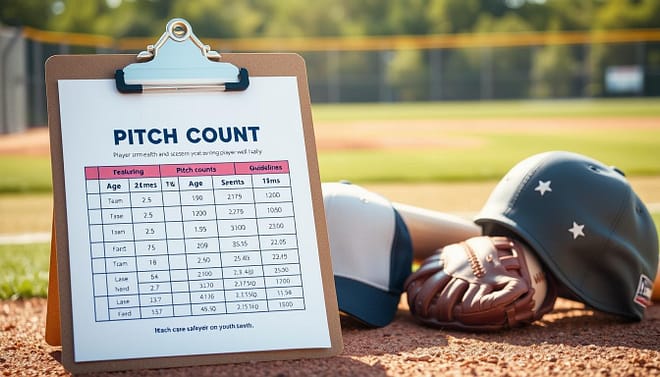
Rest days are just as critical as pitch counts. After pitching, players need set days off to recover. This helps muscles and ligaments heal fully.
Rest makes the body stronger. We never skip these recovery periods, even in big tournaments. A rested pitcher is safer and more effective.
For athletes on multiple teams, we have clear rules. Parents and players must tell all coaches about their schedule. This helps prevent overuse and keeps total weekly pitch counts in check.
Our multi-team policy is for total player protection. It prevents a young arm from being used too much across different leagues. We put the child’s well-being first.
Introducing off-speed pitches is a big step for young pitchers. Our guidelines are age-specific to ensure safety.
- Ages 7-10: Focus on basic mechanics and fastball control only.
- Ages 11-13: May begin learning a change-up with coach approval.
- Ages 14+: Can start incorporating breaking balls, but with strict monitoring of volume and technique.
Rushing a curveball can harm more than help. We build strength and proper form first. This step-by-step approach builds a durable, resilient arm.
Our arm health program is a partnership with parents and players. By following these pitch counts, rest days, and guidelines, we build a culture of safety. Our goal is a lifelong love for baseball, played with a healthy, strong arm.
Concussion Awareness: signs, remove‑from‑play, medical clearance steps
Our concussion awareness program focuses on three main areas. We teach players to recognize signs, act quickly, and follow a strict medical clearance process. This concussion protocol is all about protecting players’ health for the long term.
Preventing head injuries starts with safety measures. We enforce rules like proper helmet fit and no helmet use to touch bases. When a player gets hit, we’re all ready to act.
| Physical Signs | Cognitive Signs | Emotional Signs | Sleep-Related Signs |
|---|---|---|---|
| Headache or pressure | Confusion or fogginess | Irritability or sadness | Sleeping more or less |
| Dizziness or balance issues | Difficulty concentrating | Nervousness or anxiety | Trouble falling asleep |
| Nausea or vomiting | Memory problems | Unusual emotional reactions | Drowsiness |
If a player shows any of these signs, we have a strict rule: remove from play immediately. Our coaches are trained to be cautious. The player must not play again that day.
The medical clearance process is essential. A healthcare expert must check the athlete. Only they can say when it’s safe for the player to start playing again.
- Rest: Complete rest until symptoms lessen.
- Light Activity: Short walks or light cycling.
- Sport-Specific Exercise: Running drills without contact.
- Non-Contact Training: Full practice without risk of impact.
- Full Clearance: Return to normal play after medical approval.
This careful approach helps players recover safely. Our concussion protocol is a big part of our commitment to safety. You can find all our safety policies in our comprehensive league safety policies.
Facilities & Equipment Checks: nets, screens, L‑safety, helmets, AED locations
A safe game starts long before the first pitch. We check every piece of gear and facility corner. At Texas Stix, we care for our playing environments and equipment as much as our athletes. This ensures a secure physical foundation for every practice and game.
Our routine inspections are part of our daily operations. For example, during the mandatory pre-game conference, coaches check if all players are legally and properly equipped. This isn’t just a formality—it’s a critical safety step.
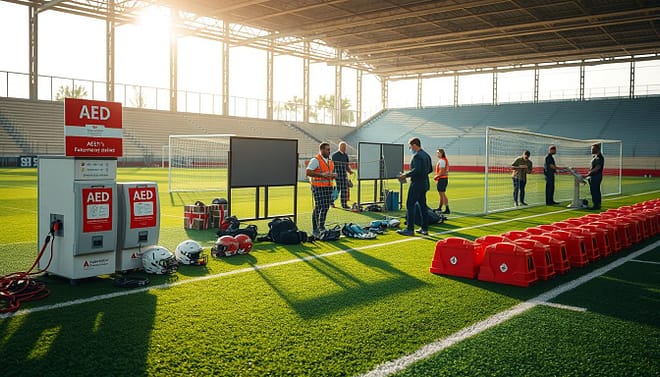
- Nets & Screens: We examine all safety nets and screens for tears, weak points, and proper placement. They must be securely anchored to provide a reliable barrier for players and spectators.
- L‑Safety (Field Layout): This refers to field dimensions and obstacle clearance. We regularly confirm base distances, pitching rubber placement, and the position of barriers and dugouts to meet official safety standards.
- Helmets: Every helmet is checked for condition, proper fit, and up‑to‑date certification. We enforce rules on proper wear to prevent avoidable injuries, making sure protection is optimal.
- AED Locations: Every facility has clearly marked AEDs (automated external defibrillators). We ensure these lifesaving devices are accessible, maintained, and that staff know their exact locations for immediate emergency response.
These checks are not one‑time events. They are recurring rituals performed by our dedicated staff. We believe that consistent attention to detail prevents accidents.
Knowing where the AEDs are located provides peace of mind for everyone. We train our coaches on emergency protocols so they can act swiftly and confidently if needed.
By maintaining this rigorous standard, we create an environment where families can focus on the joy of the game. Our commitment to facility and equipment safety means you can trust that we’ve done our homework, so your player can just play.
Family Role: forms, meds list, allergy notes, when to alert coaches
At Texas Stix, we all work together for youth safety. Your help is key to our protective system.
Fill out all forms carefully. We need your current emergency contacts and health history. A list of medications and allergy notes help our coaches act fast and right.
We check this information before games. It’s like checking equipment. This makes sure everyone knows the same important details for safety.
Keep talking to your coach about any health issues. Even small changes matter for your athlete’s safety.
This open talk between families and staff builds trust. It lets every player feel safe and confident, knowing we all care about their well-being.