The 2026 youth baseball season has arrived, and the tech landscape just underwent its biggest shake-up since the shift from Bes-7 to BBCOR. If you’ve spent any time at the cages lately, you’ve seen them: bats with digital brains. But here is the bottom line: if that sensor isn’t secured by the new mandatory “Permanent Locking Mechanism” (PLM), your kid is walking back to the dugout on an equipment violation before the first pitch is even thrown. We are seeing a total pivot from external “add-on” sensors to integrated systems that are actually part of the bat’s DNA.
You want your player to have the data-driven edge that defines modern “Moneyball” development, but you can’t risk a $500 investment becoming an illegal paperweight. The problem is that most parents are still trying to zip-tie sensors to knobs or use rubber sleeves that the new 2026 rules have flat-out banned for safety. We’ve put together this guide to help you distinguish between a legal piece of digital timber and a high-tech liability, ensuring your athlete stays compliant while hunting for those exit velocity gains.
The 2026 Tech Shift: The Death of the Add-On
The era of the “removable” sensor is effectively over in competitive play. For years, we lived in a Wild West where players slid a rubber attachment over the knob of their bat to house a Blast Motion or Diamond Kinetics sensor. It worked for practice, but governing bodies finally pulled the plug because those sensors had a nasty habit of becoming projectiles during a high-velocity swing.
In 2026, the rules have shifted toward total integration. Leagues now demand that any electronic device must be “embedded” or “permanently locked” into the bat. This means the bat manufacturers and the sensor companies had to get in the same room and design equipment from the ground up. You are no longer buying a bat and an accessory; you are buying a unified piece of sports tech. This shift isn’t just about safety, though that’s the official reason—it’s about data integrity. When the sensor is part of the bat, the swing metrics are more precise because there is zero “sensor lag” or movement within a flimsy rubber sleeve.
Understanding “Locking Mechanisms” and PLM Specs
What exactly makes a bat “Smart-Legal” this year? It comes down to the Permanent Locking Mechanism (PLM). Think of this like the deadbolt on your front door—it’s not considered secure if it can just be wiggled out by hand during a game.
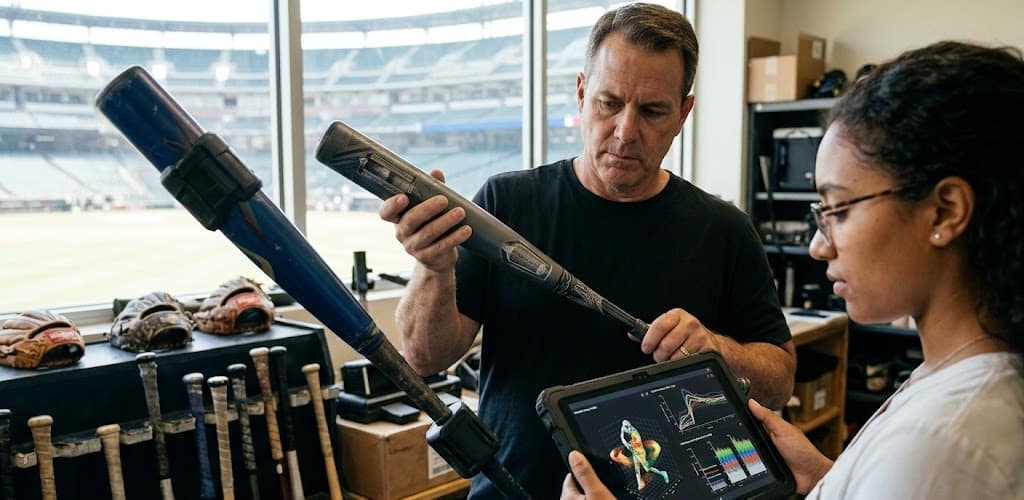
Manufacturers are achieving this in two primary ways:
- Internal Cavities: The sensor sits inside a precision-milled pocket within the knob, held in place by a threaded, heavy-duty cap that requires a specific tool to open. These safety standards ensure the bat remains compliant with the USA Baseball Bat Standard (USABat), which requires the sensor to remain housed even during a catastrophic bat failure
- Factory Sealing: Some “Smart” bats come with the sensor pre-installed and non-removable, meaning the battery charges through the knob via an induction pad or a weather-sealed port.
If you can pull the sensor off with your thumb, it’s illegal for 2026 game play. The new safety standards require the sensor to remain housed even during a catastrophic bat failure (like a cracked barrel). When you’re at the store, don’t just look for a “Smart” sticker; check the knob. If it doesn’t have a flush-mount locking system or a reinforced threaded cap, put it back on the rack.
Smart vs. Standard: The Comparison
Blast Motion vs. Diamond Kinetics: The 2026 Battle
If you’re going digital, you’re likely choosing between these two titans. Both have spent the last eighteen months partnering with major bat brands like Easton, Rawlings, and DeMarini to ensure their sensors fit the new 2026 cavities perfectly.
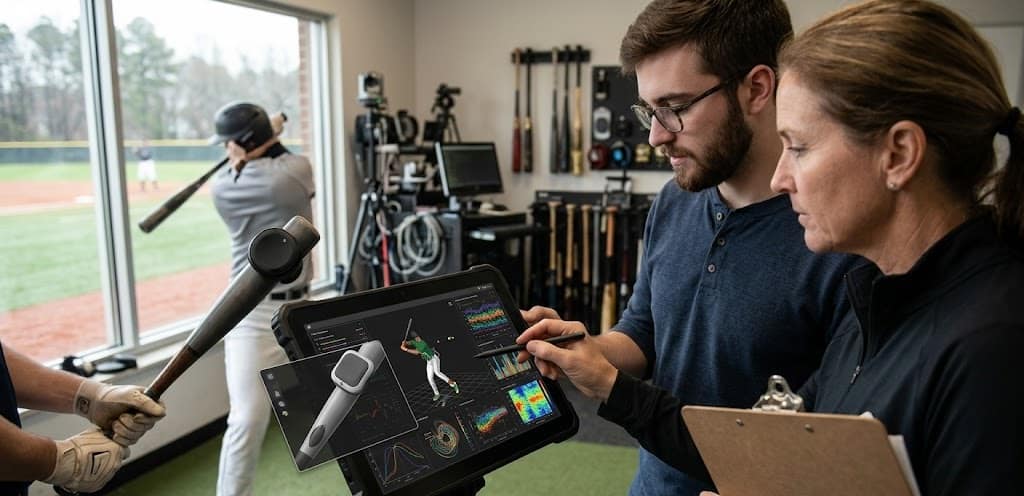
Blast Motion remains the king of “Swing Quality.” Their 2026 interface is incredibly slick, focusing on Plane, Connection, and Rotation. If your player is struggling with a “long” swing or casting their hands, Blast is the diagnostic tool you want. It’s like having a hitting coach in your pocket that never gets tired of looking at video.
Diamond Kinetics, on the other hand, has leaned heavily into the “gamification” of hitting. Their 2026 update includes virtual stadiums and challenges that make boring tee work feel like a Home Run Derby. For a 12U player who needs a little extra motivation to get their swings in, Diamond Kinetics is the clear winner. From a technical standpoint, their new sensors have improved “impact detection,” which helps filter out practice swings from real hacks more accurately than previous generations. This is a primary example of how we use swing analysis technology for youth players to bridge the gap between traditional practice and elite-level results.”
The Compliance Checklist: Don’t Get Burned
Before you swipe that credit card, run through this 5-point checklist. I’ve seen parents drop a fortune on last year’s “Smart” model only to have an umpire toss it in the first inning.
- Look for the 2026 Certification Mark: Check the barrel and the knob for a specific “PLM Compliant” stamp.
- Test the “Thumb Wiggle”: If the sensor housing moves at all when pressed, it’s a failure waiting to happen.
- Verify App Compatibility: Ensure the embedded sensor is the latest generation; older sensors may not fit the new 2026 threaded cavities.
- Check the Weight Drop: Remember that adding a sensor and a locking cap adds a tiny bit of weight—make sure the bat’s “swing weight” still feels right for your player.
- Confirm “In-Game” Approval: Just because it’s a USA or BBCOR bat doesn’t mean your specific tournament allows sensors; always double-check the tournament director’s supplemental rules. Standards can vary by age group and bracket, so always double-check the latest Texas youth baseball tournament regulations or consult your tournament director’s supplemental rules before taking the field.
The Bottom Line
Is a 2026 Smart Bat worth the premium? If you are a family that lives by the “Moneyball” creed—that you can’t improve what you don’t measure—then yes, it’s a vital tool. The ability to see exactly where a swing breaks down in the middle of a game is an incredible advantage. However, if you aren’t going to actually log into the app and analyze the Plane and Connection scores, you’re just buying an overpriced alloy stick.
Hunt for the tech that fits your player’s goals. If they are serious about high school or college ball, start tracking the data now. Just make sure that sensor is locked down tight so the only thing flying off your bat is the ball.
FAQs
Are external sensor sleeves still legal for 2026 practice?
Yes, you can still use the old rubber attachments during cage work or private lessons. However, they are strictly prohibited in sanctioned game play for most major youth organizations this year.
Do Smart Bats require a subscription?
While the hardware tracks the data, both Blast Motion and Diamond Kinetics typically require a monthly or annual subscription to access advanced “Premium” metrics and long-term trend analysis.
Can I move my 2026 sensor between two different “Smart” bats?
Generally, yes, as long as both bats use the same brand’s locking mechanism. For example, a Blast-compatible Easton and a Blast-compatible Rawlings will usually allow you to swap the internal sensor using the provided key.
Will using a Smart Bat void my warranty?
Not if you use the official sensor and locking mechanism. However, trying to “mod” a standard bat to hold a sensor will definitely kill your warranty and make the bat illegal for play.