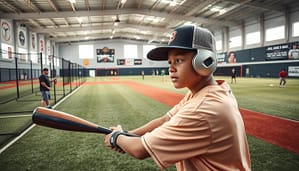
The modern scouting landscape has shifted from evaluating superficial raw power to prioritizing pure barrel accuracy. Major League Baseball front offices and elite collegiate programs no longer validate prospects based entirely on isolated, wind-aided exit velocity readings.
Instead, the premium is placed on an athlete’s ability to consistently replicate precise barrel delivery against elite velocity and elite spin. No player in the amateur ranks exemplifies this analytical evolution more clearly than UCLA shortstop Roch Cholowsky.
As the 2026 amateur draft cycle reaches its peak, Cholowsky has solidified his position at the absolute top of professional scouting boards. His offensive trajectory provides a masterclass for high school players aiming to transition away from erratic amateur swings and toward a sustainable, professional approach at the plate.
The Analytical Profile of an Elite Collegiate Hitter
To understand the value of a professional approach, developing athletes must examine the hard data behind Cholowsky’s collegiate career. Standing 6-foot-2 and weighing 202 pounds, the right-handed hitting shortstop has combined high-end athletic leverage with historic statistical efficiency.
After displaying foundational promise as a freshman in 2024 with a .308 batting average, Cholowsky completely transformed his profile during his historic 2025 sophomore campaign. He anchored the Bruins’ offense by posting a staggering 1.190 OPS, blasting 23 home runs, and driving in 74 runs over 66 games.
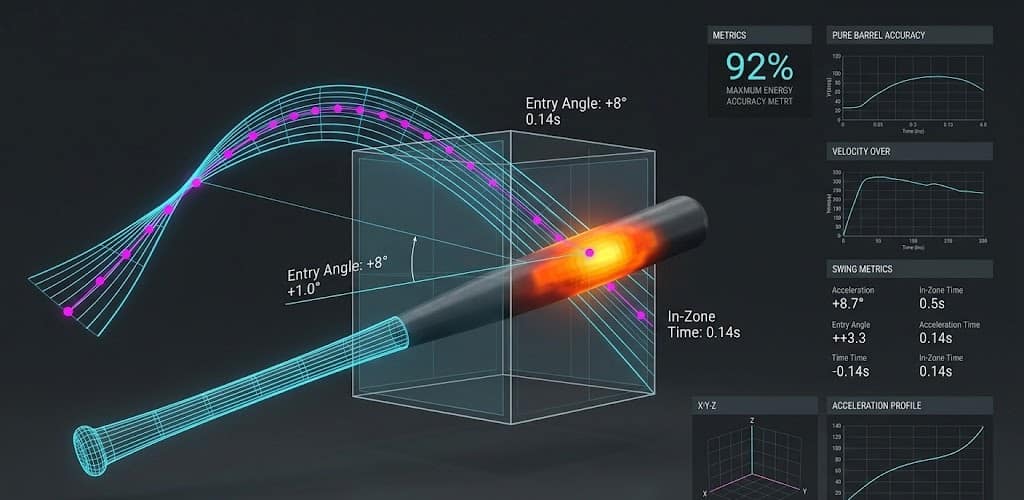
This monumental surge in game power was not a product of increased aggression or selling out for launch angle. His underlying data revealed an elite 90% in-zone contact rate paired with a walk percentage that consistently outpaced his strikeout rate.
+--------+---------+--------+--------+--------+---------+
| Season | Program | AVG    | OBP    | SLG    | OPS     |
+--------+---------+--------+--------+--------+---------+
| 2024   | UCLA    | .308   | .399   | .500   | .899    |
| 2025   | UCLA    | .353   | .480   | .710   | 1.190   |
| 2026   | UCLA    | .320   | .452   | .636   | 1.088   |
+--------+---------+--------+--------+--------+---------+
During his June 2026 campaign, which culminated in him being named a finalist for the prestigious Golden Spikes Award, Cholowsky maintained these elite contact metrics. Despite facing hyper-targeted pitching strategies designed to exploit any structural weakness, he hit .320 while launching 21 home runs.
For young players executing their development within elite amateur programs, this multi-year statistical consistency represents the gold standard. It demonstrates that true offensive dominance is built on structural discipline and barrel control rather than volatile hot streaks.
The Biomechanical Foundation of Barrel Accuracy
Achieving elite barrel accuracy requires a swing architecture that eliminates unnecessary movement. Cholowsky’s setup in the batter’s box is distinctly minimalist, serving as an exceptional visual model for developing high school hitters.
He utilizes a quiet, balanced stance with a smooth, rhythmic load that syncs seamlessly with the pitcher’s release point. A defining characteristic of his pre-swing movement is a controlled barrel tip that optimizes his path through the hitting zone.
This biomechanical trigger allows his hands to remain highly connected to his core, preventing the casting motion that ruins so many amateur swings. By keeping his hand path incredibly tight to his body, Cholowsky creates a short, efficient entry into the zone and a long, extension-driven exit.
+---------------------------+-----------------------+-----------------------+
| Mechanical Metric         | Amateur Standard      | Cholowsky Standard    |
+---------------------------+-----------------------+-----------------------+
| In-Zone Contact Rate      | 72% - 76%             | 90.0%                 |
| Average Exit Velocity     | 84 - 88 MPH           | 91.5 MPH              |
| 90th Percentile Exit Velo | 94 - 98 MPH           | 106.5 MPH             |
| Max Batted Ball Velocity  | 102 - 105 MPH         | 110.0+ MPH            |
+---------------------------+-----------------------+-----------------------+
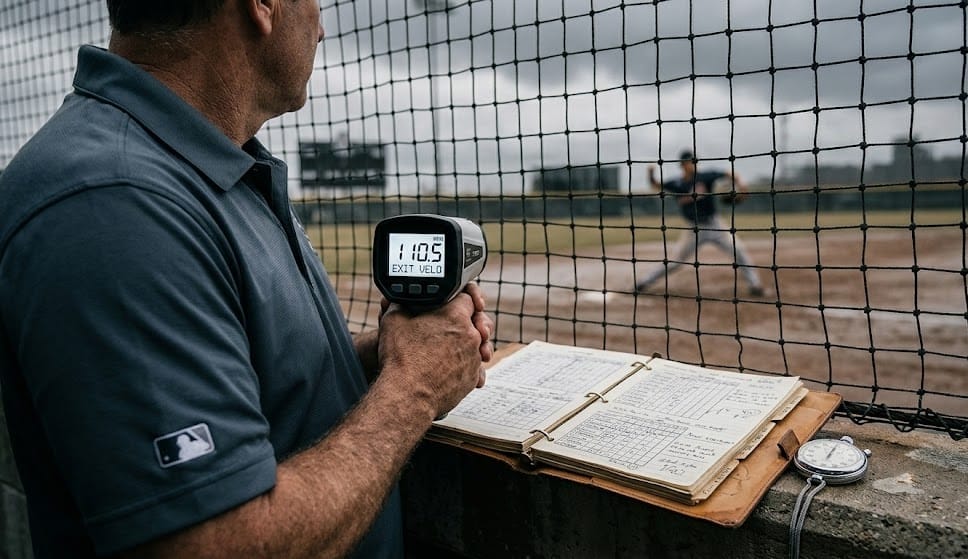
The physical metrics compiled across his collegiate career illustrate the immense explosive impact generated by this clean mechanical pathway. According to verified player data, Cholowsky produces an average exit velocity of 91.5 mph, with a 90th percentile velocity reading sitting at a blazing 106.5 mph.
Furthermore, his peak batted-ball events routinely surpass the 110 mph threshold, proving that his compact swing lacks no raw power. High school athletes must understand that generating this level of force does not require over-swinging or collapsing the backside.
When your swing path is perfectly sequenced, your body naturally maximizes ground-force efficiency and bat-speed acceleration. This structural optimization ensures that your barrel remains in the hitting zone long enough to handle late, dynamic movement.
Developing an Elite Internal Clock and Pitch Recognition
Pure barrel accuracy is entirely useless if a hitter cannot accurately process incoming pitch trajectories. Cholowsky’s exceptional strike-zone awareness is deeply rooted in his unique athletic background and elite sports lineage.
As the son of Dan Cholowsky, a former minor league infielder and a highly respected long-time scout for the Cincinnati Reds, Roch grew up immersed in the hyper-analytical world of professional player evaluation. This environment allowed him to develop an advanced internal clock that governs his spatial recognition at the plate.
Additionally, his background as a highly recruited, three-star high school quarterback at Hamilton High School in Arizona sharpened his peripheral vision and situational awareness under extreme pressure. This dual-sport development directly translates into his composure when stepping into a collegiate batter’s box.
Evaluating his performance against elite velocity reveals that against pitches tracked at 92 mph or higher, Cholowsky produced a stellar .341 batting average and a .537 slugging percentage. He does not guess on specific locations; instead, he relies on elite pitch recognition to track the ball deeper into the hitting zone than the average amateur player.
This split-second delay allows his brain to process spin axes, pick up slider rotation early, and make immediate, micro-adjustments to his hand path. High school hitters must actively train this cognitive skill by facing live pitching variations rather than relying solely on static batting cage sessions.
When you learn to slow the game down mentally, you stop chasing marginal pitches out of the strike zone and force pitchers to come to you. This mental shift is what transforms a highly volatile high school hitter into a high-value draft prospect.
Mechanical Adaptations for Handling Professional Pitching
Surviving the transition from high school baseball to the collegiate or professional levels requires a complete overhaul of how a player attacks elite pitching. Amateur hitters frequently get away with excessive barrel drag or long, sweeping actions because they are facing sub-90 mph fastballs with minimal movement.
Once a prospect enters an environment where everyday starters feature mid-90s fastballs paired with high-spin sweepers, those long swings are instantly exposed. Cholowsky’s technical blueprint shows how a hitter can shrink their swing radius without sacrificing their natural power output.
His approach relies on an intentional focus on pulling the ball in the air with true backspin, a metric that directly correlates with professional home run production. He maps out his hitting zone based on his personal data sheets, hunting pitches that enter his optimal primary launch angle corridors.
- Maintain strict structural integrity with your front hip during the stride phase to prevent premature leaking of rotational power.
- Keep the head completely quiet through contact to allow your visual tracking system to accurately calculate late vertical drop.
By implementing these specific protocols, Cholowsky has completely neutralized the effectiveness of elite velocity on the inner half of the plate. He constructs his game plan around protecting his strengths while systematically forcing the opposing pitcher to throw multiple strikes in a single plate appearance.
Developing athletes can implement these exact adaptations by utilizing advanced training tools like high-speed cameras and real-time ball flight monitors during their daily cage routines. The goal must always be to produce a repeatable, accurate barrel path that leaves zero margin for error.
Navigating the Competitive Draft Window
The validation of Cholowsky’s professional approach is vividly reflected in his standing within the current 2026 Major League Baseball Draft rankings. He enters the final stretch of the amateur scouting calendar locked in an intense battle with elite Texas prep shortstop Grady Emerson for the No. 1 overall pick.
This competitive dynamic underscores the immense premium that major league organizations place on finding a true, five-tool shortstop who possesses an advanced, analytical mind at the plate. While UCLA’s team campaign suffered an unexpected regional exit against Saint Mary’s in early June 2026, scouts refused to downgrade Cholowsky’s individual draft projection.
His individual performance remained completely insulated from team variance because his professional habits, defensive runs saved, and exit velocity floors are entirely verified. This separation between individual execution and external team outcomes is a critical lesson for young players navigating the modern recruiting landscape.
Professional front offices evaluate prospects through isolated data points and long-term physical projection rather than short-term tournament results. When a player possesses a plus arm, buttery smooth actions on the infield dirt, and a 90% in-zone contact rate, their draft value remains incredibly stable.
Cholowsky’s journey proves that committing to a high-level developmental process yields massive dividends when the professional evaluation windows finally open. High school athletes must stop chasing empty weekend statistics and instead focus on building a physical and analytical profile that can withstand the scrutiny of Major League Baseball front offices.
Implementing the Pro Model into Daily Training
Transitioning to a professional approach requires an athlete to completely redefine their daily relationship with failure. Baseball is inherently a sport of micro-adjustments, where the elite performers are distinguished by their ability to flush negative outcomes and execute the next pitch plan.
Roch Cholowsky’s collegiate development at UCLA provides the exact structural roadmap required to achieve this elite level of athletic maturity. High school prospects must actively step away from the traditional, unmonitored batting practice sessions that promote lazy mechanics and false confidence.
Instead, every single swing taken in a training environment must be recorded, measured, and analyzed against verified collegiate and professional baselines. You must learn to hunt specific velocity bands, intentionally train against high-spin metrics, and master the psychological art of count leverage.
To maximize your developmental trajectory, you must pair these physical mechanical adjustments with a sophisticated understanding of modern athletic compliance guidelines. Navigating the modern recruiting and draft landscape requires players to maintain an immaculate standard of physical durability and technical precision.
By taking complete ownership of your data tracking, studying the movement patterns of elite draft prospects, and committing to an authoritative, process-driven training routine, you position yourself to excel under the brightest lights. The road to the professional ranks is exclusively reserved for those who treat their daily development like a professional operation long before the first draft selection is made.
The sophisticated training philosophies and mechanical benchmarks demonstrated by elite draft prospects emphasize the critical need for technical precision at the plate. To see these advanced hitting concepts applied directly to real-world training environments, analyzing these high-level hitting mechanics and professional approach drills provides essential visual instruction for athletes dedicated to mastering pure barrel accuracy.