Scrap Yard End of Summer Tournament travel tips start with a simple idea: reduce avoidable stress so the player can compete, recover, and enjoy the weekend. The event is scheduled for July 25–26, 2026, at the Scrap Yard Sports Complex in Conroe, Texas, according to the tournament listing from BaseballConnected.
For Texas baseball families, a two-day tournament can feel easy on paper and still become hard if the details are left until the last week. Lodging, food, schedules, equipment, younger siblings, and player rest all compete for attention. Parents do not need a perfect plan. They need a workable one that can adjust without turning every small change into a family crisis.
This is especially true late in the summer, when many players are carrying a full season of innings, swings, workouts, and travel. The goal is not to overmanage the weekend. The goal is to make the off-field pieces predictable enough that your player can focus on warmups, team responsibilities, and recovery between games.
Start With The Confirmed Tournament Details
Date, Venue, And First Questions
The confirmed planning anchors are the dates, July 25–26, 2026, and the site, Scrap Yard Sports Complex in Conroe. Those two facts should drive the first round of family decisions: where to stay, how early to arrive, how meals will work, and what time the player needs to be available for team activities.
Before booking anything, ask the coach or team contact how the team expects to handle arrival times, pregame meetings, uniform needs, and postgame responsibilities. Some teams want players on site well before first pitch. Others may set a team meeting time after the bracket or pool schedule is released. If the full game schedule is not final yet, build your travel plan around flexibility rather than a single ideal timeline.
Build A Simple Family Command Center
Put the key details in one place. That can be a shared phone note, a printed folder, or a cloud document. Include hotel information, the venue name, coach contact details, player uniform needs, medical contacts, and any team messages. A single location for information saves time when plans shift or a parent is helping from another car.
Families with multiple children should add sibling plans to the same file. That may include snacks, entertainment, rest breaks, and who is responsible for each child during warmups or between games. The baseball player is not the only person affected by a long tournament day.
Control Lodging, Meals, And Hidden Costs
Book Earlier Than You Think
Hotel planning is one of the biggest pressure points for traveling baseball families. Travel cost advice for youth sports notes that hotels near sports complexes often raise prices during tournament weekends and that booking early can help with rates and availability youth sports travel costs. For this event, families should compare the value of being closer to the complex against the cost of a longer drive.
Do not judge lodging by price alone. A slightly cheaper room may cost more in time, fuel, and fatigue if it creates a long drive before an early report time. A room with a kitchenette or refrigerator can also reduce food costs if the family plans ahead. Parents should check cancellation terms, because tournament schedules can shift and family needs may change.
Make Food Part Of The Plan
Eating out for every meal is convenient, but it can drain a weekend budget fast. Families can reduce that pressure by planning a grocery stop, packing breakfast items, and keeping player-friendly snacks available. This matters most between games, when the player may need food quickly but not a heavy meal.
Think in categories: breakfast, between-game fuel, postgame meal, and family snacks. The player’s food should be familiar, not experimental. Tournament weekends are not the best time to test new energy drinks, unfamiliar supplements, or heavy meals that could sit poorly. Younger siblings also need a plan, because hungry siblings often create stress right when the player needs calm.
Pack For Long Tournament Days
Player Bag Versus Family Bag
One common mistake is treating the player’s baseball bag as the family supply closet. Keep those jobs separate. The player bag should be about baseball readiness. The family bag should handle comfort, food, schedule papers, chargers, and sibling needs. That separation helps the athlete find gear quickly and keeps parents from digging through cleats, gloves, and uniforms when they need sunscreen, water, or a phone cable.
- Player bag: uniforms, belt, socks, glove, batting gloves, helmet if assigned, cleats, turf shoes if used, water, and any team-required items.
- Family bag: snacks, refillable water bottles, portable chargers, simple first-aid items, wipes, towels, a small trash bag, and activities for younger siblings.
- Vehicle backup: extra clothes, extra socks, a cooler if allowed by family preference, and a spare copy of key schedule information.
Parents should also check equipment before leaving home. A missing belt or pair of socks is not a development issue, but it can create needless stress. The player should be part of that check. Ownership matters. Even young athletes can learn to confirm their own gear the night before travel.
Younger Siblings Need A Plan Too
Younger siblings can have a good weekend if parents treat their needs as part of the plan rather than an afterthought. Tournament days can be long, and younger children may need shade, breaks, food, quiet time, or a simple activity. If two adults are traveling, decide ahead of time who handles sibling breaks and who stays near the field when the player is active.
This protects the baseball player as well. Players notice family tension. A calm sibling plan helps reduce sideline stress and keeps the athlete from feeling responsible for everyone else’s mood.
Keep The Schedule Flexible Without Losing Structure
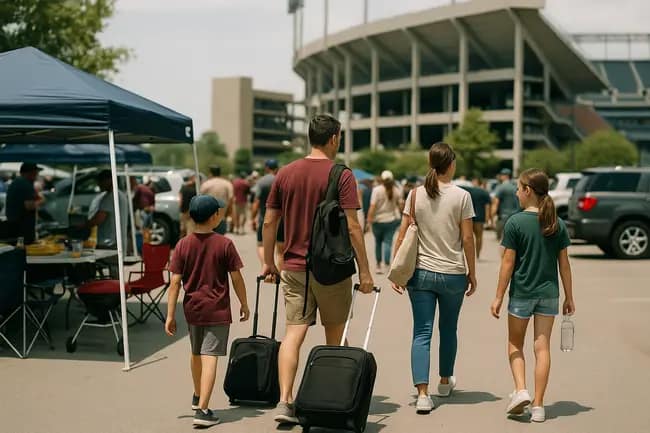
Set Check-In Points
Schedules can change during tournament weekends. Weather, field timing, prior games, and bracket movement can all affect the day. Parents cannot control those moving pieces, but they can control how often they check for updates and how they communicate with the family.
Set specific check-in points: before leaving the hotel, after arriving at the complex, after each game, and before leaving the venue. One parent can monitor team messages while the other manages food, siblings, or equipment. If one adult is traveling alone with multiple children, the shared document becomes even more useful.
Protect Sleep And Recovery
Rest is not a luxury during a tournament. It is part of player preparation. Late meals, long drives, and too much downtime entertainment can leave an athlete flat the next morning. Families should protect the night before the first game and avoid turning the tournament into a packed vacation schedule.
That does not mean the trip has to be joyless. A short family activity can be a good reset if the schedule allows. The key is timing. If the player has an early report time or multiple games in one day, recovery should win. A tired player may press, lose focus, or struggle to stay emotionally steady after mistakes.
Scrap Yard End Of Summer Tournament Travel Tips For Families
The best Scrap Yard End of Summer Tournament travel tips are not complicated. Book lodging early, make food decisions before the weekend, keep schedules in one place, pack for long days, and protect the player’s rest. Those steps do not guarantee wins, and they should not be sold that way. They simply give a young athlete a better environment for competing with focus.
For families traveling to Conroe, the event can be more than a set of games. It can be a useful checkpoint in a player’s development: how he prepares, how he handles schedule changes, how he responds between games, and how well he takes care of his body during travel. Parents set the tone by staying organized without becoming tense.
A practical plan leaves room for baseball to happen. There will still be delays, forgotten items, tired siblings, and hard innings. That is tournament baseball. The family that prepares for those ordinary problems is usually better able to support the player through them.