Sample Day at RoughRiders Academy
At RoughRiders Academy, every day is a chance for young athletes to grow and develop their skills. Let’s take a closer look at what a typical day at our youth sports camp looks like.
8:00 AM – Arrival and Morning Warm-Up
Our day starts with a warm-up session to get the athletes ready for the activities ahead. This is a great time for them to stretch, move around, and get their energy levels up.
9:00 AM – Skill Development Sessions
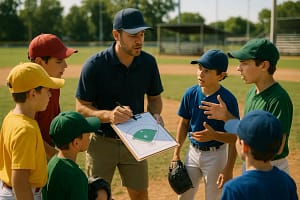
Next, we dive into skill development sessions. These sessions are designed to help athletes improve their technique and mastery of specific skills. Whether it’s baseball, softball, or another sport, our experienced coaches provide personalized guidance and feedback to help each athlete reach their full potentials.
12:00 PM – Lunch Break
After a morning of intense training, it’s time for a well-deserved lunch break. Our athletes enjoy a nutritious meal that fuels their bodies for the rest of the day. This break also gives them a chance to relax, recharge, and refocus.
1:00 PM – Team Building Activities
Team building activities are an essential part of our youth sports camp. These activities help athletes develop important skills such as communication, teamwork, and problem-solving. Through fun and engaging exercises, they learn to work together, support each other, and build strong relationships with their teammates.
3:00 PM – Wrap-Up and Departure
As the day comes to a close, we wrap up with a final session to summarize the key takeaways and accomplishments. Our athletes reflect on their progress, receive encouragement, and look forward to the next day’s adventures.
At RoughRiders Academy, we believe in creating a supportive and inclusive environment where young athletes can thrive. Our sample day showcases the variety of activities, skill development, and team building that make our youth sports camp a unique and enriching experience.
| Time | Activity |
|---|---|
| 8:00 AM | Arrival and Morning Warm-Up |
| 9:00 AM | Skill Development Sessions |
| 12:00 PM | Lunch Break |
| 1:00 PM | Team Building Activities |
| 3:00 PM | Wrap-Up and Departure |
Welcome & Warm-Up Rituals
The start of our RoughRiders Academy isn’t about doing push-ups. It’s about setting the day’s emotional tone. We’ve learned what really works for both bodies and minds. Traditional dynamic stretching has its place, but we focus on social bonding first.
Imagine this: instead of saying “run a lap,” we do the “Name & Pitch” circle. Each kid shares their name and favorite ice cream flavor, then mimics scooping it. Mint chocolate chip gets a big wind-up, while vanilla is a straightforward fastball.
This ritual is inspired by Phantom Ranch. It creates a sense of belonging before any athletic demands. Kids feel seen and valued, which helps them engage more as athletes. It’s not just team-building; it’s a strategic team introduction with a purpose.
We’re starting two systems at once: social identity and physical readiness. Forget static stretching that treats bodies like machines. Our approach is dynamic, engaging muscles, minds, and social connections.
The camp schedule starts with these playful moments. But it’s not just play. We’re setting the day’s psychological framework. When a kid says “Rocky Road” with a curveball, they’re claiming their space in the group.
These early focus exercises set the tone for the day. They influence how kids show up for the next three hours. Will they be open or guarded? Competitive or collaborative? The circle decides.
Starting with dynamic stretching misses the human touch. Yes, we’ll do lunges and arm circles. But first, we value who you are as much as what you can do. It’s the difference between a group and a team.
This approach changes the camp schedule into a story. The warm-up is Chapter One: Establishing Character. The ice cream flavors become conversation starters later. It creates a flow that stretching alone can’t.
Our focus exercises in these moments are fun but engaging. No one fails at sharing their favorite flavor. Everyone succeeds at being themselves. From this safety, we can build athletic risk-taking.
We also tell the kids: “This isn’t just fun—it’s how champions start their day.” We connect the social team introduction to the physical demands ahead. The circle ritual is the psychological start to our camp schedule.
Hitting Station Circuit (tees, soft toss, targets)
Our three-station hitting circuit is a game-changer for young hitters. It’s not just batting practice. It’s a way to build a swing that thinks for itself.
Learning to hit is like learning a new language. You start with the basics, then move on to more complex skills. Our circuit helps hitters learn in a similar way.
The circuit is like a summer camp schedule. It’s fun but also teaches important skills. From the tee to the target, hitters learn to react naturally during games.
| Station | Core Purpose | Mental Focus | Progression Phase |
|---|---|---|---|
| Tee Work | Decoding swing mechanics in isolation | Body awareness & muscle memory | Foundation (Grammar) |
| Soft Toss | Introducing timing and trajectory | Hand-eye coordination & rhythm | Conversation (Dialogue) |
| Target Practice | Applying mechanics to specific outcomes | Decision-making & accuracy | Application (Poetry) |
The tee station is where hitters learn the basics of their swing. They focus on stance, grip, and follow-through. It’s a place to perfect form.
Muscle memory is built in quiet moments before it’s tested in action. The tee station helps hitters learn their body’s geometry without a moving ball.
Soft toss is the next step. It introduces timing and rhythm. The hitter learns to anticipate and react to the ball.
This station is where theory meets practice. Hitters learn to “listen” to the pitch and “respond” with their swing.
The target station is the final test. Hitters aim for specific areas, like line drives or ground balls. It’s where they turn batting practice into real goals.
This station requires quick decisions. Hitters learn to use their swing for strategy. It’s about painting with their bat, not just swinging.
Together, these stations create a mental circuit. Hitters learn form, timing, and intention. By the time they face live pitching, they’re ready.
Hitters who go through this circuit own their swings. They’re not copying others. They’re creating their own unique style.
Parents see the magic in this circuit. Every hit builds confidence for real games. The swing becomes the hitter’s own.
Fielding Fundamentals (grounders, backhand, fly balls)
At our fielding station, we focus on defense like music critics do with music. Every movement is like a melody, harmony, and rhythm. It’s not just glove work; it’s understanding the story of the ball.
Think of a grounder as a math problem in dirt. You need to figure out where to catch it based on its speed and angle. It’s not just about quick hands. It’s about understanding the ball’s story.
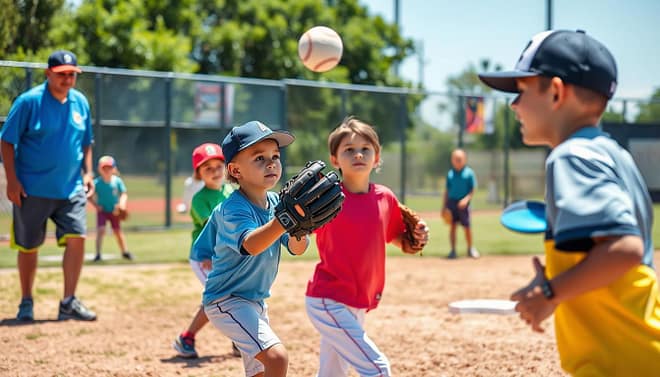
The backhand play is like a clever answer. You need to move your body in a special way while keeping your mind sharp. We break it down step by step, like analyzing a movie scene.
Fly balls are all about following the ball’s path in the sky. Our outfield drills focus on your eyes and feet first. It’s like playing in a band, where footwork is the melody, glove position is harmony, and timing is the rhythm.
| Skill Type | Mental Framework | Physical Focus | Common Error |
|---|---|---|---|
| Grounders | Geometry problem solving | Low center of gravity, soft hands | Rising up too early |
| Backhand | Contortionist grace under pressure | Lateral movement, glove extension | Crossing feet instead of shuffling |
| Fly Balls | Parabolic tracking with environmental factors | Drop-step timing, route efficiency | Turning head too late on deep balls |
Each skill station focuses on one part of defense. For infield practice, we use colored cones to teach kids to catch the ball. The backhand station teaches kids how to move their body to catch the ball.
Fly ball outfield drills use tools to track the sun and wind. We teach kids to think about the weather and the ball’s path. It’s not just about catching the ball; it’s about understanding the game.
The result is players who don’t just react. They think and plan. They turn chaos into smart plays. Great fielding is not just about good hands. It’s about a sharp mind.
Baserunning Challenges (leads, turns, sliding mats)
Sliding mats are more than just for avoiding tags. They teach young athletes to fully commit, even with dirt-stained consequences. This is where speed and agility learn to solve baseball problems.
The lead off a base is a tense negotiation. It’s a mix of psychological warfare and geometry. We use cones to teach risk assessment, showing the importance of a good base path strategy.
Then, there’s the turn. Watching a kid pivot around first base is like watching a dancer. We run “turn-around-first” competitions to teach momentum conservation. It’s about finding the quickest route to second, not just being fast.
The slide is the main event. Our sliding mats become targets, teaching the right sliding technique. We focus on knee tuck, hand placement, and body angle. Each slide has its own strategic purpose.
We call these baseball games for kids, but they’re really diagnostics. A relay down the lines shows teamwork. A “steal the base” challenge reveals who can read a pitcher. The sliding mat “bullseye” contest tests precision.
What we get isn’t just better runners. It’s smarter players. Kids learn that baserunning is a puzzle. They learn when to use speed and agility and when to slow down.
The bonding happens in the shared challenge. High-fives after a successful steal and groans when someone misses the target. These baseball games for kids create communities of competitors learning the same lessons.
By the end, that tentative lead becomes confident. The awkward turn becomes smooth. And the fear of the slide turns into joy of a perfect sliding technique. They haven’t just run bases. They’ve learned to navigate them.
Pitching & Throwing Mechanics (Age-Safe Progressions)
The pitching station is where romance meets reality. We break down baseball’s most mythologized motion with scientific care. It’s like analyzing a movie for the human body’s throwing mechanics.
We’re not coaching cannon fodder for travel ball. We’re building a relationship with kinetic energy. This needs a trauma-informed approach to arm care.
Age-safe progressions are not suggestions. They are non-negotiable commandments. Our philosophy is simple: a throw is a kinetic chain, a whip, not a shove.
We start with vocabulary before velocity. Young players learn their body’s language first. They learn what proper hip-shoulder separation feels like and how energy transfers from the ground up.
Our throwing program uses lightweight balls for a reason. Heavy baseballs teach compensation, not mechanics. Light tools reveal flaws in the kinetic chain like a diagnostic scan.
Footwork comes before arm action. Always. If the foundation is wrong, the structure will collapse. We focus more on balance and stride than on arm angles.
This is the TBRI of sports coaching. Trust-Based Relational Intervention applied to movement. We build security in mechanics so confidence can follow naturally.
At our skill stations, you’ll see:
- Target practice with foam balls focusing on follow-through
- Mirror work for body awareness and alignment checks
- Partner drills stressing rhythm over raw power
- Video analysis breaking down the kinetic chain frame by frame
The goal isn’t to create pitching prodigies at eight years old. It’s to prevent the athletic equivalent of a bad metaphor: overused and painful. Proper youth pitching mechanics are an insurance policy against future injury.
We teach players to listen to their bodies. Does that shoulder feel tight? Is the elbow dragging behind? These are early warning systems we help them decode.
The most dangerous myth in youth pitching? “No pain, no gain.” We replace it with “No mechanics, no future.” Our skill stations are clinics in body literacy.
Parents sometimes ask about velocity charts. We show them mechanics checklists instead. Is the front side closed? Is the back leg driving? Is the release point consistent?
This throwing program builds athletes who understand their instruments. Your child’s arm isn’t a weapon. It’s a finely tuned system of levers and pulleys. We teach them to maintain it with the care of a master violinist.
The result? Players who throw with intelligence, not just force. They develop what coaches call “easy velocity” – power that comes from efficiency, not strain. That’s sustainable arm care in action.
Our pitching station isn’t about creating highlights for YouTube. It’s about building foundations that last decades. Because the best throw isn’t the hardest one. It’s the one you can make ten years from now.
Confidence Games (knockout, relay races, accuracy comps)
Welcome to the pressure cooker—the part of camp where smiles mask the subtle assessment of character. We’ve built the foundation. Now we test it under the glorious, chaotic weight of pure play. These aren’t just baseball games for kids. They’re social experiments in cleats.
Think of it as the diamond’s version of Phantom Ranch’s exclusive activities. The joy is genuine. The competition is fierce but friendly. Yet from my perch, I’m watching subtext. Who thrives when eyes are on them? Who supports a teammate’s error? These games are stealth assessments, revealing more in ten minutes than a week of drills.
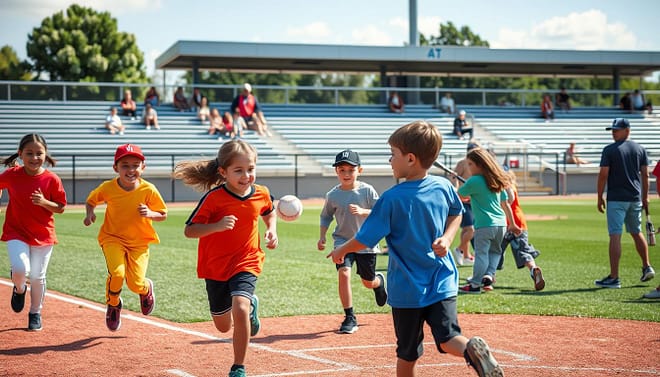
First up: Knockout. It’s a simple shooting game borrowed from the court, adapted for the field. Two players, one target. Make your throw before the person behind you does. The simplicity is deceptive. This is a focus under pressure masterclass. The mind wants to rush. The body tenses. I watch for the child who takes a breath, finds their rhythm, and executes despite the ticking clock. That’s a kid who won’t choke with bases loaded.
Then, the relay races. Ah, the beautiful chaos of coordinated movement. This is where team building activities become visceral. It’s not about abstract “cooperation.” It’s about the seamless handoff, the shouted encouragement, the collective sprint toward a shared finish line. You see natural leaders emerge. You see quiet supporters find their voice. The transition from individual to unit happens right before your eyes.
Lastly, accuracy competitions. Hitting targets. Throwing to specific bases. Placing a bunt. This is precision with stakes. The crowd (their peers) watches. The score matters. Here, we see who ties their self-worth to the result and who separates performance from identity. A missed target is data, not destiny. We celebrate the attempt as much as the bullseye.
The genius of these friendly competition formats? They teach resilience through joy. Losing a relay race stings for a moment, then you’re high-fiving the winning team. Missing the target in accuracy comps gets a groan, then immediate support. Kids learn to win with grace and lose without their world collapsing. That’s life, packaged as play.
| Game | Primary Skill Tested | Social-Emotional Lesson | The Observer’s Insight |
|---|---|---|---|
| Knockout | Execution under time pressure | Managing anxiety, maintaining rhythm | Reveals mental fortitude and focus under pressure |
| Relay Races | Team coordination & transition | Collective success over individual glory | Shows natural leadership and supportive communication |
| Accuracy Competitions | Precision with consequence | Separating performance from self-worth | Identifies resilience and growth mindset |
These concepts aren’t unique to baseball. The same principles of joyful competition apply across sports. For a fantastic resource on turning drills into engaging team building activities, check out this guide on 60 Fun Basketball Drills and Games. The philosophy translates: play builds character.
So we laugh, we cheer, we compete. But beneath the surface, a transformation occurs. The child who shied from the spotlight takes their turn in knockout. The solo player becomes a relay anchor. The perfectionist learns to shrug off a miss. This is where confidence is forged—not through empty praise, but through tested capability. The games end. The lessons, though, are just getting started.
Team Play & Mini-Scrimmages with Teaching Moments
Our mini-scrimmage is like a dynamic classroom where mistakes teach us. Drills like hitting and fielding come together in a live game simulation. It’s when individual skills turn into team smarts.
We make a big difference by stopping the game often. A missed cut-off at second base? That’s a chance to learn. A runner unsure at first and second? We pause the game for a lesson.
Our staff, like Phantom Ranch Cabin Leaders, explain the “why” behind the “what.” They use “active listening” to guide in-game coaching. This way, every play is a puzzle to solve together, not just a command.
Our camp focuses on sportsmanship and teamwork. The score is less important than understanding the game. A successful live game simulation is about shared “aha!” moments.
It’s not just about winning. It’s about seeing how skills come together. This is where the RoughRiders’ goal of fun through teamwork shines. The joy is in solving the puzzle together, seeing the light in a kid’s eyes.
Teamwork and spatial awareness are key in sports. The skills learned in baseball games for kids help in other sports too. It’s about reading the field and making smart decisions under pressure.
Our mini-scrimmages show that sportsmanship is more than shaking hands. It’s about improving teammates through communication and smart play. It’s the highest respect in baseball games for kids: understanding the game together.
Hydration, Shade, and Snack Breaks
Summer camp is like a big show, and taking breaks is a smart move. We don’t stop just because it’s hot. We do it because our camp schedule says so, just like a coach plans the game.
Drinking water is a must, not just a good idea. We treat each sip like a win against tiredness. It’s all about staying safe in the heat.
Shade is our meeting place. Under the trees, we share stories and jokes. This free time helps us bond faster than any drill.
Snack time is like a science experiment, but fun. We’re not just giving out snacks. We’re making sure everyone has the right amount of energy.
Let’s look at what makes downtime effective:
- The Hydration Protocol: Drink water before you’re thirsty. Add electrolytes after you’ve been active. We teach kids to listen to their bodies.
- The Shade Strategy: We have cool spots with good air flow. It’s not just comfy. It’s a safety must.
- The Fuel Timing: Snacks are given at the right times to keep energy up, not crash it.
The snack table is like a small market. It teaches kids about sharing and working together. A popsicle can change a bad mood faster than words.
These breaks are like the blank spaces in a painting. They let our bodies and minds learn and relax. They help us forget about mistakes and bad throws.
We plan these breaks carefully, just like drills. Why? Because a tired or hungry camper can’t learn. They’re too busy being tired or hungry.
Think of it as taking care of your car. It needs fuel and cooling. Your mind needs quiet and friends. Our breaks give you both, so you’re ready to go again.
These breaks are not lost time. They’re time well spent. They turn athlete nutrition into a habit. They make heat safety second nature. And they’re where we really grow.
Reflection Huddle & Player of the Day
Forget the box score. Our most important metric is gathered in a post-game circle we call the Reflection Huddle. This isn’t an afterthought; it’s the final edit on the day’s story. Inspired by traditional camps, we’ve made it a sports psychology ritual. We’re looking for the day’s best lessons.
The goal is simple yet profound: turn physical tiredness into mental and emotional success. It’s where the daily recap goes beyond what we did to how we felt and what we learned. This practice helps kids see that progress, not perfection, is the real win.
We go around the circle. The prompts are designed to get real insights, not just nice answers:
- “What’s one thing you did today that felt impossible yesterday?”
- “Where did you help a teammate, or where did a teammate help you?”
- “What’s a mistake you made that actually taught you something?”
This structured reflection turns random events into a story of personal growth. It gives closure to the camp schedule, making sure everyone leaves with more than just sore muscles.
Then, we crown the Player of the Day. This is our lesson in positive reinforcement. The award doesn’t go to the kid with the hardest hit or the fastest pitch. It often goes to the most improved, the quiet kid who cheered loudly, or the one who helped a teammate after an error.
By celebrating effort, attitude, and courage over natural talent, we redefine success. This final ritual lets each camper leave with a personal trophy—a story of growth they created. It’s the perfect, meaningful end to our day, showing the most valuable stat is the feeling you take home.
Take-Home Drills & Parent Conversation Prompts
We don’t just send a kid home. We send a small, enthusiastic analyst with new data and a mission. The real skill reinforcement starts when the cleats come off. Our camp schedule is a launchpad, not a containment field.
Think of your living room as the secondary training facility. We aim for seamless practice at home that feels like play, not homework.
Here’s the two-part playbook for turning your house into an extension of RoughRiders Academy. It’s about tools and talk.
| Take-Home Drill (The Tool) | Equipment Needed | Skill Reinforced | Parent Prompt (The Talk) |
|---|---|---|---|
| Wall Ball Reaction | A tennis ball, a flat wall. | Quick hands, tracking, throwing accuracy. | “What was the hardest angle the ball took off the wall today? How did you adjust?” |
| Towel Swing Mechanics | A hand towel (seriously). | Full rotation, hip drive, swing path. | “Show me the ‘whoosh’ sound of your perfect swing. What did your coach say makes that sound happen?” |
| Footwork Patterns | Tape or socks on the floor. | Agility, grounder approach, balance. | “When you moved through those patterns, did you feel more like a dancer or a shortstop? What’s the difference?” |
| Shadow Pitching | A mirror. | Arm slot, balance, follow-through. | “I saw you checking your form. What one thing were you focusing on keeping consistent?” |
See the shift? The right column is where true parent engagement ignites. We’re upgrading you from spectator to co-analyst.
Forget “Did you win?” That’s a dead-end query. Our prompts are open-source intelligence gathering. They ask about process, struggle, and observation.
“Did you help a teammate figure something out?” This isn’t about altruism. It’s a leadership diagnostic. Explaining a skill cements it in their own mind.
This transforms the post-game debrief. You’re not grilling for stats. You’re conducting a Socratic dialogue on footwork and philosophy. The car ride home becomes the most important film session.
This practice at home ethos bridges the gap perfectly. The towel swings maintain muscle memory. The conversations build mental acuity. Together, they extend the energy of our camp schedule into your daily routine.
The goal is lifelong learning, not just a good season. By providing these simple tools and smarter questions, we equip your family to keep the game alive. The field is just the classroom. Your home is the lab.
Photo Moments & Community Highlights
The mud-streaked grin after a slide into home. The quiet high-five from a coach after a great catch. These aren’t just summer snapshots. They’re evidence of transformation at our baseball games for kids.
In our age of curated digital lives, these authentic moments become the real social media highlights parents cherish. They’re the shareable proof of a community built on dirt and genuine laughter.
We design these photo ops intentionally. The team photos at RoughRiders Academy aren’t stiff poses. They’re captured eruptions of joy between drills. They’re the punctuation marks in a day of learning.
These pixels hold the camp memories that outlast the season. Years from now, that image of a group hug after a win will trigger nostalgia. It’s the tangible artifact of belonging.
Our community events create the same shareable currency. The friendships they will cherish forever crystallize in these frames. These camp memories become social media highlights that tell a true story.
Your camera roll becomes a documentary of growth. Each team photo tells how fun drills transform into passion. This is where the game becomes part of their story. The final picture is just the beginning.