Summer Slam lessons give young players a practical way to understand competition beyond the final score. For Texas baseball families, a summer tournament weekend should not be judged only by trophies, pool records, or one hot bat. The better question is whether the player learned how to compete, reset, prepare, communicate, and handle the pressure that comes with a structured youth baseball event.
The research available for Summer Slam-branded events supports a clear point: these tournaments often use age divisions, game guarantees, awards, and competitive placement to create a real test for young teams. That does not mean every event is identical, and families should always verify the exact venue, rules, schedule, and division level before committing. The phrase Legacy Park can refer to different facilities, so the safest development approach is to study the tournament format first, then decide how it fits the player.
For coaches in Texas, the value is not copying another state’s event. The value is using the same tournament structure to teach standards. A team that knows how to prepare for three games, manage emotions after a loss, respect balanced divisions, and stay engaged through a long weekend is building habits that carry into league play, school baseball, showcases, and future travel schedules.
Summer Slam Lessons In Tournament Structure
Why Summer Slam Lessons Start With The Schedule
Competitive spirit grows when players understand that a tournament is a full weekend assignment, not a single game. The MWTF Summer Slam in Tiffin, Ohio is listed by Five Tool Youth as a C-Level event scheduled for June 12-14, 2026, with a three-game guarantee at P.M. Gillmor Community Park and surrounding facilities if needed Five Tool event listing. That type of format matters because players cannot depend on one inning or one matchup to define their weekend.
A three-game guarantee gives coaches room to evaluate response patterns. Does the pitcher adjust after a tough first inning? Does the catcher keep leading if the lineup falls behind? Does the bottom half of the order stay locked in after early strikeouts? Those questions are more useful than a simple win-loss summary.
For Texas teams traveling across the state during hot months, schedule habits become part of development. Players need to learn hydration routines, between-game recovery, pregame throwing limits, meal timing, and how to stay mentally ready when game times shift. None of that requires hype. It requires coaches and parents to treat the weekend as a training environment with real consequences.
Age Divisions And Competitive Fit
The 12th Annual Cinnaminson Summer Slam in New Jersey lists youth divisions from 7U through 12U, giving younger players an age-based setting for competition Cinnaminson tournament page. The same listing also reflects attention to competitive placement through permission requirements tied to team fit. For player development, that detail matters. Young athletes need challenge, but they also need a level where the game still teaches baseball skills rather than only survival.
Balanced competition does not guarantee equal outcomes. It gives players a fair setting to learn. A 9U player who faces a comparable opponent can work on strike-zone control, base-running decisions, and defensive communication. If the division is poorly matched, the learning can shrink into frustration for one side and false confidence for the other.
Texas coaches can use competitive Summer Slam habits as a planning lens before registering. Ask whether the division matches the roster’s current stage. Ask whether the team needs a stretch weekend or a confidence-building weekend. Both can be valid, but they serve different development goals.
Turning Pressure Into Player Growth
Resilience Is Built Between Games
One of the most useful Summer Slam lessons is that competitive spirit shows up after something goes wrong. A young player can look confident during warmups and still struggle when an umpire’s zone feels tight, a teammate makes an error, or a lineup spot produces a tough matchup. Tournament baseball exposes those moments quickly because the next game may arrive the same day.
Coaches should use that gap between games with purpose. A short review can help players separate controllable actions from emotional reactions. Instead of asking, “Why did we lose?” a coach can ask, “Did we throw first-pitch strikes?” “Did our outfield communicate?” “Did we run the bases with awareness?” Those questions move the player back toward behavior.
Parents have a role here as well. The car ride after a game can either reinforce learning or add pressure. A player who hears only about strikeouts, errors, and missed chances may become more guarded. A player who is asked what adjustment he will try next has a better chance to build ownership.
Recognition Should Support Standards
The Five Tool listing for the MWTF Summer Slam notes awards such as rings for first-place teams and customized medals for second-place teams. Awards can motivate young players, but they should not replace the deeper standard. A ring is a memory. The habits that helped earn it are the real developmental asset.
For a Texas youth program, recognition works best when it is tied to team values. Coaches can praise the player who backed up bases all weekend, the pitcher who competed in the zone, the catcher who handled multiple arms, or the bench player who stayed ready. That keeps achievement connected to behavior rather than only outcome.
This is where Summer Slam lessons can help families avoid short-term thinking. A player may not collect an award and still leave the weekend better. He may have learned how to play through heat, adjust to a faster pitcher, lead from the dugout, or prepare for a second game after a poor first result.
What Texas Coaches Can Apply From Summer Events
Build A Pre-Tournament Development Plan
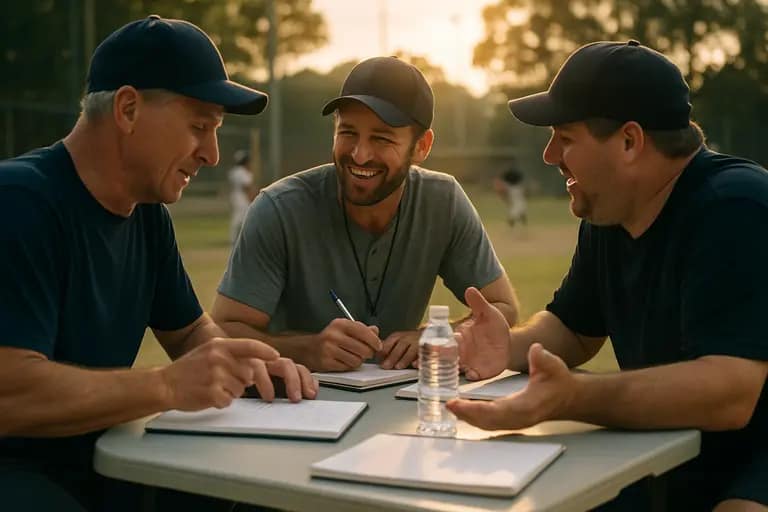
A tournament should fit into a training cycle. Before the weekend, coaches can set two or three measurable team goals that match the roster’s age and skill stage. For a younger team, that may mean clean catch-play, correct cutoff usage, and aggressive but smart base running. For older youth teams, it may mean quality at-bats, pitcher command, and defensive execution with runners in scoring position.
Those goals should be simple enough for players to remember under pressure. If the staff gives too many messages, the weekend becomes noise. If the staff gives clear standards, players can compete with direction.
- Set one offensive goal, such as swinging at better pitches or advancing runners with intent.
- Set one defensive goal, such as clean communication on balls in the air.
- Set one mental goal, such as responding to mistakes with the next playable action.
Families evaluating tournament-heavy schedules should also consider the individual player. Not every athlete develops at the same pace or needs the same number of events. A useful resource on individual development in youth events can help parents think beyond the team calendar and look at confidence, skill growth, and long-term retention.
Use The Weekend As An Evaluation Window
Summer Slam lessons are strongest when coaches record what actually happened. That does not require advanced technology. A simple staff chart can track first-pitch strikes, free bases allowed, quality at-bats, catcher blocks, missed signs, or base-running mistakes. The goal is not to shame players. The goal is to identify the next practice priorities.
After the event, the best programs avoid emotional overreaction. One tournament should not define a player’s ceiling. It can reveal current habits. A player who chases high fastballs may need vision and approach work. A fielder who rushes throws may need footwork and tempo reps. A pitcher who loses command after an error may need routines for breathing, focal points, and mound presence.
For Texas teams trying to build a stronger youth pipeline, this is where tournament play connects to weekday training. The weekend creates stress. Practice turns that stress into instruction. Without the practice follow-up, the lessons fade.
How Summer Slam Lessons Shape Texas Players
The most useful Summer Slam lessons for young players are not complicated. Compete in a fair division. Prepare for multiple games. Respect the schedule. Learn from pressure. Treat awards as a result of standards, not the only reason to play. Those ideas fit Texas youth baseball because the state already asks families to manage travel, weather, roster depth, and a crowded tournament calendar.
For players, the message is direct: competitive spirit is a trained behavior. It is shown in how a hitter returns to the box after a bad call, how an infielder wants the next ground ball after an error, how a pitcher attacks the zone after traffic builds, and how teammates stay engaged when they are not in the lineup.
For parents and coaches, the responsibility is to frame the weekend correctly. A Summer Slam-style event can be a valuable test, but only if adults use it to teach. The scoreboard matters because competition matters. The deeper value is whether the player leaves with clearer habits, stronger emotional control, and a better understanding of what serious baseball asks of him.