Texas Baseball Tryouts are not just a one-day skills check. For young athletes and families, they are a first look at how a program teaches, communicates and builds teams. A player may be asked to run, throw, field, hit and respond to coaching in a short window, but the bigger evaluation often centers on readiness: Can the athlete compete with effort, handle instruction and fit the program’s age group and schedule?
Texas families should approach tryouts with a development-first mindset. Select baseball can offer stronger competition, more structured practice and exposure to different coaching environments, but it also requires time, travel and honest self-assessment. The right tryout is not always the one with the loudest marketing. It is the one that matches the player’s current skill level, maturity and family commitment.
How Texas Baseball Tryouts Are Usually Structured
Tryout formats vary by organization, field space, age group and season. Some clubs post specific tryout windows, while others ask families to register and attend an assigned session. For one recent cycle, the Tomball Kings listed open Spring 2026 baseball tryouts every Friday through Feb. 28, 2026 and asked players to register in advance through the Tomball Kings tryout page. That kind of posted schedule gives families a clear planning point, but players should still confirm details before showing up because tryout times, field locations and roster needs can change.
Registration And Age Group Fit
Registration matters because coaches need to know who is attending, what age division the player fits and how to communicate updates. Families should be ready to provide the athlete’s name, date of birth, primary positions, baseball background and parent contact information. If a player is between age groups or has played multiple positions, families should be direct rather than trying to force a fit that is not accurate.
Age divisions can cover a wide range. The Texas Bulldogs state that their select youth baseball programs serve players from 8U to 16U on the Texas Bulldogs program page. That range shows why families should look closely at the specific division, not just the club name. An 8U tryout should not feel the same as a 16U tryout. Younger players are often judged more on basic movement, attention and teachability, while older players may face more demanding defensive actions, swing evaluation and game-situation work.
What To Bring Before First Pitch
Players should arrive early enough to check in, put on cleats, stretch and get comfortable with the field. A glove, bat, helmet, baseball pants, cleats, turf shoes if needed, water and any required catcher’s gear should be packed the night before. Pitchers should not assume they will throw a full bullpen unless the club has stated that in advance. Catchers should be ready for receiving, blocking and throwing work if the session includes it.
Parents can help by staying organized without coaching from the sideline. A tryout is a chance for the player to show independence. Coaches can learn a lot from how an athlete warms up, listens, handles a mistake and moves to the next station.
What Coaches Can Evaluate Without Making Rankings
At well-run Texas Baseball Tryouts, the goal is not to crown a player after one round of batting practice. Coaches are trying to decide whether the athlete can help a roster and keep developing inside that program. That requires skill evaluation, but it also requires attention to habits.
Texas Baseball Tryouts Skills Stations
Common stations may include throwing accuracy, infield or outfield defense, catching, hitting, baserunning and controlled competitive reps. A younger infielder might be asked to field routine ground balls and make firm throws across the diamond. An older player may be asked to show footwork, exchange speed, arm strength and decision-making under more pace. Hitters may take tee work, front toss, coach pitch or live looks depending on age and setting.
Baseball IQ can show up in small moments. Does the player know where to throw the ball? Does he back up a base? Does he understand how to run through first, take a proper turn or communicate on a fly ball? These details do not require a perfect athlete. They show whether the player has been taught and whether he is ready to learn more.
Coachability And Team Fit
Coachability is not a slogan. It is visible behavior. A player who makes an error, receives a correction and improves the next rep gives coaches useful information. A player who pouts, argues or shuts down also gives coaches information. Texas select baseball rosters often need players who can handle role changes, tournament pressure and practice demands without losing focus.
Families should avoid treating a tryout as a showcase ranking event. A player can perform well and still not match a team’s current roster needs. Another player may not be the loudest athlete on the field but may fit a developmental role because of effort, defensive value or positional need. Programs rarely have the same openings at every age level.
Family Commitments After A Roster Offer
A roster offer should start a serious family conversation. Before accepting, parents should ask about practice frequency, tournament expectations, coaching communication, player fees, uniforms, facility access, position plans and how missed events are handled. Those questions are not signs of distrust. They help prevent confusion once the season begins.
Practice schedules matter because development happens between tournament weekends. A team that trains consistently can build throwing routines, defensive communication, hitting plans and baserunning standards. Tournament play can test those skills, but games alone do not teach everything. Players need reps where mistakes can be corrected without the pressure of an immediate result.
Families should also ask how the program balances winning and instruction. Competitive baseball should still be age-appropriate. Younger players need chances to learn multiple positions and build confidence. Older players may need clearer role definition, stronger accountability and exposure to higher-level competition. Neither model works if the expectations are unclear.
Texas Heat, Travel And Tryout Day Logistics
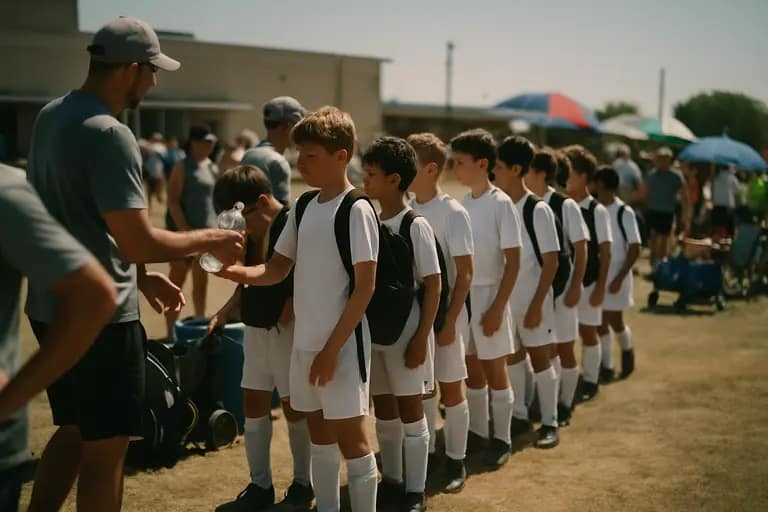
Outdoor baseball in Texas can place real stress on young athletes, especially during late summer tryout periods. Families should plan hydration, shade time and recovery before the session starts. Players should not wait until they feel tired to drink water. They should also eat in a way that supports activity rather than arriving underfueled.
Travel planning matters as well. A club across the metro area may look attractive, but weekly drives can affect school, rest and family routines. A strong program fit loses value if the schedule is not sustainable. Parents should map practice locations, tournament expectations and weekday traffic before committing.
How Players Should Handle Nerves
Nerves are normal. The best way to manage them is to control preparation. Players can build a simple pre-tryout routine: play catch with intent, take controlled swings, review defensive footwork and get comfortable competing in front of unfamiliar coaches. The athlete does not need to prove everything in one rep. He needs to show effort, attention and repeatable actions.
Body language matters after mistakes. Every tryout includes missed ground balls, weak contact and throws that sail. Coaches know youth players are still developing. The response after the mistake often says more than the mistake itself.
Why Texas Baseball Tryouts Matter For Development
The best Texas Baseball Tryouts give families more than a yes-or-no answer. They reveal whether a program’s standards match the player’s needs. A good fit should challenge the athlete without burying him, provide instruction without empty promises and communicate expectations clearly before fees and schedules are locked in.
Young players should leave a tryout knowing what they did well and what needs work, even if they do not make that roster. Throwing accuracy, swing decisions, defensive footwork, running effort and coachability can all be trained. For Texas baseball families, that is the real value of the process: finding the right environment for the next stage of growth.