Tomball’s 2026 baseball season gives Texas coaches a rare case study because it was dominant without being one-dimensional. The Cougars entered the UIL Class 6A Division II state championship game at Dell Diamond with a 42-1-1 record, then beat Houston Memorial 9-1 to finish 43-1-1 and secure the program’s second state title in three years. For Texas high school baseball programs trying to build more complete players, the headline is not only the record. It is how Tomball used two-way development, pitching command, lineup discipline, defensive stability, and postseason maturity to turn elite talent into repeatable winning baseball.
For texaselitebaseball.org readers, Tomball’s season matters because it gives coaches, players, and families a practical model. Two-way development is often discussed through the most talented player on a roster, but the better lesson is program-wide. A player who can pitch and hit must be trained carefully. A lineup with multiple usable arms must be organized with intent. A team with college-level talent still has to win innings through routine plays, strike-zone control, and the ability to adjust after failure.
Why Tomball’s Record Matters Beyond The Number
A 42-1-1 record entering a state final is eye-catching, but the developmental meaning sits beneath the win column. Baseball is a sport built to expose inconsistency. One bad inning, one missed cutoff, one walk-heavy start, or one flat offensive day can undo a long winning streak. Tomball’s ability to keep winning across a full spring schedule shows the value of a team culture that handles repetition.
That is why the Cougars’ run is more useful for coaches than a simple championship recap. A team does not reach 43 wins by relying only on one arm or one hot hitter. It needs layers. It needs starting pitching, bullpen options, a defense that turns ordinary plays into outs, hitters who understand situations, and role players who stay ready when the postseason narrows every decision.
UIL’s official tournament information placed Tomball against Houston Memorial in the 6A Division II final after the Cougars arrived at 42-1-1 and Memorial entered at 34-7. The matchup itself mattered because it put two Houston-area programs into a championship setting at Dell Diamond, where performance, preparation, and depth were all tested on a public stage through the UIL baseball state tournament.
For Texas coaches, the record becomes a teaching tool. Winning that consistently requires more than talent identification. It requires player maintenance, practice structure, staff communication, and a clear view of which skills transfer when the stage gets bigger.
How C.J. Sampson Showed The Value Of A True Two-Way Profile
C.J. Sampson became the clearest player-development lens for Tomball’s season. In the championship win, coverage of the final reported that Sampson, a Texas A&M signee, worked six innings, allowed seven hits, struck out eight, walked none, and went 2-for-3 at the plate with an intentional walk. That is the type of two-way performance coaches can use to explain the difference between having tools and carrying responsibility.
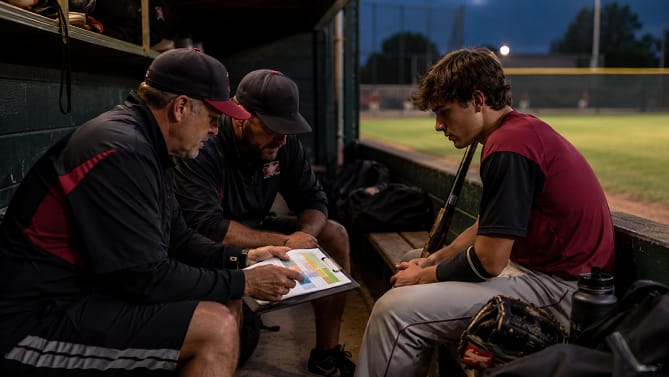
A two-way player is not simply a hitter who also pitches. At a championship level, the role demands physical preparation, workload awareness, emotional control, and the ability to separate at-bats from mound work. A bad swing cannot carry into the next inning. A stressful inning cannot damage the next plate appearance. Coaches have to train that separation with purpose.
Sampson’s championship line matters because it showed command and offensive presence in the same game. The strikeout total drew attention, but the no-walk detail may be more useful for development. At the highest level of Texas high school baseball, free bases can change a game faster than raw velocity can save one. Sampson’s ability to attack the zone while still contributing offensively gives coaches a clean example of what two-way readiness looks like.
That model connects naturally with broader Texas baseball development because players who want the next step must learn to carry skill into real competition, not only into showcases or practice sessions.
Why Two-Way Development Has To Be Managed, Not Celebrated Too Early
Two-way development can be powerful, but it can also be mishandled. Coaches should not treat every talented athlete as a two-way project just because the player is useful in multiple places. The role has to be earned and managed. A player needs movement quality, recovery habits, communication with coaches, and a clear understanding of how each role affects the other.
For pitchers who also hit, throwing volume and swing volume compete for time and recovery. A heavy mound workload can affect lower-body freshness at the plate. A long offensive day can affect arm-care timing. A player who is mentally invested in both roles needs routines that create order instead of stress.
Tomball’s example is useful because Sampson’s two-way role did not look improvised at the end of the year. It looked like part of a larger program plan. Coaches who want to build similar players should begin long before the playoffs. They need to know which athletes can handle dual responsibility, which players need position specialization, and which players are better served by developing one elite skill first.
| Development Area | What Tomball’s Model Shows | Coaching Application |
|---|---|---|
| Pitching Command | Championship pressure still starts with strikes | Track first-pitch strikes, walks, and recovery between innings |
| Offensive Role | Two-way players must still contribute within the lineup plan | Train approach, timing, and situational at-bats |
| Workload Management | Dual-role players need structured weekly planning | Coordinate bullpen volume, strength work, and recovery |
| Mental Separation | Pitching stress cannot ruin offensive performance | Build routines between innings and plate appearances |
| Team Depth | One star matters less without roster support | Develop secondary arms and role-player readiness |
The mistake is turning two-way development into a label. Tomball’s season shows why it should be treated as a structure.
How Tomball’s Program Depth Protected Its Stars
A two-way standout can define a season, but a state championship team still needs depth around him. Tomball’s 9-1 win over Memorial did not happen only because Sampson delivered. The Cougars scored early, kept pressure on the opponent, and played from a position of control. That matters because two-way stars are most effective when the rest of the roster prevents every game from becoming a one-player burden.
For coaches, this is one of the most important lessons. Player development is not only about producing the best athlete on the roster. It is about creating enough reliable players that the best athlete can stay within a sustainable role. If a pitcher has to be perfect because the offense cannot score, the development environment becomes fragile. If a hitter has to carry the lineup every week, swing decisions can become forced. If the defense gives away outs, every pitcher’s development gets distorted.
Tomball’s three-year run adds context. Houston Chronicle coverage described the Cougars as a program that had reached three consecutive state championship games, won titles in 2024 and 2026, and built a 119-10-2 record across those three seasons. That type of consistency points toward more than a single senior class. It points toward a program standard.
For Texas coaches, that is the more transferable piece. Every school will not have a C.J. Sampson. Every school can work toward deeper pitching plans, clearer player roles, better defensive standards, and a training environment that keeps development connected to winning baseball.
Why The Championship Game Was A Lesson In Strike-Zone Control
Tomball’s 9-1 win over Houston Memorial gave coaches a simple teaching point: strike-zone control travels. In championship settings, emotion can push hitters to chase and pitchers to overthrow. Teams that control the zone usually control the rhythm of the game.
Sampson’s no-walk pitching line is a strong example, but strike-zone control is not limited to the mound. Hitters have to identify which pitches they can drive, which pitches they can fight off, and which situations call for team-first contact. A championship lineup does not need every at-bat to become a highlight. It needs pressure, base runners, productive outs, and the patience to wait for mistakes.
This is where two-way development can influence an entire team. A player who understands pitching often becomes a smarter hitter because he sees how pitchers sequence, set up counts, and attack weaknesses. A hitter who competes in the box may understand how quickly momentum shifts when pitchers fall behind. Coaches can use that crossover as a teaching advantage.
USA Baseball’s development resources reinforce the broader idea that player growth should connect skill instruction, competition, and game awareness rather than separating tools from baseball decisions. Its athlete development programs offer a national reference point for how high-level baseball environments think about training, evaluation, and competition.
Tomball’s season gives that concept a Texas high school example. Skill mattered, but the skill was organized around baseball decisions.
What Texas Coaches Can Take From Doug Rush’s Program Model
Head coach Doug Rush’s Tomball program has become a useful reference point because the Cougars have shown staying power. A single great season can happen when a roster peaks. A multi-year championship window suggests a stronger foundation: player identification, development continuity, staff trust, and a clear standard that younger players inherit before they become starters.
For coaches, the question is not how to copy Tomball’s roster. The question is how to copy the logic. What does the program value every day? How are pitchers built? How are two-way players protected? How are younger players brought into varsity standards before they are asked to deliver varsity results?
A development-focused program needs honest internal evaluation. Some players should continue as two-way athletes. Some should narrow their role. Some need strength before exposure. Some need more defensive reps than showcase appearances. Some need to learn how to fail without dragging that failure into the next inning.
That is why a team like Tomball becomes useful beyond the Houston area. The program gives Texas coaches a real example of what happens when talent, structure, and competition meet. The Cougars did not just win a final. They showed what a high-functioning development environment can look like in the state’s largest classification.
Why Two-Way Players Need A Team-First Definition
Two-way development can easily become individual branding, especially for players with college interest. Tomball’s season offers a better frame. A two-way player should not be developed as a personal showcase project. He should be developed as a player who gives the team more ways to win.
That distinction matters for families. A player who pitches and hits has to accept that both roles serve the game plan. He might not hit in the spot he prefers. He might not throw on the day he wants. He might need to rest from one role to protect the other. He might need to work on defense, base running, and leadership as much as the two headline tools.
For coaches, the team-first definition creates clearer communication. The player knows why workload decisions are made. Parents understand that development includes restraint. The roster understands that one standout’s role does not erase everyone else’s contribution.
The NCAA’s official recruiting resources are useful here because they remind families that college baseball decisions happen inside a structured process involving eligibility, communication rules, academic fit, and evaluation windows. A strong two-way profile can help a player, but the NCAA recruiting process still requires planning beyond performance.
Tomball’s example should push Texas players toward that broader view. The goal is not to collect labels. The goal is to become a reliable baseball player whose skills hold up under higher-level demands.
How High School Players Can Apply Tomball’s Lessons
A high school player watching Tomball’s 2026 season should not reduce the lesson to “be like C.J. Sampson.” That is too narrow and not practical for most athletes. The better lesson is to study the habits behind the outcome.
A pitcher can start with command. Track walks, first-pitch strikes, and whether misses happen in competitive locations. A hitter can study decision quality. Track chase rate in games, two-strike contact, and whether swings match the count. A two-way player can track recovery. Note how the body responds after mound days, heavy lifting days, and tournament weekends. A defender can track routine-play consistency, because postseason baseball often turns on ordinary plays made under pressure.
Players should also study how Tomball handled winning. A 43-1-1 finish brings attention, but it also brings expectation. The ability to play clean baseball after becoming the team everyone wants to beat is part of development. Talent draws pressure. Preparation absorbs it.
Families can apply the lesson by choosing development environments that teach the whole game. Lessons, showcases, and travel baseball can all help, but only when they feed a larger plan. The best baseball path is the one that helps a player compete better in real games.
Why Tomball’s 2026 Season Should Shape Texas Player Development Conversations
Tomball’s 42-1-1 record entering the state final and 43-1-1 finish after the championship win should stay in Texas baseball conversations because the season offers a complete development lesson. It showed elite talent, but it also showed depth, structure, command, offensive discipline, coaching continuity, and a two-way player who performed when the title was on the line.
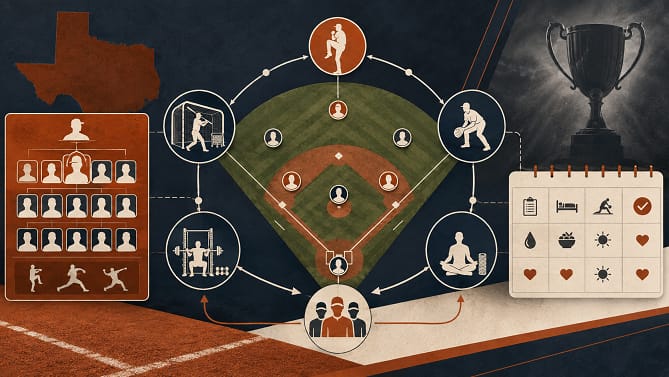
For Texas coaches, that is the real model. Build players who can do more than flash tools. Build routines that protect two-way athletes. Build lineups that support stars instead of depending on them for everything. Build defensive standards that give pitchers room to attack. Build a culture where players understand that individual development and team winning are connected.
For players, Tomball’s season is a reminder that the next level rewards repeatable baseball. One good bullpen, one loud swing, or one standout tournament can open attention. A full season of command, preparation, and role execution builds trust.
That is why Tomball’s 2026 run matters for texaselitebaseball.org readers. It gives Texas baseball a clear, current example of how two-way development can work when it is supported by a complete program.