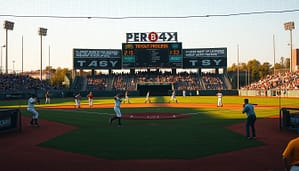
Summer Slam Lessons start with the setting: a youth baseball event at Legacy Park in Decatur, Texas, scheduled for July 11-12, 2026, with posted 11U and 13U divisions on the National Championship Sports listing official event page. For Texas families, that type of weekend is not just about chasing a trophy. It is a test of preparation, response, teamwork, and whether young players can carry training habits into structured competition.
The event details give coaches and parents enough structure to plan the baseball side and the family side. Registration fees are listed at $400 for 9U-12U teams and $425 for 13U-14U teams. The posted gate fee is $15 per individual daily. The listed game time limit for 9U-14U games is 1 hour and 30 minutes. Those facts matter because the clock changes how teams manage pace, pitching, substitutions, defensive focus, and late-game at-bats.
Event Structure And Player Growth
What Teams Can Verify Before Arrival
A tournament weekend becomes more productive when families know the details before they load the car. The Summer Slam listing states that schedule requests must be submitted through the NCS Schedule Request system by the Sunday prior to the event. That deadline can help coaches avoid last-minute confusion and keep families from guessing about travel, warmups, and arrival windows.
For youth players, clear scheduling is part of development. A player who knows when to report can learn how to prepare without being rushed. That includes eating early enough, packing both uniforms if needed, checking glove condition, bringing water, and understanding the first job of the day. Competitive spirit does not begin with the first pitch. It begins when a young athlete learns that being ready is a controllable skill.
Planning Around Time Limits And Pitching Rules
The posted 1 hour and 30 minute time limit creates a different competitive feel than an open-ended game. Coaches have to teach players how to value each inning, each out, and each baserunner. A missed cutoff, a delayed return throw, or a casual at-bat can carry more weight when the game is moving under a clock.
The event rules listed on the NCS site use outs instead of innings for pitching totals. That detail can push useful conversations inside a team. Pitchers can learn that efficiency matters. Catchers can learn to help the staff get ahead in counts. Infielders can understand why routine outs protect arms and keep the game moving. For families, the outs-based rule also gives a clearer way to track pitching use during the weekend.
How Summer Slam Lessons Build Competitive Spirit
Summer Slam Lessons For Pregame Routines
Pregame work at this level should have a purpose. Players in 11U and 13U divisions are still building physical coordination, emotional control, and baseball awareness. A quality routine gives them a repeatable path: light movement, arm care, catch play, ground balls or fly balls, situational reminders, and a clear first-inning mindset.
The strongest Summer Slam Lessons come when coaches connect that routine to game pressure. A player who rushes through catch play often brings the same pace into the first defensive inning. A hitter who does not track pitches before the game may need an at-bat or two to adjust. These are not character flaws. They are teachable habits, and tournament settings expose them faster than a short practice block.
Competing Without Chasing Weekend Hype
Texas youth baseball can create pressure quickly. Families travel, teams pay entry fees, and players know the weekend matters to their group. Still, a development-minded program should avoid judging a player only by one box score. A young hitter can go hitless and still show better swing decisions. A pitcher can give up runs and still show improved tempo, strike throwing, or mound composure.
This is where parents and coaches can keep the event useful. Competitive spirit should not mean emotional swings after every result. It should mean players stay engaged after an error, run hard after contact, support teammates, and show that they can play the next pitch. For more on keeping event performance tied to long-term growth, the same principle applies in individual development in youth baseball events.
Family Logistics At Legacy Park
Cooler Policy And Facility Expectations
The posted cooler policy allows outside food and drinks, while outside alcohol and portable grills are prohibited. Pets are not allowed at the facility. These details may look minor, but they affect game-day planning for families with younger siblings, grandparents, and players who need food and hydration between games.
Good family planning supports player performance. If a player has water, snacks, dry gear, and a place to reset between games, the player is more likely to stay focused. If families are surprised by facility rules or have to leave the park for basic needs, stress can bleed into the dugout. Tournament baseball asks young athletes to manage enough on the field. The adults can help by handling the known logistics early.
Schedule Requests And Weather Scenarios
The refund policy is also part of practical planning. The listing states that teams receive a full refund for withdrawing seven days prior to the event. If weather prevents all games from being played, the listed policy gives a full refund; if one game is played, it gives a half refund; if two games are played, no refund is listed. Those terms give coaches a clear framework for communicating with families before the weekend.
Weather uncertainty is part of tournament baseball in Texas. The development lesson is not only financial. Players need to learn how to handle delays, restarts, and changes in rhythm. A rain delay or schedule shift can test dugout maturity. The team that stays loose, listens, and resets quickly often gets more out of the day, regardless of the final score.
Turning Tournament Pressure Into Development

Coaches Can Grade Behaviors
Coaches can use an event like this to grade behaviors that do not always show up in the scorebook. Does the catcher manage pace? Does the shortstop communicate before the pitch? Does the outfielder back up bases without being reminded? Does the hitter understand the game situation with a runner on third and less than two outs?
Those checkpoints are useful for 11U and 13U players because they connect competitive baseball to baseball IQ. Teams do not need to invent fake rankings or make big claims after a weekend. They can identify two or three behaviors that improved and two or three that need more practice. That keeps the tournament tied to the next training block.
Players Can Own Their Adjustments
Young players benefit when they leave a tournament with specific takeaways. A pitcher might learn that falling behind in counts created longer innings. A hitter might realize that taking the first good fastball was a better plan than waiting for a perfect pitch. A baserunner might see that secondary leads helped create pressure even without stealing.
That type of review is more valuable than a generic talk about effort. A player needs language for what happened and what comes next. Families comparing future events can use the same development lens discussed in Texas baseball tournaments for player growth: schedule fit, coaching feedback, skill transfer, and whether the weekend supports the player’s current stage.
- Before the event, set two team goals tied to controllable baseball habits.
- During games, track communication, effort after mistakes, and strike-zone decisions.
- After the weekend, review one skill goal and one competitive behavior for each player.
Why Summer Slam Lessons Matter For Texas Youth Baseball
A Better Measure Of A Tournament Weekend
Summer Slam Lessons matter because events like the Legacy Park tournament give Texas players a structured place to test their habits. The posted format, fees, time limits, rules, refund terms, cooler policy, and facility expectations all create a real tournament environment. Within that environment, development comes from how players respond.
A good weekend is not only a clean bracket run. It is a weekend where young athletes learn to prepare on time, compete under a clock, respect pitching rules, handle facility standards, and stay connected to teammates. For Texas youth baseball families, that is the proper standard. The event can build competitive spirit when coaches teach from it, parents plan around it, and players leave with a clearer view of the next step.