Welcome to the great American pastime’s modern dilemma – choosing the right youth baseball path for your child. It’s like trying to find the best deal in baseball and making memories at the same time.
Families now do more research than Wall Street analysts. The world of youth baseball has changed a lot. It’s no longer just Little League.
Today, we face a world of travel teams, showcase tournaments, and programs that promise a lot. It’s not just about playing baseball. It’s about what kind of person your child will become.
Let’s figure out this decision together. Getting it right is more important than any batting average.
Evaluating Coaching Staff
Let’s talk about the clipboard crew – the coaching staff that can turn your baseball program selection into a home run or a strikeout. I’ve seen many coaching philosophies, and some are definitely worth canceling.
The best coaches are like master chefs. They know each player needs something different. Some need more heat, others need to simmer. The worst coaches serve the same dish to everyone.
Watch for red flags, like coaches talking more about trophies than technique. Or when their kid always plays shortstop – it’s time to leave. Parent-coaches can add more drama than a reality show reunion.
Good coaching focuses on growth, not just winning. They’re building future adults who handle failure, work as teams, and thank the umpire. The coach obsessed with winning? They’re preparing kids for D-Day when they just need little league.
Your baseball program selection depends on finding coaches who value the journey over the destination. Because let’s be real – those coach pants are questionable enough without bad philosophy.
Program Philosophy
Coaching staff is the heart of a youth baseball program. Philosophy is its soul. I’ve seen both, and the difference is clear.
Some programs focus on winning, treating it as a bonus. Others care more about player growth. The experience is like night and day.

Ask tough questions when you visit. How do they handle losing? What’s their policy on playing time?
Is there a clear code of conduct? Or is it more like a set of guidelines?
The mission statement is key. Is it about making college athletes or building community members? Some programs focus on winning, while others aim for character growth.
Look for these signs:
- Development milestones over win-loss records
- Clear playing time policies for all
- Long-term growth over short-term wins
- Values beyond the baseball field
The right philosophy turns baseball into a learning experience. It makes ballparks into classrooms for life lessons.
Age & Skill Levels
Youth baseball is about making kids happy and well-rounded, not just future stars. I’ve seen kids get burned out by parents who push too hard. Your 10-year-old doesn’t need a pricey travel team.
Choosing the right baseball program means matching the challenge to the child’s skill level. It’s like finding a book that’s just right for their reading level. If it’s too easy, they get bored. If it’s too hard, they lose interest.
Young players need to build a strong foundation, not win tournaments. Focus on basic skills and enjoying the game. As they grow, the competition should get tougher naturally.
Don’t let programs push too much specialization too soon. I’ve seen more arm injuries from overuse than from playing. The goal is to find the perfect balance for your child’s current level.
| Age Group | Focus Areas | Competition Level | Time Commitment |
|---|---|---|---|
| 5-8 years | Basic skills, fun introduction | Recreational/local leagues | 2-3 hours weekly |
| 9-12 years | Skill development, teamwork | Local tournaments, some travel | 4-6 hours weekly |
| 13-15 years | Position specialization, strategy | Competitive travel teams | 8-12 hours weekly |
| 16-18 years | College preparation, advanced skills | Elite national competition | 12-20 hours weekly |
Being a good parent means knowing your child’s true skill level. Ask coaches for honest feedback, not just what you want to hear. Choose tournaments that fit their age and ability, not just the biggest ones.
The best baseball programs offer a good mix of challenge and fun. They understand that kids develop at different rates. Remember, today’s recreational player could be tomorrow’s star, as long as they love playing.
Parent Reviews
Forget Yelp reviews and glossy brochures – the real intelligence on youth baseball programs comes from the parents who’ve lived it. I’ve gathered more actionable intel from sideline conversations than from any coach’s polished presentation.
The parent network operates like a sophisticated intelligence agency with one flaw: every agent is emotionally invested. You’ll hear declarations about 8-year-old “phenoms.” The key is listening for patterns, not outliers.
- Seek out former families – they’re the equivalent of restaurant reviewers who actually got food poisoning
- Join local Facebook groups where parents speak more freely than in official channels
- Listen for specific examples, not general praise
- Note how many families mention the same strengths or concerns
The most telling reviews often come wrapped in diplomatic language. “The coaching was very dedicated” might mean they screamed at kids. “The program is competitive” could signal $500 monthly fees for extra lessons.
I’ve created this cheat sheet for translating parent-speak into reality:
| What Parents Say | What It Might Mean | Follow-up Questions |
|---|---|---|
| “Very intense program” | Expect 5+ weekly commitments | How many rainouts were made up? |
| “Coaches know their stuff” | Former college players who might lack teaching skills | How do they handle struggling players? |
| “Great facility” | New turf but old equipment | Are batting cages included in fees? |
| “Like a family” | Cliquey parents or inclusive community? | How are new players integrated? |
Social media groups have become the modern water cooler for these discussions. The anonymity of online forums often yields more honesty than face-to-face conversations. Just remember you’re getting human perspectives, not divine truth.
Ultimately, parent reviews give you the emotional temperature of a program. They won’t tell you about coaching certifications, but they’ll reveal whether kids love baseball in August after four months of 6 AM practices.
That’s the real metric that matters in youth baseball – whether the joy survives the season.
Visit & Trial Practices
Would you buy a car without test-driving it? Of course not. Yet, parents often choose youth sports programs without seeing them in action. This is a big mistake in baseball program selection.
Watching practices is like studying a tribe’s culture. You learn about the program’s true nature before deciding. Mission statements look good online, but the real culture shows up on the field.
See how coaches handle mistakes. Do they correct or criticize harshly? Check the teaching-to-activity ratio. Are players learning or just doing drills?
Team dynamics are key. Watch how players act when not playing. Do they support each other? Is there positive energy or just going through the motions?
Trial practices offer a real taste of the program. It’s one thing to hear about a philosophy – it’s another to see it in action.
I’ve seen practices that were well-organized and focused on development. I’ve also seen chaotic ones with little baseball. The difference was huge.
The best signs? Players working hard and enjoying it. Coaches who teach, not just criticize. A balance between teaching and playing.
Never choose a program without seeing it yourself. Your baseball program selection needs this step. It’s the difference between choosing based on reality or marketing.
Think of it as quality control for your child’s sports growth. You wouldn’t buy a car based on a brochure alone. Don’t make that mistake with your child’s sports experience.
Registration Process
Let’s talk about the moment dreams meet paperwork – the registration process. It’s what separates the pros from the amateurs. Think of it as a financial x-ray that shows a program’s true character.
Financial transparency is key. It shows if a program is trustworthy. Quality youth baseball programs give detailed cost breakdowns. You should see where your money goes:
- Tournament fees and travel expenses
- Equipment and uniform costs
- Facility rental and maintenance
- Coach compensation and training
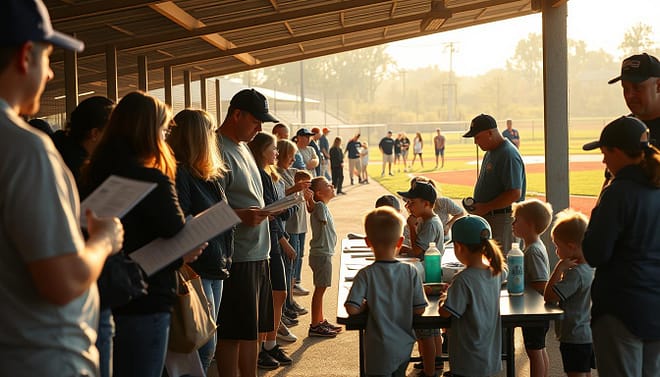
Be careful of programs that hide their fees. That “$2,500” registration might turn into $4,000 with extra costs. These can include special uniforms, team-building retreats, or “administrative fees.”
Payment structures reveal a program’s values. Good programs offer payment plans. They know families have budgets. Bad ones want all the money upfront with no refunds.
Read every line and ask every question. If the process is too complicated, it might not be right. Your child’s experience is worth clear and fair costs.
Tips for Parents
We’re the support team, not the stars of the show. Your child’s journey in baseball shouldn’t be about your past. It’s about their future.
Be honest about the chances of getting a college scholarship. It’s like a no-hitter in the ninth inning – rare. Your child needs to work hard in school too, not just on the field.
It’s important to keep things balanced. If baseball takes over your weekends and dinner talks, it’s too much. A healthy family has sports as just one part of life, not everything.
Be a fan and a driver, not a coach. Let the pros handle the game. The best thing is knowing when to step back.
In twenty years, your child will remember your support more than any trophy. The real victory is in helping them grow into a better person, not just a player.