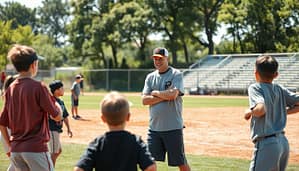
Imagine giving a ten-year-old the keys to a race car. It doesn’t make sense, right? The same logic applies to training young athletes.
A one-size-fits-all strength and conditioning plan can actually do more harm than good. Young bodies grow and develop at wildly different rates.
Training that matches their biological maturity—not just their birthday—is the real key. This science-backed approach helps them build power, agility, and confidence safely and effectively.
Skipping this step can lead to burnout, injury, or stalled progress. But when the program fits the athlete, they don’t just improve—they thrive.
This is the core of a smart youth strength program. It’s like learning to drive: you start with the basics before you hit the highway.
The right guidance builds durable, confident athletes who perform better and get hurt less often. Let’s explore how an age-appropriate framework makes all the difference.
Principles of Youth S&C: movement quality before load
At Texas Stix, we start every athlete’s journey with a simple rule: master the movement before the weight. This rule is not just a suggestion; it’s the foundation of our programs. We believe that flawless technique is the ultimate performance enhancer and injury preventer.
So, what does “movement quality” mean? It’s about performing seven fundamental human movement patterns with control and stability. These patterns are the foundation of every effective warm-up and training session. They are the building blocks for all sports skills.
Think of these patterns as your body’s movement alphabet. You need to know the letters before you can write a sentence. The table below breaks down these essential patterns and their primary purpose.
| Movement Pattern | Primary Purpose | Example Exercise |
|---|---|---|
| Squat | Lowering and raising the body with hip/knee bend | Bodyweight Squat to a Box |
| Hinge | Bending at the hips with a flat back | Kettlebell Deadlift (with light weight or PVC pipe) |
| Push | Applying force away from the body | Push-Up (or Knee Push-Up) |
| Pull | Applying force toward the body | Inverted Row or Band Pull-Apart |
| Carry | Stabilizing the core while moving with load | Farmer’s Walk (with light dumbbells) |
| Brace | Creating full-body tension and stability | Front Plank |
| Rotate/Anti-Rotate | Controlling rotational forces | Pallof Press or Cable Chop |
For a 9-year-old new to training, a “squat” means learning to sit back onto a low box. They must do this with a tall chest and knees tracking over toes. We don’t add weight until that motion is automatic and perfect. This focus on quality movement is the heart of a proper dynamic warm-up.
Dynamic warm-ups become skill sessions. We use exercises like spider-man stretches and bird-dogs to rehearse these patterns. The goal is to wake up the right muscles and groove perfect movement pathways before any intense activity begins.
Only after an athlete owns these patterns do we introduce the principle of progressive overload. This means making it a little harder, in a planned way, over time. The “overload” can be:
- Adding a small amount of weight
- Performing one more repetition
- Moving through a greater range of motion
- Controlling the tempo (like a 3-second lowering phase)
- Combining patterns (like a squat to an overhead press)
Before adding any load in a warm-up or main session, we ask: “Is the movement pattern perfect?” If the answer is no, we scale back. This disciplined approach teaches body control and builds robust, resilient athletes from the inside out.
A great warm-up reinforces these patterns. A great training session builds upon them. By putting movement quality first, we ensure that strength gains are safe, sustainable, and built on a rock-solid foundation. This is how young athletes learn to trust and control their bodies, setting them up for a lifetime of athletic success.
The Arm‑Care Routine: scap/rotator work and throws‑count awareness
Keeping a throwing arm strong involves two main things: scapular stability and tracking throws. It’s not about endless drills. It’s about smart, focused work that keeps young athletes safe.
The shoulder blade, or scapula, is like a house’s foundation. If it’s weak or moves poorly, the whole structure is at risk. For throwers, a strong and mobile scapula gives a stable base for the arm. This reduces strain on smaller muscles.
Rotator cuff exercises are important, but they’re not the main focus. They help keep the arm centered in the socket during a throw. At Texas Stix, we start with scapular control drills before doing rotator work.
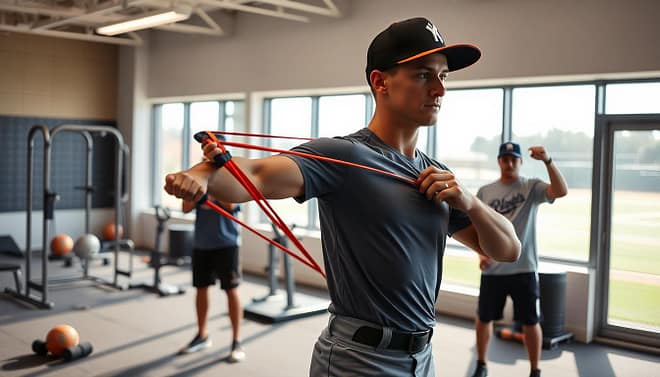
Tracking all throws, not just game pitches, is key. This includes warm-ups and practice. A sudden increase in throws can signal overuse injuries.
For high school teams in-season, the biggest risk is bad arm care. Poor training can harm more than help. The solution is light exercises that keep the shoulder healthy without adding fatigue.
Here’s a breakdown of a balanced Stix arm-care routine:
| Component | Primary Focus | Sample Exercise | Key Purpose |
|---|---|---|---|
| Scapular Stability | Control & Strength of Shoulder Blade | Scapular Wall Slides | Creates a stable base for the throwing arm |
| Rotator Cuff Strength | Endurance of Deep Shoulder Muscles | External Rotation with Band | Centers the shoulder joint during motion |
| Throws-Count Monitoring | Workload Management | Daily Throw Log | Prevents sudden spikes in volume |
This approach makes arm care simple and smart. Athletes learn to listen to their bodies. Parents understand the “why” behind the exercises.
A good arm care routine is essential. It lets young players grow their skills with confidence, knowing their arm is strong.
Speed and Agility: start mechanics, crossover, base‑running turns
Speed in baseball is more than just running fast. It’s about perfecting specific movements that make a big difference in the game. At Texas Stix, we work on turning raw speed into skills that matter on the field.
The first step is key. Good start mechanics are essential for stealing bases or chasing ground balls. It’s not about luck; it’s a skill you can learn.
Players learn to start with a strong first step. They aim for explosive speed. The right sprint mechanics from a stop can save valuable time.
Lateral agility is also important. The crossover step helps fielders move quickly side to side. It lets them change direction fast without losing balance. We practice this to make it second nature during games.
Base-running turns are often overlooked but are critical. A bad turn can slow you down. We teach players to take a tight turn and use a quick step to pivot.
All these skills come together for better running form. This reduces energy loss and boosts top speed. These are the tools every player needs: fast starts, quick changes, and being ready to make contact.
Texas Stix includes these drills in every workout. We prove that speed and agility can be improved. Mastering your sprint mechanics turns your natural talent into a consistent edge in baseball.
Mobility and Recovery: sleep, hydration, stretch kits, foam rolling
Think of your body like a high-performance engine. It needs time for maintenance and refueling to run well. This is where mobility and recovery come in.
Hard work in the gym or on the field stimulates growth. But growth, repair, and adaptation happen when you rest. A smart recovery plan turns hard training into real results.
It also builds lifelong health habits. Good recovery supports a healthy body composition, strengthens bones, and boosts confidence. You feel better and perform better.
Sleep is your secret weapon. It’s the number one performance enhancer you already have. During deep sleep, your body releases growth hormone to repair muscles and consolidate the skills you practiced. Aim for 8-10 hours of quality sleep each night for optimal recovery.
Hydration keeps everything flowing. Water is essential for nutrient transport, joint lubrication, and temperature control. Don’t wait until you’re thirsty. Sip water throughout the day, before and after practice.
Beyond rest and fluids, an active recovery toolkit helps maintain joint health and muscle pliability. This reduces next-day soreness and keeps you feeling loose.
A simple “stretch kit” can be a game-changer. This isn’t fancy equipment. Think a resistance band for shoulder and hip activation, and a towel for assisted stretches. Using these for just 5-10 minutes post-workout improves flexibility and mobility.
Foam rolling is like a massage for your muscles. It helps release tight spots and improve blood flow. Focus on major muscle groups like quads, hamstrings, and calves. Consistent rolling improves tissue quality and helps you move more freely.
Here’s a quick guide to your recovery pillars:
| Pillar | Primary Goal | Key Action | Benefit for Athletes |
|---|---|---|---|
| Sleep | Physical & Mental Repair | Aim for 8-10 hours nightly | Boosts memory, muscle recovery, and mood |
| Hydration | System Function | Drink water consistently, not just when thirsty | Prevents cramps, maintains energy, sharpens focus |
| Stretch Kits | Joint & Muscle Mobility | 5-10 min of band/towel work post-activity | Increases range of motion, reduces injury risk |
| Foam Rolling | Muscle Pliability | Roll major leg muscles for 1-2 minutes each | Eases soreness, breaks up muscle knots |
Building these habits creates a powerful cycle. Effective recovery supports harder training. Better training leads to greater confidence and performance. By prioritizing your mobility and recovery, you build a foundation for feeling good day-to-day and excelling in the long run.
Safety & Supervision: coach credentials, ratios, progressions
A top youth S&C program focuses on safety and supervision. It’s not just about getting faster or stronger. A safe place is where athletes build confidence and avoid injuries.
Coaches play a key role. They should have certifications from groups like the NSCA or USA Weightlifting. These show they know about developmental anatomy and age-appropriate programming. It’s also important they have experience with young athletes.
The number of coaches to athletes matters too. Smaller groups mean more personal attention. A coach can catch and stop bad form before it leads to injury.
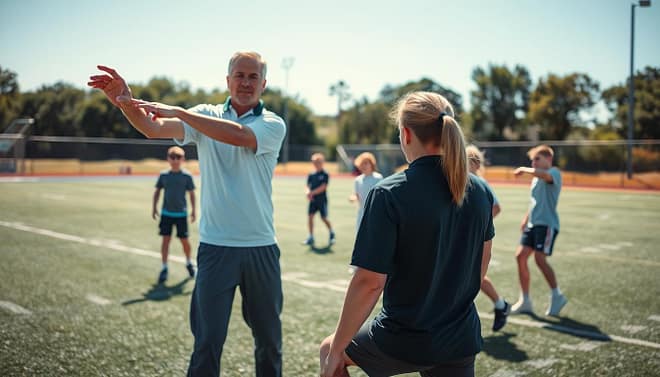
Having clear rules for technique is important. We teach one movement at a time. This builds control and prevents reckless behavior. Strength training, done right, doesn’t harm growth. It actually helps bones and supports healthy growth.
Bad environments and too-fast progressions lead to injuries. Our “circa-PHV” rule helps during growth spurts. We slow down and focus on the basics. This helps athletes regain confidence.
Having a solid return‑to‑play plan is key. After a minor injury or during growth, a good coach adjusts the training. They might lower the intensity or add new drills. The goal is to safely bring athletes back to play.
A good return‑to‑play plan means athletes don’t rush back too soon. Coaches watch their workload and technique closely. This careful approach turns setbacks into learning experiences, building resilience.
Great supervision lets athletes feel safe to try their best. They trust their coach. This trust is the last piece in a safe and effective training journey.
Sample 2‑Day/Week At‑Home Plans With No Special Equipment
Building athletic strength doesn’t need a fancy gym. At-home training plans are great for busy families. They offer convenience and help build confidence. You just need your body, resistance bands, or dumbbells.
Master seven key movement patterns. These are squat, hinge, push, pull, carry, brace, and safe landing. Focus on quality before adding weight or speed.
A simple two-day plan fits a weekly schedule. Day one might include bodyweight squats, push-ups, and farmer’s carry. Day two could have hinge movements like glute bridges, rows with bands, and planks for core bracing.
Every session starts with a dynamic warm-up. Do arm circles, cat-cow stretches, and light jogging. Finish with static stretches for major muscle groups.
These at-home plans focus on movement quality. They’re designed for youth athletes and build a strong foundation. This approach helps with speed and injury prevention safely at home.
Start with these basic frameworks. Consistent practice with proper form leads to real gains. Your journey to better athleticism begins right where you are.