Baseball tryouts are a bittersweet part of the game. They start the season with excitement. But they also end dreams for some.
It’s not just about showing up with a new glove. It’s a strategic audition. The difference between success and failure is very small. It’s like a mix of a job interview and a short spring training.
For those aiming for the Texas Rangers Youth Academy, it’s both thrilling and scary. It’s the first big step to making the team.
This is your guide. We’ll explore the tryout process from start to finish. Let’s go through it together.
What to Expect at Tryouts
Forget the dream of hitting a ball under the stars. Today’s youth tryouts happen in loud gyms. You’ll hear squeaking shoes and beepers. A Chicago coach said he’s only had tryouts outside once.
Tryouts are a series of stations. You’ll do drills that test your skills. This includes batting in a cage, fielding on the floor, and running fast.
It’s like a baseball-themed test. Each drill is a part of your score. Coaches are like Moneyball players, judging your skills.
Here’s the key to tryout tips: you’re being checked piece by piece. The lack of a game lets coaches compare your skills.
Let’s look at the main parts of the tryout:
- Batting Practice: It’s about your swing and bat speed. Can you hit the ball well every time?
- Fielding Drills: Your footwork and how you catch and throw are key. Are you quick and accurate?
- Pitching Tryouts: Pitchers are judged on their control and speed. Can you hit the right spots?
- Base Running: Your speed is timed. They also watch how fast you start and turn.
The atmosphere is filled with hope and analysis. Sweat and tension mix with the sound of drills. Coaches compare notes, and you must perform at your best.
Here’s what happens at each station and what coaches look for:
| Tryout Station | What You Do | What Coaches Measure |
|---|---|---|
| 60-Yard Dash | Sprint from a starting line. | Raw speed, acceleration, running form. |
| Infield Fielding | Field 5-10 ground balls, make throws to a base. | Footwork, glove technique, arm strength, throwing accuracy. |
| Batting Cage | Hit 10-15 pitches from a coach or machine. | Swing mechanics, bat control, power, pitch recognition. |
| Pitching Evaluation | Throw 15-20 pitches to a catcher. | Velocity, control, pitch variety, mechanics, composure. |
| Outfield Fly Balls | Catch fly balls and make long throws. | Route efficiency, tracking, crow hop, arm strength. |
The best tryout tips are to focus on your skills, not just one big play. Coaches look at your consistency and how well you do under pressure. Your goal is to show you can do the basics well, every time.
When you enter the gym or field, know the drill. Focus on each part of the tryout. Show your skills in each area, and you’ll make a strong case for the team.
Registration Process
Getting ready for youth sports isn’t just about throwing fastballs. It’s also about handling the paperwork smoothly. Before your athlete plays, they must pass the administrative test. This is the first challenge, where preparation meets paperwork.
The process can feel like a puzzle from a sadist. You’ll deal with online portals that are hard to use. You’ll also find physical forms that need a doctor’s signature, even if they haven’t seen your child in months. And, you’ll face tight deadlines, feeling the pressure of a big game.
Missing a step can mean you’re out before you start. This isn’t an exaggeration. A wrong birth certificate scan or missed waiver can bench a player fast. The registration process is your first test of youth sports readiness.
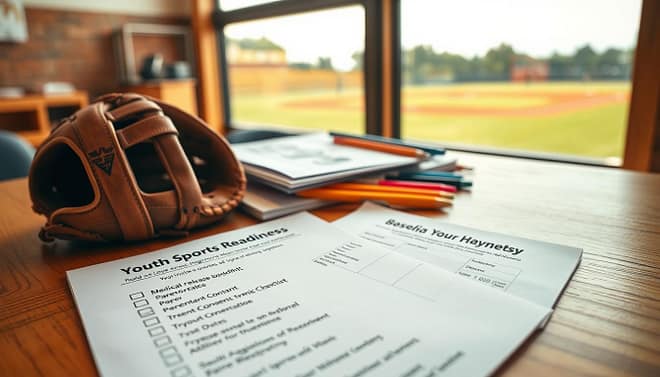
To succeed, study the process like game film. Read every instruction twice. Submit documents early, 48 hours before the deadline. Keep everything organized digitally. This shows you’re serious and reliable.
Break down the process into smaller parts. The table below is your guide to success.
| Registration Component | Common Pitfall | Pro-Tip for Readiness |
|---|---|---|
| Online Portal & Form | Assuming autosave works. (It doesn’t.) | Fill out the form in one sitting. Copy long answers into a notes app first. |
| Physical & Medical Forms | Last-minute doctor visits causing delays. | Schedule the sports physical 6-8 weeks before registration opens. Get multiple signed copies. |
| Payment & Deadlines | Hidden fees or unclear payment deadlines. | Call the club office to confirm the total cost and the exact deadline time (e.g., 5:00 PM EST). Pay immediately upon submission. |
| Communication Follow-up | No confirmation received, leading to anxiety. | Take a screenshot of your final submission and confirmation number. Email the organizer directly if you don’t get an auto-reply within 24 hours. |
Mastering this table is key to youth sports readiness. It turns a stressful task into a strategic advantage. You’re showing focus and discipline, just like the academy wants. This is your first successful bunt—you’re on base, and the game is just starting.
Required Skills and Conditioning
Forget ‘hustle’—today we’re diving into the three-tier pyramid of skills. Coaches look for more than effort; they check your athletic skills. The base is not just baseball. It’s about raw athleticism.
Speed, agility, and strength are key. It’s not about lifting heavy weights. It’s about quick starts and strong throws. Your body is like a sports car. Is it ready for the game?
The second tier focuses on sport-specific skills. This includes a good swing, fielding, and throwing. Coaches will judge your batting, fielding, throwing, and base running skills. Is your technique top-notch?
The top of the pyramid is baseball IQ. This is knowing when to take extra bases and how to read pitchers. It’s not something you can fake. It’s about understanding the game.
Conditioning is your secret weapon. It’s not just about lasting the whole game. It’s about performing well even when tired. Training with sprints and resistance exercises builds the explosiveness coaches want.
Prepare for the tryout like it’s a real game. Use short, intense workouts and focus on skills. This is the heart of youth sports readiness.
Coaches can tell if you’ve trained well or just played a lot. Show them you’ve worked hard. For a program that builds this pyramid, check out the Martin Collegiate Baseball Academy.
To improve your youth sports readiness, treat your body and mind as a system to optimize. Follow these tryout tips, and you’ll be ready for the season ahead.
Common Myths and Misconceptions
Youth tryouts are filled with myths, like a season of ‘MythBusters’. Let’s examine these myths with a critical eye. We aim to clear up the confusion that makes parents and players anxious.
The first myth is that the superstar always makes the team. This is like a Hollywood movie. But, in reality, coaches are building a team, not casting a movie. A player who shines in one moment but is unreliable in others can be a problem.
Coaches want players who are consistent. They need players who can always do their job well. A coachable athlete who fits into a specific role is often more valuable than a player who only shines in the spotlight.
The second myth is that it’s all about who you know. While connections can help, most good academies focus on fair tryouts. They use tests like 60-yard dash times and throwing speed to judge players.
One coach said the tryout process is tough but fair. They look at hard data, not just who you know. They want athletes, not just friends of the team.
The third myth is that a bad tryout means you’re a bad player. This is simply not true. A bad tryout can happen for many reasons, like nerves or a bad day.
The truth is, tryouts are about showing your skills in a specific way. It’s not just about being naturally good. It’s about being well-prepared and calm under pressure.
So, let’s forget the myths. Success at youth tryouts comes from being consistent, coachable, and composed. It’s not about fairy tales.
Parent Role at Tryouts
The parent’s role at youth sports tryouts is often misunderstood. It’s not about coaching or judging other players. Instead, it’s about supporting your child and helping with logistics.
Think of yourself as the ground crew for a NASA launch. You prepare everything before the rocket blasts off. Then, you watch and trust the training.
Your main job is to make sure your child is ready. This means getting enough sleep, eating well, and having everything they need. This is your area of focus.
During the tryout, try to be invisible. Your child should feel your support, not your anxiety. Your calmness is a powerful message.
After the tryout, be a listening ear. Ask about their experience, not just how they did. If coaches give feedback, help your child understand it.
Remember, evaluations are private. They’re for your child’s growth, not for public discussion. Your role is to help them learn from the feedback.
To understand what helps and what hurts, consider this:
| Parent Role | Effective Behavior | Ineffective Behavior | Impact on Player |
|---|---|---|---|
| Pre-Tryout | Focus on sleep, nutrition, and equipment check | Drilling skills last-minute; creating pressure | Arrives calm vs. arrives anxious and fatigued |
| During Tryout | Observant but silent; positive body language | Coaching from sidelines; reacting to every play | Feels supported vs. feels scrutinized and judged |
| Post-Tryout | Asks open-ended questions; listens first | Immediate critique; comparison to other players | Processes experience vs. defends performance |
| Feedback Phase | Treats coach’s notes as confidential data | Debates evaluation publicly; dismisses input | Views feedback as growth tool vs. personal attack |
Your calmness is the strongest message you can send. It shows your family’s approach to challenges. So, be ready, stay calm, and trust the training.
FAQs
The FAQ section is where theory meets panic. Let’s tackle the most common mental hurdles. These aren’t just about rules; they’re a test of your character and composure.
What intangible characteristics do coaches want? They’re looking for a predictable attitude. Think of it this way: a player who listens, doesn’t argue with the sky after a bad call, and picks up a teammate is a known asset. A hothead is a liability. Coachability is the silent skill they value most.
What if I make a mistake? You will. The single best tryout tip is to have a short memory. A flubbed grounder is just a pop fly in the infield—it happens. How you recover in the next five seconds, with focused intensity, often impresses more than a flawless performance. Breathe. Reset.
Should I only showcase my primary position? Not necessarily. While you should demonstrate mastery there, versatility whispers “valuable roster spot.” If you’re a solid shortstop but can also competently shag flies in the outfield, that’s data a coach loves. Don’t force it, but don’t hide it either.
How much will they emphasize speed? It depends on the team’s DNA. A squad built on small-ball and aggressive baserunning will clock your 60-time like it’s the stock ticker. Others might prioritize power or defensive IQ. The universal truth? General athleticism never hurts your case.
How should I handle an indoor tryout? This is the brutal compromise, even in places like Chicago. The confined space favors measurable metrics (arm strength, exit velocity) over game instinct. Your preparation must adjust.
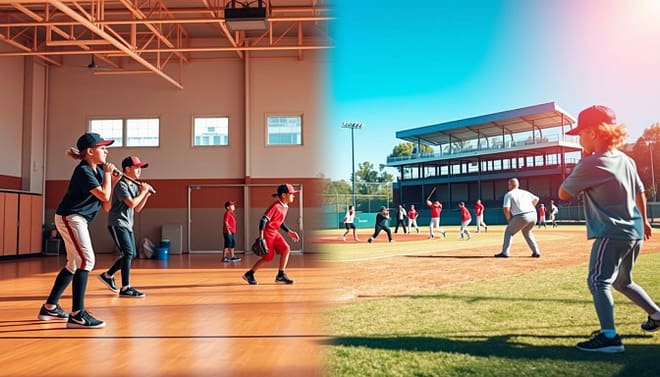
| Aspect | Indoor Tryout Dynamics | Outdoor Tryout Dynamics |
|---|---|---|
| Primary Focus | Measurable metrics (velocity, bat speed) | Game instinct & situational awareness |
| Space | Confined, artificial | Open, natural |
| Player Advantage | Raw power, repeatable mechanics | Baseball IQ, adaptability |
| Preparation Key | Practice in cages, short bursts | Full-field drills, reading hops |
How should I handle a cut? With grace. Request feedback if it’s offered. See it as a diagnostic, not a verdict. A coach’s honest assessment is a roadmap, not a dead end. How you process this says more about your future than the decision itself.
The unifying thread in all these tryout tips? They reveal our desire to control the uncontrollable. The real answer is always to funnel your energy into the controllables:
- Your maximum effort on every rep.
- Your positive, team-oriented attitude.
- The quality of your preparation.
Master those, and you’ve already passed the biggest test.
Conclusion: Getting Ready for the Big Day
So, you’ve studied the playbook. Now, it’s showtime. This isn’t about a pop quiz on baseball theory. It’s the live performance where your preparation meets the moment.
True youth sports readiness is that quiet confidence. It’s knowing your swing is grooved, your arm is loose, and your mind is clear. It comes from the hard work and positive attitude you’ve already put in. Walk onto that field physically prepared and mentally present.
Places like the Texas Rangers Youth Academy design their process to be fair and equitable. They look at the whole player. Coaches aren’t searching for a finished statue. They’re prospectors hunting for the right raw material—athleticism, coachability, grit.
Your job is to give them a compelling sample. Trust their system, even when the drills feel strange. Whether you make this roster or not, approaching with this level of analytical preparation is a personal victory. You’ve treated your talent with the seriousness it deserves. Now, go give them some data worth measuring.