Let’s get real about the student athlete life. They’re not aiming for perfect grades and sports wins at the same time. It’s more like they’re caught in a mix of dreams and reality.
Parents often hope their kids can excel in both sports and school. But, let’s face it, they might end up sleeping in the car on the way to games.
We’re not raising the next sports legend who’s also a genius in science. The real challenge is teaching life skills, not just winning games or getting good grades.
This isn’t about giving up on high standards. It’s about being realistic about how much time and energy kids have. When they’re stressed out, nobody wins.
Scheduling Tips
If your family calendar looks like a war room, you’re in the right place. Scheduling isn’t about being perfect. It’s about making systems that work in real life. Let’s face it, any plan that doesn’t handle last-minute changes or surprise projects is just a dream.
Having routines helps turn chaos into manageable chaos. It’s the difference between smoothly executing plans and the last-minute scramble we all know. The key is to work smarter, not harder, with systems that stand up to forgetfulness and exhaustion.
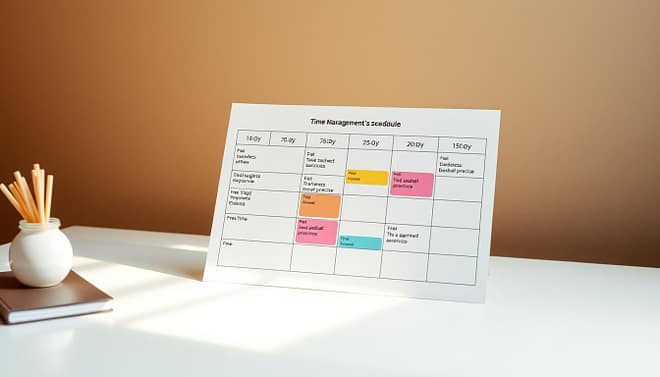
Weekly planning sessions are your strategy meeting. Sunday evenings are best for this. Use your calendar, colored pens, and plan the week ahead. This short time investment reduces stress and avoids last-minute rushes.
Set specific homework times like a coach assigns positions. For example, math from 4-5 PM, history from 7-8 PM. This structure helps avoid procrastination and makes the week predictable, even when life isn’t.
Here are some pro tips you might not know:
- The 7-minute shower rule: Use a timer to stay efficient. It’s not for relaxation, but for moving between tasks
- Meal prep without losing your mind: Cook once, eat twice (or more). Batch cooking is your nutritional support
- The power of the five-minute warning: Alerts help prevent meltdowns better than any plan
This is your guide to managing time at home. The table below shows how different scheduling methods compare to real life:
| Scheduling Method | Preparation Time | Stress Level | Real-World Effectiveness |
|---|---|---|---|
| Wing It Daily | 0 minutes | Extreme (9/10) | Poor (2/10) |
| Basic Calendar | 15 minutes weekly | Moderate (6/10) | Average (5/10) |
| Color-Coded System | 30 minutes weekly | Low (3/10) | Good (7/10) |
| Digital Sync + Alerts | 45 minutes weekly | Minimal (2/10) | Excellent (9/10) |
Time management isn’t about adding hours. It’s about making the hours you have work better. Your calendar should help you, not stress you out. When done right, scheduling lets everyone perform their best, both in school and in life.
Remember, flexibility is key in any plan. The best plans adapt to surprises while keeping direction. This is how you achieve success in school and in life.
Communication with Teachers
Ever tried explaining playoff priorities to an educator who thinks ERA is a medical condition? Talking to teachers isn’t just about sending emails. It’s about being diplomatic and showing you care about your grades.
It’s better to send your schedule early. Do this during syllabus week. It shows you’re serious about school, even when you’re playing sports.

Parents can help a lot in talking to teachers. Meeting with them can turn into planning sessions. When parents explain how sports affect school, teachers get it.
Here’s a three-step plan for talking to teachers:
- Schedule transparency: Give them a schedule with important dates marked
- Progress updates: Send weekly emails during sports seasons
- Recovery plans: Have plans for catching up on schoolwork that fit both sports and school
Teachers are more likely to work with you if you offer solutions. Instead of saying “I can’t take the test,” say “I’ve done the reading and can take it Thursday before practice.”
Using digital tools can change how you communicate with teachers. You can turn in work from anywhere and keep them updated. This shows you’re serious about keeping up with schoolwork.
Teachers want you to do well in school and sports. They just need to see you’re committed to both. Show them your hard work in sports translates to school, and you’ll win at both.
Homework During Tournaments
Tournament weekends turn education into a thrilling challenge. Imagine your student athlete writing a physics lab report between games. It’s not just doing many things at once – it’s like navigating through an obstacle course.
Time hacking is the secret to success. Use the 45-minute bus rides to finish reading assignments. Hotel downtime is perfect for writing essays. Even eating after games can be a chance to study.
- Commute conquest: Make travel time for studying
- Hotel headquarters: Set up a study area in your room
- Digital delegation: Use apps for learning on the go
- Power hour protocol: Focus on studying for 60 minutes
Think of tournament schedules as a military plan. Every spare moment is an opportunity to learn. Your kid might do Spanish homework during rain delays or review flashcards between game announcements.
| Time Slot | Academic Activity | Efficiency Rating |
|---|---|---|
| Morning bus ride | Reading assignments | ★★★★★ |
| Between games | Flashcard review | ★★★★☆ |
| Hotel evening | Essay writing | ★★★★★ |
| Meal times | Discussion-based learning | ★★★☆☆ |
This strategy turns tournaments into a chance to learn. The student athlete learns to manage time like a pro. They also develop focus skills that are impressive.
Managing schoolwork and practices during tournaments is key. It’s about treating education as a portable tool. The best performers know learning never stops – it just changes location.
Your young competitor might do their best schoolwork at 10 PM in a Holiday Inn Express. That’s not giving up – it’s winning the battle between education and sports.
Setting Priorities
In the world of youth sports, it’s time to face reality. SAT prep is more important than travel ball. It’s not cruel, it’s just smart. Your kid might not play pro sports, but they must pass biology.
Effective time management is key. It’s not about doing everything. It’s about focusing on what’s most important at the right time. This means choosing wisely how to use your time.
Teaching your athlete to manage their time means giving them control. They learn that missing practice for a science project is okay. It’s a sign of growing up. The diamond will wait, but that chemistry final won’t.
Being honest about commitments is essential. Does your player really need to be in so many activities? Or would focusing on a few with schoolwork be better?
Finding the right balance is important. It’s about knowing when to keep going and when to stop. Sometimes, the best play is studying, not playing ball. This approach helps kids succeed in school and sports, as shown in balancing both.
Teaching your athlete to manage their time well is valuable. It helps them focus on what really matters. A good batting average is nice, but a 4.0 GPA is more important for college.
Family Success Stories
Forget the perfect families on Instagram. Real success is about a kid studying during breaks and doing well in school. It’s the family that uses a road trip to learn history between games. These stories are real and show the beauty of imperfection.
I’ve seen parents be proud when everyone shows up to the game dressed. That’s a victory. Schools give awards, but the real triumphs are small moments. Like finishing homework late at night or improving grades with extra help.
It’s not about being perfect. It’s about raising kids who can handle both wins and losses well. Your family’s journey, with all its ups and downs, is the story worth sharing.