Why would anyone give up free time for the chaos of a Little League field? It’s not for the fame—unless you think grass-stained clothes and shouting are cool.
The real reason is deeper and more meaningful. What happens on those fields isn’t just a game. It’s a community coming together, like a digital age version of a barn-raising.
This is how Bryan’s youth sports work: a non-profit system built by volunteers who love the game. Every season needs more people to help. It’s not just about filling a spot.
By volunteering, you’re supporting a worthy cause. The reward is seeing a shy child connect with a ball. Sharing laughs after mistakes. Teaching that hard work can beat talent.
You become a key part of the community. Your time builds more than skills—it creates lasting memories.
How to Find a Youth Sports Coach
Finding the right youth sports coach is key to your child’s success. Here are some tips to help you find the best coach for your child:
1. Ask for Recommendations
Start by asking other parents, coaches, or your child’s school for recommendations. They can provide valuable insights and suggestions based on their experiences.
2. Check Online Directories
Utilize online directories and websites that specialize in youth sports coaching. These platforms often have a list of certified coaches in your area, making it easier to find the right one.
3. Attend Local Games and Events
Attend local games and events to observe different coaches in action. This will give you a firsthand look at their coaching style and how they interact with players.
4. Read Reviews and Testimonials
Read reviews and testimonials from other parents who have worked with the coach. This will provide valuable feedback and help you gauge the coach’s effectiveness.
5. Consider Experience and Qualifications
Look for coaches with relevant experience and qualifications in the specific sport your child is interested in. A coach with a strong background in the sport will have a better understanding of the game and be able to provide valuable guidance.
6. Evaluate Coaching Philosophy
Every coach has their own coaching philosophy. Consider whether their approach aligns with your child’s needs and your own expectations. Look for a coach who emphasizes positive reinforcement, skill development, and sportsmanship.
7. Schedule a Meeting
Once you have narrowed down your options, schedule a meeting with the coach. This will give you the opportunity to ask questions, discuss your child’s goals, and get a sense of the coach’s personality and communication style.
8. Observe a Practice
Observe a practice session to see how the coach interacts with players, provides feedback, and creates a positive learning environment. This will give you a better understanding of their coaching style and how they handle different situations.
9. Trust Your Instincts
Ultimately, trust your instincts. Choose a coach who you believe will provide the best support and guidance for your child’s development. Consider factors such as their passion for the sport, ability to connect with players, and commitment to creating a positive team environment.
By following these tips, you can find a youth sports coach who will help your child reach their full athletic and personal growth.
Background Check Process
Getting a background check feels like a personal invasion. It’s like a digital search that checks your past. But in today’s youth sports, it’s a must.
Think of it as a software update for coaches. The background check is like a firewall. It checks if you’re trustworthy before letting you work with kids.
Why does it feel so invasive? It’s because we see scrutiny as suspicion. But it’s actually building trust in our communities. It shows that the league is serious about safety.
This process makes parents feel more involved. It’s not just about showing up. It’s about being a trusted adult in the community.
Coaches and volunteers must go through these checks. It’s not about you; it’s about keeping everyone safe. Without these checks, the program wouldn’t be the same.
Leagues like National Sports ID make the process easier. It’s not about finding bad things; it’s about making sure our kids are safe.
| Check Type | Primary Purpose | Typical Components | Impact on Trust |
|---|---|---|---|
| National Criminal Database | Flag felony convictions | Multi-state search, sex offender registry | Foundation of basic safety assurance |
| County Criminal Search | Local court record verification | Current county, previous residences | Addresses jurisdiction-specific concerns |
| Social Security Trace | Identity validation & history | Name/address history, SSN verification | Confirms applicant is who they claim |
| Continuous Monitoring | Ongoing risk management | Regular updates on new records | Enhanced Parent Trust through vigilance |
The table shows how each check adds to the safety of our kids. It’s like having a full security system, not just a lock.
When you fill out those forms, you’re building trust. You’re not just proving you’re safe. You’re helping make community sports possible.
Benefits of Volunteering as a Coach
Volunteering as a coach offers numerous benefits that can enhance your personal and professional growth. By dedicating your time and expertise to help others, you can gain valuable experience, develop new skills, and make a positive impact on the lives of others.
One of the key advantages of volunteering as a coach is the opportunity to develop your coaching skills. Through hands-on experience and continuous learning, you can refine your coaching techniques and strategies. This not only improves your ability to guide and support athletes but also enhances your overall coaching abilities.
Volunteering as a coach also allows you to gain valuable experience in the field. By working with different athletes, teams, and coaching environments, you can broaden your understanding of various coaching styles, philosophies, and approaches. This diverse experience can help you develop a well-rounded coaching perspective and increase your chances of success in your coaching career.
Another significant benefit of volunteering as a coach is the opportunity to make a positive impact on the lives of others. By sharing your knowledge, expertise, and passion for sports, you can inspire and motivate athletes to reach their full potentials. Witnessing the growth and development of athletes can be incredibly rewarding and fulfilling.
Volunteering as a coach also provides a platform for networking and building professional relationships. Through interactions with other coaches, athletes, and sports professionals, you can establish valuable connections that can open doors to new opportunities and collaborations. These connections can be instrumental in advancing your coaching career and expanding your professional network.
Lastly, volunteering as a coach can be a fulfilling and enriching experience. By dedicating your time and energy to helping others, you can find a sense of purpose and fulfillment. The joy of seeing athletes improve and succeed can be incredibly rewarding and can contribute to your overall well-being.
Overall, volunteering as a coach offers a wide range of benefits that can enhance your personal and professional growth. By sharing your expertise, gaining valuable experience, and making a positive impact on the lives of others, you can become a more skilled and successful coach.
Testimonials from Volunteer Coaches
“Volunteering as a coach has been one of the most rewarding experiences of my life. It has allowed me to develop my coaching skills, make a positive impact on athletes’ lives, and build valuable connections in the sports industry. I highly recommend volunteering as a coach to anyone who is passionate about sports and wants to make a difference.”
“Volunteering as a coach has given me the opportunity to share my passion for sports with others. It has allowed me to inspire and motivate athletes to reach their full potentials. The sense of fulfillment I get from seeing athletes improve and succeed is truly rewarding. I highly recommend volunteering as a coach to anyone who wants to make a positive impact on the lives of others.”
How to Find a Youth Sports Coach
Finding the right youth sports coach is key to your child’s success. Here are some tips to help you find the best coach for your child:
1. Ask for Recommendations
Start by asking other parents, coaches, or your child’s school for recommendations. They can provide valuable insights and suggestions based on their experiences.
2. Check Online Directories
Utilize online directories and websites that specialize in youth sports coaching. These platforms often have a list of certified coaches in your area, making it easier to find a suitable one.
3. Attend Local Games and Events
Attending local games and events is a great way to observe coaches in action. You can see how they interact with players, handle game situations, and assess their coaching style.
4. Read Reviews and Testimonials
Read reviews and testimonials from other parents who have worked with the coach. This can give you an idea of their coaching philosophy, effectiveness, and overall reputation.
5. Schedule a Meeting
Once you have a few candidates in mind, schedule a meeting with the coach. This allows you to ask questions, discuss your child’s needs, and gauge the coach’s communication style.
6. Evaluate Their Experience and Qualifications
Look for coaches who have experience working with youth athletes. Check their qualifications, certifications, and any specialized training they may have.
7. Assess Their Coaching Philosophy
Understand the coach’s coaching philosophy and how it aligns with your child’s goals and values. A coach who emphasizes positive reinforcement, sportsmanship, and player development is ideal.
8. Consider Their Availability and Flexibility
Ensure that the coach’s schedule aligns with your child’s availability. Consider their flexibility in terms of practice times, game schedules, and any additional activities they may offer.
9. Evaluate Their Communication Style
Effective communication is essential between a coach and a parent. Assess the coach’s communication style, responsiveness, and willingness to keep you informed about your child’s progress.
10. Trust Your Instincts
Ultimately, trust your instincts. Choose a coach who you believe will provide the best support and guidance for your child’s development as an athlete.
By following these tips, you can find a youth sports coach who will help your child reach their full athletic and personal growth.

Parent Involvement in Early Childhood Education
Parent involvement is a key factor in early childhood education. It plays a significant role in a child’s development and learning process. By actively participating in their child’s education, parents can create a supportive and nurturing environment that fosters growth and development.
Research has shown that parent involvement in early childhood education has a positive impact on children’s academic achievement and social-emotional development. When parents are involved, children tend to have better attendance, higher academic achievement, and improved social skills.
There are various ways parents can be involved in their child’s early childhood education. One effective way is through volunteering in the classroom. By participating in classroom activities, parents can engage with their child’s teachers, observe their child’s learning environment, and contribute to the educational experience.
Another way parents can be involved is by attending parent-teacher conferences. These conferences provide an opportunity for parents to discuss their child’s progress, set goals, and collaborate with teachers to support their child’s learning journey.
Parents can also contribute to their child’s education by participating in school events and activities. Whether it’s attending a school play, helping with a field trip, or volunteering for school events, these experiences provide valuable opportunities for parents to engage with their child’s educational environment.
Parent involvement in early childhood education is essential for creating a collaborative and supportive learning environment. By actively participating in their child’s education, parents can make a positive impact on their child’s development and ensure a strong foundation for future success.
Benefits of Parent Involvement in Early Childhood Education
Parent involvement in early childhood education offers numerous benefits for children’s development and learning. Some of the key benefits include:
- Improved academic achievement
- Enhanced social skills
- Increased attendance
- Stronger parent-child relationships
- Increased parental confidence in supporting their child’s education
By actively participating in their child’s early childhood education, parents can create a supportive and nurturing environment that fosters growth and development.
Communication with Parents
Coaching kids is like herding cats, and managing their parents is like conducting a symphony. It’s a challenge, but it’s worth it. As a volunteer coaching Bryan youth, you’re not just a coach. You’re a leader who helps parents and kids work together.
Good communication is key. It’s more important than any pep talk. Start by setting clear expectations before the season begins. Explain your coaching style, the practice schedule, and your values. This helps everyone understand what the season will be like.
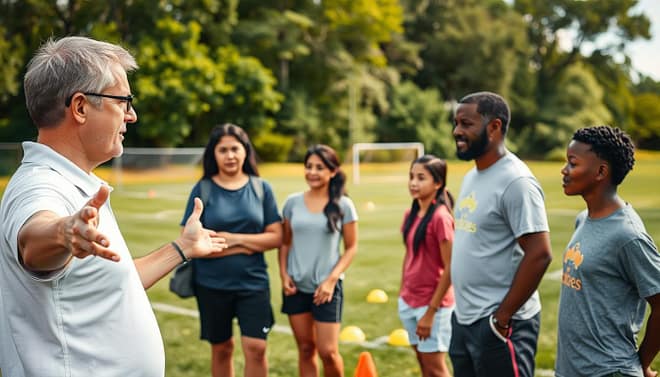
Use modern tools to help you communicate. Group emails and team apps are great for keeping everyone informed. But don’t forget the power of a simple, positive comment. A kind word about a child’s effort can mean a lot.
Parents want their kids to feel seen, safe, and happy. Your job is to make sure they know that. Share positive updates regularly to keep everyone on the same page.
There’s a rule in the league about behavior. It says disruptive behavior can get you kicked out. But you want to create a positive environment where this rule isn’t needed.
Problems will come up. A parent might question your decisions or the intensity of practices. This is where your emotional intelligence comes in. Always talk to parents privately and assume they have their child’s best interests in mind.
By talking things through calmly, you can avoid a lot of trouble. You’re not just coaching kids; you’re also teaching adults how to support them.
| Situation | Recommended Approach | Best Tools | Desired Outcome |
|---|---|---|---|
| Setting Season Expectations | Proactive, group-based, detailed | Pre-season meeting, Welcome packet/email | Aligned understanding, reduced preseason anxiety |
| Weekly Logistics & Updates | Consistent, concise, scheduled | Team app announcement, Group email | Parents are informed, no confusion on times/locations |
| Positive Feedback & Recognition | Immediate, personal, specific | Verbal comment at pick-up, Quick text to parent | Builds trust, reinforces child’s joy, strengthens parent-coach bond |
| Addressing a Concern or Conflict | Private, calm, assumes good intent | Phone call or in-person chat (never via text/email for serious issues) | De-escalation, mutual understanding, preserved relationship |
| Sideline Behavior Issue | Direct reference to shared rules, firm but polite | Reference to distributed Code of Conduct, involve league official if needed | Immediate de-escalation, maintains safe environment for all |
The table above is your guide for managing the sideline. It shows how to handle problems from the start. By focusing on the first four situations, you can avoid the last one.
This is all about building a community. You’re the bridge between the field and the stands. Get it right, and you create a supportive environment. Get it wrong, and you face challenges. The choice is yours.
Child Development Understanding
Being a youth coach means you’re also a part-time developmental psychologist. Your job is more than just drills and formations. It’s about understanding how young minds learn, grow, and connect.
Love for a game isn’t made overnight. It grows through specific conditions. When youth sports coaches understand motivation, every practice is intentional. They’re building the foundation for lifelong passion.
The young shortstop missing the cutoff isn’t being defiant. Their brain is just growing. Expecting them to be perfect is like expecting a house without a roof.
For kids, being part of the team is more important than winning. The desire to belong, wear the jersey, and share snacks is powerful. Youth sports coaches can use these to motivate better than any winning speech.
To make this work, you need to build self-determination theory into your coaching. This means fostering competence, autonomy, and relatedness. Your drills build skill, confidence, and competence.
The second part is about giving choices within structure. Asking if they want to work on lateral shuffle or backpedal first makes them feel in control. This builds autonomy.
The third part is about building relationships. It’s the team cheer, partner drills, and huddles where everyone gets praised. Smart youth sports coaches know that team bonds are as important as skills.
When you combine these three, magic happens. Striking out teaches emotional regulation, not just failure. A missed catch becomes a chance to practice communication. You start coaching more than just a sport.
Your role changes from instructor to experience architect. You create conditions for love of the game to grow. This makes you more than just a coach; you’re a mentor.
This isn’t just soft science. It’s the real truth behind effective youth development. The best youth sports coaches understand human growth before they know sports.
So, take a break from your clipboard. Think about the kids’ development stage. Are your expectations right? Does your practice meet their needs for competence, choice, and connection? Answering these questions is how you truly extend the love of the game.
Safety and First Aid Requirements
Safety in youth sports is often overlooked. It’s the boring part before the game starts. But it’s the base that everything else is built on.
As a parent, your first step is to give accurate medical info and emergency contacts. This isn’t just paperwork. It’s a safety net for your child. Bryan Youth Sports needs this to keep everyone safe.
The league’s warning about injuries isn’t a way out. It’s a sign that you, the volunteer, are in charge. By agreeing to emergency treatment, you ensure your child gets help fast.
Your job is simple. Check the equipment before each practice. Make sure helmets and chest protectors are in good shape. Also, enforce safety rules like no head-first slides for younger kids.
Having a basic first aid kit and an ICE plan is a must. Knowing how to use a bandage or treat a sprain isn’t about being a hero. It’s about giving good care until help arrives.
This is the most important way you can help. You become more than just a spectator. You’re the protector of the field. You’re making a place where the biggest worries are minor injuries.
The final piece of trust is having a well-stocked first aid kit and knowing how to use it. The real win is when everyone goes home safe and sound.