Hydration Plan for Youth Athletes
Keeping young athletes hydrated is key to their performance and health. A good hydration plan is essential for all sports, from soccer to basketball. It helps prevent dehydration and keeps energy levels up.
Here are some tips for a hydration plan that works:
1. Encourage Drinking Water Throughout the Day
It’s important for young athletes to drink water all day, not just before games. This helps keep their body fluids balanced and prevents dehydration.
2. Monitor Fluid Intake
Coaches and parents should watch how much water young athletes drink. This helps make sure they’re getting enough to stay hydrated.
3. Use Sports Drinks
Sports drinks are good for athletes who sweat a lot. They help replace lost salts and electrolytes. But, they should only be used when needed, like during long games or in hot weather.
4. Encourage Electrolyte-Rich Foods
Adding foods rich in electrolytes to their diet can help. Foods like bananas, oranges, and nuts are good for young athletes. They help keep electrolyte levels up.
5. Teach Proper Hydration Techniques
Young athletes should learn how to drink water properly. This means drinking slowly and regularly, not gulping down water all at once.
By following these tips, young athletes can stay hydrated and perform their best. A good hydration plan is a key part of their sports nutrition.
| Benefits of Proper Hydration | How to Stay Hydrated |
|---|---|
| Prevents dehydration | Drink water throughout the day |
| Improves performance | Monitor fluid intake |
| Reduces risk of heat-related illnesses | Use sports drinks when needed |
| Supports overall health | Encourage electrolyte-rich foods |
| Enhances focus and concentration | Teach proper hydration techniques |
FAQ
Q: What is the importance of youth sports nutrition?
A: Youth sports nutrition is vital for young athletes to perform at their best. It helps them build strength, improve endurance, and recover from physical activities. Proper nutrition supports their growth and development, ensuring they can participate in sports safely and effectively.
Q: How can I ensure my child is getting the right nutrients for sports?
A: To ensure your child is getting the right nutrients for sports, focus on a balanced diet that includes a variety of foods. Include lean proteins, whole grains, fruits, vegetables, and healthy fats. Avoid excessive sugar and processed foods. Consider consulting a sports dietitian for personalized nutrition advice.
Q: What are some common nutrition myths in youth sports?
A: Some common nutrition myths in youth sports include the belief that athletes need to eat a lot of protein to build muscle, that they should only eat carbohydrates before games, and that they should avoid eating before exercise. These myths can lead to poor nutrition choices and hinder performance. It’s important to rely on scientific evidence and consult with a sports dietitian to debunk these myths.
Q: How can I help my child develop healthy eating habits?
A: To help your child develop healthy eating habits, lead by example and encourage them to try new foods. Create a positive environment where they feel comfortable asking questions about food and nutrition. Involve them in meal planning and preparation, and make healthy choices accessible and appealing.
Q: What are some tips for fueling young athletes?
A: To fuel young athletes, focus on providing them with a balanced diet that includes a variety of nutrient-dense foods. Encourage them to eat regular meals and snacks, including complex carbohydrates, lean proteins, and healthy fats. Avoid excessive sugar and processed foods. Encourage them to drink plenty of water and consider incorporating sports drinks during long or intense activities.
Q: How can I help my child recover from sports activities?
A: To help your child recover from sports activities, encourage them to prioritize rest and recovery. Provide them with a balanced diet that includes foods rich in protein, carbohydrates, and healthy fats. Encourage them to stay hydrated and consider incorporating recovery snacks or meals that include foods like bananas, chocolate milk, or peanut butter sandwiches.
Q: What are some common nutrition challenges faced by young athletes?
A: Young athletes often face challenges such as time constraints, picky eating, and pressure to perform. They may have limited time to eat before games or practices, and they may be hesitant to try new foods. They may also feel pressure to perform well and may turn to unhealthy foods for quick energy. It’s important to address these challenges and provide support and guidance to help them make healthy choices.
Q: How can I ensure my child is getting the right nutrients for sports?
A: To ensure your child is getting the right nutrients for sports, focus on a balanced diet that includes a variety of foods. Include lean proteins, whole grains, fruits, vegetables, and healthy fats. Avoid excessive sugar and processed foods. Consider consulting a sports dietitian for personalized nutrition advice.
Q: What are some tips for fueling young athletes?
A: To fuel young athletes, focus on providing them with a balanced diet that includes a variety of nutrient-dense foods. Encourage them to eat regular meals and snacks, including complex carbohydrates, lean proteins, and healthy fats. Avoid excessive sugar and processed foods. Encourage them to drink plenty of water and consider incorporating sports drinks during long or intense activities.
Q: How can I help my child recover from sports activities?
A: To help your child recover from sports activities, encourage them to prioritize rest and recovery. Provide them with a balanced diet that includes foods rich in protein, carbohydrates, and healthy fats. Encourage them to stay hydrated and consider incorporating recovery snacks or meals that include foods like bananas, chocolate milk, or peanut butter sandwiches.
Q: What are some common nutrition challenges faced by young athletes?
A: Young athletes often face challenges such as time constraints, picky eating, and pressure to perform. They may have limited time to eat before games or practices, and they may be hesitant to try new foods. They may also feel pressure to perform well and may turn to unhealthy foods for quick energy. It’s important to address these challenges and provide support and guidance to help them make healthy choices.
Balanced Lunches & Allergy Conscious Options
Lunch is the main event of your child’s day for nutrition. It’s not just a start or a break. It’s when they get the energy for the rest of the day or recover from morning activities. In the world of youth sports nutrition, lunch is the star.
So, what does a balanced lunch mean? It’s not just a nice idea. It’s about the right amounts of protein, carbs, and fats. The performance plate helps us focus on these important parts of our diet.
For a 150-pound young athlete, we aim for 25-30 grams of protein at each meal. This helps their muscles grow. We also add complex carbs for energy and healthy fats for long-lasting power.
Here’s a simple example of what a young athlete might eat:
- Carbohydrates: 205-340 grams (for quick energy and lasting power)
- Protein: 95-122 grams (for muscle repair and growth)
- Fats: Around 68 grams (for joint health and steady energy)
Lunch should be a big part of these daily needs. A turkey and avocado wrap, quinoa salad, and carrot sticks with hummus are a great choice.
But, we can’t ignore allergies and intolerances. Youth sports nutrition needs creative solutions. How do we make a tasty lunch without common allergens like dairy, nuts, gluten, or eggs?
Substitution is key. Use fortified almond or oat milk instead of dairy. Sunflower seed butter is a great protein-rich alternative to peanut butter. And chickpea pasta is a good choice for those with gluten sensitivity.
Reading labels carefully and planning meals with care is essential. We aim for safety and performance, making sure no athlete misses out on lunch.
Remember, last night’s dinner helps fuel today’s lunch. A big, balanced dinner starts the recovery and fueling process for the next day. It’s all connected.
Getting balance and safety right is what makes youth sports nutrition great. It helps every young player perform at their best, without any sacrifices.
FAQ
Q: What is a hydration plan?
A: A hydration plan is a structured approach to ensure you drink enough water throughout the day. It involves setting specific goals and tracking your progress to maintain proper hydration.
Q: Why is hydration important?
A: Hydration is essential for maintaining proper bodily functions, regulating body temperature, and supporting overall health. It helps prevent dehydration, which can lead to various health issues.
Q: How can I create a hydration plan?
A: To create a hydration plan, start by setting a daily water intake goal. Use a hydration app or a physical log to track your progress. Adjust your goal based on your activity level and climate to ensure you stay hydrated.
Q: What are some tips for staying hydrated?
A: To stay hydrated, carry a refillable water bottle with you, drink water regularly throughout the day, and avoid sugary drinks that can dehydrate you. You can also infuse your water with fruits or herbs for added flavor.
Q: How can I track my hydration?
A: You can track your hydration by using a hydration app or a physical log. These tools allow you to monitor your daily water intake and make adjustments as needed to stay on track with your hydration plan.
Q: What are the benefits of a hydration plan?
A: A hydration plan can improve your overall health and well-being. It helps maintain proper bodily functions, supports physical performance, and can even aid in weight loss. Staying hydrated also boosts your energy levels and mental clarity.
Q: How can I customize my hydration plan?
A: To customize your hydration plan, consider your individual needs based on your activity level, climate, and health goals. Adjust your daily water intake goal and track your progress to ensure you stay hydrated.
Q: What are some common hydration myths?
A: Some common hydration myths include the belief that you should drink a certain amount of water per day based on your weight, and that you can tell if you’re hydrated by the color of your urine. These myths are not supported by scientific evidence.
Q: How can I stay motivated to follow my hydration plan?
A: To stay motivated, set achievable goals and celebrate your progress. Find ways to make drinking water enjoyable, such as infusing your water with fruits or herbs. Remind yourself of the benefits of proper hydration and how it contributes to your overall health and well-being.
FAQ
Q: What are mental skills?
A: Mental skills are the abilities that help us perform at our best. They include focus, confidence, and resilience. These skills are essential for achieving success in various areas of life.
Q: How can I improve my mental skills?
A: To improve your mental skills, you can practice mindfulness, set goals, and develop a positive mindset. These strategies can help you enhance your focus, confidence, and resilience.
Q: What is the importance of mental skills in achieving success?
A: Mental skills play a vital role in achieving success. They help you stay focused, build confidence, and develop resilience. By improving your mental skills, you can overcome challenges and reach your goals.
Q: How can I develop mental skills?
A: To develop mental skills, you can practice mindfulness, set goals, and develop a positive mindset. These strategies can help you enhance your focus, confidence, and resilience.
Q: What are the benefits of mental skills?
A: Mental skills offer numerous benefits. They help you stay focused, build confidence, and develop resilience. By improving your mental skills, you can overcome challenges and achieve success in various areas of life.
Q: How can I improve my mental skills?
A: To improve your mental skills, you can practice mindfulness, set goals, and develop a positive mindset. These strategies can help you enhance your focus, confidence, and resilience.
Q: What is the importance of mental skills in achieving success?
A: Mental skills play a vital role in achieving success. They help you stay focused, build confidence, and develop resilience. By improving your mental skills, you can overcome challenges and reach your goals.
Q: How can I develop mental skills?
A: To develop mental skills, you can practice mindfulness, set goals, and develop a positive mindset. These strategies can help you enhance your focus, confidence, and resilience.
Q: What are the benefits of mental skills?
A: Mental skills offer numerous benefits. They help you stay focused, build confidence, and develop resilience. By improving your mental skills, you can overcome challenges and achieve success in various areas of life.
Confidence Scripts & Visualization for Kids
What do a blockbuster movie, a hit song, and a clutch at-bat have in common? They all start with a killer script. For young athletes, confidence isn’t a magical feeling. It’s a set of lines they rehearse until it feels real.
Think of negative self-talk as the bad first draft every great writer produces. “I always strike out.” “This pitcher is too fast.” Our job is to play editor. We help kids cross out weak lines and write stronger ones.
Let’s get specific. The shift from doubt to confidence happens in the rewrite. It’s less about positive thinking and more about accurate and actionable thinking. The table below shows the stark contrast between the default script and the empowered one.
| Scenario | Unhelpful Self-Talk (The First Draft) | Confidence Script (The Final Cut) |
|---|---|---|
| After a fielding error | “I’m terrible. Coach will bench me.” | “That was a mistake. Next grounder, I’ll get my glove down earlier and follow through.” |
| Facing a tough pitcher | “I can’t hit this kid. He’s too good.” | “See the ball. Wait for my pitch. I’ve hit fastballs in practice.” |
| Feeling tired in late innings | “I’m gassed. I just want this to be over.” | “My body is working hard. This is where my team needs me. One play at a time.” |
This isn’t just feel-good advice. It’s cognitive behavioral therapy for cleats. By practicing their confidence script, kids create new neural pathways. The helpful line becomes the automatic one.
Now, let’s add the special effects. If confidence scripts are the dialogue, visualization is the full sensory movie. This is where abstract mental skills become vividly real. We’re not talking about vague daydreaming. This is targeted neural rehearsal.

Here’s how to direct this mental film. First, find a quiet moment. Have your player close their eyes and run a specific play in their mind—not from the stands, but through their own eyes. The key is detail. What does the bat feel like in their hands? The texture of the dirt? The sound of the crowd?
Then, hit play on success. See the pitch coming in clean and slow. Feel the perfect connection of bat and ball. Hear the crack. Watch it sail. Feel the sprint to first base. This isn’t woo-woo magic. It’s priming the brain and muscles for a sequence they’ve already flawlessly executed. It’s practicing in the ultimate simulator.
For the digital native, think of it as loading into a practice mode inside their favorite game. They run the drill repeatedly until the button combo is muscle memory. Visualization is the mental skills version of that. It reduces the unknown, making the real moment feel familiar, even routine.
Combine the script and the visualization. Before bed or on the car ride to the field, have them run their “highlight reel” with their new confidence lines as the voiceover. This dual practice builds a mental armor. When the pressure arrives, it doesn’t feel like a terrifying premiere. It feels like a re-run of a show they’ve already aced.
FAQ
Q: What are mental skills?
A: Mental skills are the abilities that help us perform at our best. They include focus, confidence, and resilience. These skills are essential for achieving success in various areas of life.
Q: How can I improve my mental skills?
A: To improve your mental skills, you can practice mindfulness, set goals, and develop a positive mindset. These strategies can help you enhance your focus, confidence, and resilience.
Q: What is the importance of mental skills in achieving success?
A: Mental skills play a vital role in achieving success. They help you stay focused, build confidence, and develop resilience. By improving your mental skills, you can overcome challenges and reach your goals.
Q: How can I develop mental skills?
A: To develop mental skills, you can practice mindfulness, set goals, and develop a positive mindset. These strategies can help you enhance your focus, confidence, and resilience.
Q: What are the benefits of mental skills?
A: Mental skills offer numerous benefits. They help you stay focused, build confidence, and develop resilience. By improving your mental skills, you can overcome challenges and achieve success in various areas of life.
Q: How can I improve my mental skills?
A: To improve your mental skills, you can practice mindfulness, set goals, and develop a positive mindset. These strategies can help you enhance your focus, confidence, and resilience.
Q: What is the importance of mental skills in achieving success?
A: Mental skills play a vital role in achieving success. They help you stay focused, build confidence, and develop resilience. By improving your mental skills, you can overcome challenges and reach your goals.
Q: How can I develop mental skills?
A: To develop mental skills, you can practice mindfulness, set goals, and develop a positive mindset. These strategies can help you enhance your focus, confidence, and resilience.
Q: What are the benefits of mental skills?
A: Mental skills offer numerous benefits. They help you stay focused, build confidence, and develop resilience. By improving your mental skills, you can overcome challenges and achieve success in various areas of life.
FAQ
Q: What are mental skills?
A: Mental skills are the abilities that help us perform at our best. They include focus, confidence, and resilience. These skills are essential for achieving success in various areas of life.
Q: How can I improve my mental skills?
A: To improve your mental skills, you can practice mindfulness, set goals, and develop a positive mindset. These strategies can help you enhance your focus, confidence, and resilience.
Q: What is the importance of mental skills in achieving success?
A: Mental skills play a vital role in achieving success. They help you stay focused, build confidence, and develop resilience. By improving your mental skills, you can overcome challenges and reach your goals.
Q: How can I develop mental skills?
A: To develop mental skills, you can practice mindfulness, set goals, and develop a positive mindset. These strategies can help you enhance your focus, confidence, and resilience.
Q: What are the benefits of mental skills?
A: Mental skills offer numerous benefits. They help you stay focused, build confidence, and develop resilience. By improving your mental skills, you can overcome challenges and achieve success in various areas of life.
Q: How can I improve my mental skills?
A: To improve your mental skills, you can practice mindfulness, set goals, and develop a positive mindset. These strategies can help you enhance your focus, confidence, and resilience.
Q: What is the importance of mental skills in achieving success?
A: Mental skills play a vital role in achieving success. They help you stay focused, build confidence, and develop resilience. By improving your mental skills, you can overcome challenges and reach your goals.
Q: How can I develop mental skills?
A: To develop mental skills, you can practice mindfulness, set goals, and develop a positive mindset. These strategies can help you enhance your focus, confidence, and resilience.
Q: What are the benefits of mental skills?
A: Mental skills offer numerous benefits. They help you stay focused, build confidence, and develop resilience. By improving your mental skills, you can overcome challenges and achieve success in various areas of life.
Sleep Hygiene for Recovery
Your kid’s hydration plan and pre-game snacks are important, but they can’t beat a lack of sleep. Think of it like this: even the best fuel can’t help if the engine isn’t maintained. Sleep is like the oil for your body.
Recovery doesn’t happen on the field. It happens when you’re sleeping, when your body can fix itself. This is when muscles heal and your brain processes new skills. It’s not just nice to have; it’s necessary.
But why do we often ignore sleep? We plan meals and track water, but bedtime is a mess. This can make your kid tired, unfocused, and hungry at the wrong times. Bad sleep messes with hunger hormones and growth.
Let’s talk about screens. Why stay up late for them if you wouldn’t wake up early? Devices can trick your brain into thinking it’s daytime, making it hard to sleep. It’s like trying to sleep with a light shining in your face.
The rule is simple: Never stay up late for something you wouldn’t get up early for. This means cutting down on video games, YouTube, and chats. You’ll see how quickly screen time can be reduced.
Young athletes need 7-9 hours of sleep. If that’s hard at night, naps can help. A short nap can refresh you, while a longer one can help your body recover. But remember, naps are just a backup, not a replacement for good sleep at night.
Building good sleep hygiene is like a secret performance booster. It’s free, safe, and often overlooked. It makes your nutrition and hydration plan much more effective.
| Category | The Sleep All-Star | The Sleep Slumper |
|---|---|---|
| Bedtime Routine | Consistent wind-down: reading, calm music, 30 mins screen-free before bed. | Chaotic schedule, crashes from exhaustion, no transition period. |
| Screen Time | Devices off and out of the room 1 hour before sleep. Uses night mode if needed. | Scrolling in bed, blue light suppressing melatonin, alerts disrupting sleep. |
| Sleep Environment | Cool, dark, quiet room. Comfortable mattress. Possibly a white noise machine. | Room too warm, light leaking in, disruptive noises, uncomfortable bedding. |
| Daytime Habits | Morning sunlight exposure, regular exercise, avoids caffeine after noon. | Irregular schedule, sedentary, consumes sugary/caffeinated drinks late. |
| Recovery Results | Wakes refreshed, sharp focus, stable energy & appetite, optimal muscle repair. | Wakes tired, brain fog, energy crashes, poor appetite control, slow recovery. |
See the difference? The All-Star’s habits help the body use what you give it. The Slumper’s body is fighting itself, making even the best hydration plan useless.
Make sleep the non-negotiable foundation. Track it like you track batting practice. Protect it like you protect their arm from overuse. When sleep is king, everything else in your performance playbook—nutrition, mindset, training—actually gets to rule.
When to Consult a Sports RD or PT
In the world of youth sports, sometimes the best move is to bring in a specialist. It’s not about being weak; it’s about being smart. Knowing when to ask for help shows you’re a good leader.
So, when should you seek help? If your athlete always seems tired, or if they’re not getting stronger no matter how hard they try. These are signs you might need some expert advice.
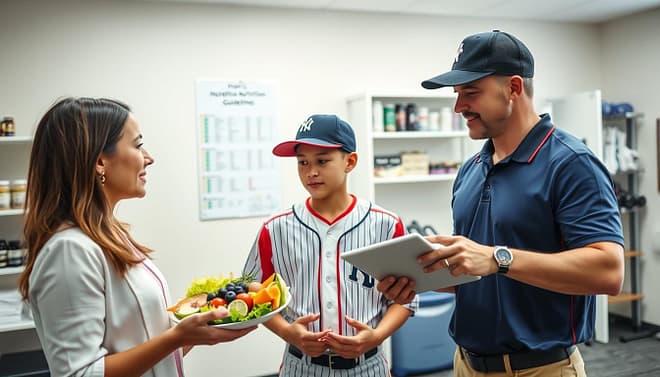
Let’s talk about the two key experts you might need. First, the Sports Registered Dietitian is like your nutrition expert. They help plan what your athlete eats. Then, there’s the Physical Therapist, who makes sure your athlete moves right.
The Sports RD is key when food is more than just fuel. They help with complex diets and energy issues. They also create a hydration plan that’s backed by science.
Here’s the truth: sometimes we need help, even if we think we know best. A Sports RD brings a scientific approach to your kitchen.
The Physical Therapist focuses on how your athlete moves. They’re needed when injuries keep coming back or when movements aren’t right. It’s like they’re fixing a broken system.
| Professional Role | When to Consult | Key Focus Areas |
|---|---|---|
| Sports Registered Dietitian | Persistent fatigue, weight management issues, complex allergies, poor recovery, need for personalized hydration plan | Nutrient timing, supplement guidance, meal strategies, energy optimization |
| Physical Therapist | Recurring injuries, movement imbalances, pain during/after play, stalled performance gains | Biomechanics correction, injury prevention, strength imbalances, recovery protocols |
| Both Professionals | Plateaued performance despite effort, preparation for higher competition levels, return from significant injury | Integrated body-nutrition approach, long-term athletic development, competition readiness |
| Specialist Programs | When generic advice fails, when facing unique challenges, when preparing for elite competition | Personalized periodization, advanced recovery techniques, competition-specific preparation |
Our coaching services work like a cabinet. Sometimes, you need a specialist. The Membership Program is like a team working on athletic development.
Wendi, our expert speaker, makes complex nutrition easy to understand. She turns science into a playbook. This helps parents plan better.
If your athlete’s challenges keep coming back, it’s time for new help. Getting professional advice can prevent injuries and improve performance.
Knowing when to ask for help is smart. It’s not giving up. It’s getting better advice. The right team can make all the difference.
Sample 7-Day Snack & Hydration Planner
The playbook is useless if it stays on the whiteboard. Here’s how to use it for seven days of camp chaos. We’re moving from theory to action. It’s not about being perfect. It’s about having a flexible plan that works in real life.
Good youth sports nutrition comes from trying and adjusting. Think of this planner as your first game. Change it based on your athlete’s hunger, the day’s activities, and what you have at home.
Each day, we balance quick energy with lasting power. Hydration is a key part of the plan. Remember, when in a rush, choose nuts, cheese sticks, or fruit cups, not candy.
| Day | Focus | Smart Snack Ideas | Hydration Goal |
|---|---|---|---|
| Monday | Foundation & Setup | Greek yogurt + berries; whole-grain crackers with hummus | 64 oz (start strong) |
| Tuesday | Quick Recovery | Turkey roll-ups; apple slices with almond butter | Add electrolyte mix post-practice |
| Wednesday | Mid-Week Energy | Hard-boiled eggs; homemade trail mix (nuts, seeds, dark chocolate) | 72 oz (peak training day) |
| Thursday | Simple & Portable | Cheese stick + whole fruit; pre-made energy bites | 64 oz + coconut water |
| Friday | Pre-Game Ready | Banana with peanut butter; whole-grain mini bagel with cream cheese | Sip 16 oz in 2 hours before activity |
| Saturday | Game Day Fuel | Team meal option: DIY sandwich bar with lean protein and veggies | Constant sipping, avoid gulping |
| Sunday | Active Recovery | Smoothie (spinach, protein powder, banana); roasted chickpeas | 64 oz, focus on water-rich foods |
Hydration has its own column for a reason. A dehydrated athlete is like a phone on 1% battery—prone to crashes. The ounces listed are goals, not mandates. Adjust for size, sweat, and weather.
The snack ideas follow the “Student-Athlete Snack Guide” philosophy: protein + fiber + healthy fat. This combo avoids sugar spikes and keeps energy steady. There’s no “magic” food. Just reliable, real options.
For team meals, keep it simple. A build-your-own station lets each kid choose what works for them. It’s diplomacy via deli meat.
This template fits into broader weekly planning. For a more detailed meal plan, check out this 7-day meal plan for energy. It’s the strategic companion to this tactical snack list.
The real win? You now have a framework. Swap Wednesday’s trail mix for popcorn. Change Friday’s bagel for a rice cake. The structure remains. Your young athlete gets consistent fuel. And you avoid the 4 PM “what’s for snack?” panic.
That’s youth sports nutrition in action—not as a textbook concept, but as a packed cooler and a filled water bottle. Now go execute.
Conclusion
As we wrap up our exploration of nutrition and mindset, it’s clear that the two are deeply intertwined. The food we eat can significantly impact our mental health and overall well-being. By making conscious choices about our diet, we can nourish not only our bodies but also our minds.
By focusing on whole, nutrient-dense foods, we can provide our brains with the necessary fuel for optimal functioning. A balanced diet rich in vitamins, minerals, and antioxidants supports cognitive health and promotes mental clarity. It’s a powerful way to take control of our mental well-being and enhance our overall quality of life.
Remember, nutrition is not just about what we eat; it’s also about how we approach food. Mindful eating practices, such as savoring each bite and paying attention to hunger and fullness cues, can help us develop a healthier relationship with food. By being present and mindful during meals, we can cultivate a deeper appreciation for the nourishment we provide our bodies and minds.
So, let’s make a commitment to prioritize nutrition and mindset in our daily lives. By nourishing our bodies with whole foods and cultivating a positive mindset, we can unlock our full mental and physical capabilities. Together, we can create a healthier, happier world, one meal at a time.