The youth baseball sideline is more complex than a Major League front office. We come with good intentions but our plans are often messy. They mix childhood memories with unchecked anxieties.
This isn’t about making a mini-MVP. It’s about building a healthy experience. The game today, as shown in Deven Morgan’s “Skills That Scale,” needs a change. We should focus on the journey, not just the scoreboard.
The first key play is to redefine success. It’s about growth, not just winning. The “process over outcome” idea is key, from Driveline to professional clubs. It helps your child see their worth beyond their batting average.
This is the heart of sports parenting tips. It’s a way to grow your child, one pitch at a time.
Game-Day Sideline Behavior & Communication
Your spot on the sideline is more than a place. It’s a way to send messages to your kid. Every gesture, every word, is like a broadcast to them. They pick up on your emotions, whether you mean to or not.
It’s time to think about how you act on the sidelines. Are you showing calm or stress? Travis Snider and 3A Athletics talk about changing youth sports. Your actions are key to this change.
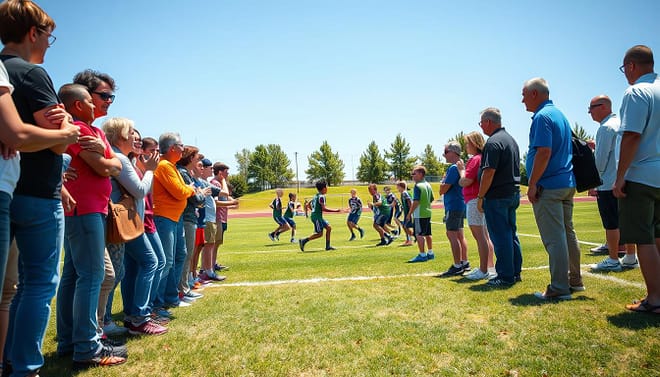
Let’s talk about what your body says. Arms crossed mean you’re tense. Leaning forward shows you’re worried. But, if you relax and smile, you show you’re enjoying the game.
Also, how loud you cheer matters. Shouting too much can stress your kid out. It’s better to be quiet and positive. A simple “Nice effort” can mean a lot more than loud cheers.
Your calm on the sidelines helps your kid. When you’re stressed, they feel it too. But, if you stay calm, you help them stay focused. It’s not about cheering loudly. It’s about being there for them.
After the game, how you talk matters a lot. Start with something positive, like “I loved watching you play.” This sets the tone for your conversation.
Here’s a plan for talking after the game:
- First 5 minutes: Just say you enjoyed watching them play.
- Minutes 5-10: Let them talk about the game. Ask them questions.
- After 10 minutes: If they’re interested, give one positive comment about their play.
This way, the ride home is a chance to talk, not just criticize. It helps you be a parent, not a coach. For tips on handling sideline comments, see this guide.
The sidelines are your stage, but it’s not for others. It’s a chance to connect with your kid. Work on your body language, your words, and the post-game talk. You’re shaping your kid’s view of sports, pressure, and fun.
FAQ
Q: What is the role of a positive coach in youth sports?
A: A positive coach in youth sports is a mentor who focuses on the development of the whole child. They create a supportive environment that fosters growth, self-confidence, and teamwork. Positive coaches emphasize the importance of sportsmanship, respect, and fair play.
Q: How can positive coaching impact a child’s development?
A: Positive coaching has a profound impact on a child’s development. It helps them develop important life skills such as teamwork, communication, and problem-solving. It also promotes self-confidence, self-esteem, and emotional well-being.
Q: What are the benefits of positive coaching?
A: Positive coaching offers numerous benefits for children. It promotes a positive and supportive environment, fosters growth and development, and helps children develop important life skills. It also enhances their self-confidence, self-esteem, and emotional well-being.
Q: How can I become a positive coach?
A: To become a positive coach, it is important to focus on the development of the whole child. This includes creating a supportive environment, fostering growth and development, and promoting positive values such as sportsmanship, respect, and fair play. It is also important to be a role model and demonstrate positive behaviors.
Q: What are some strategies for positive coaching?
A: Some strategies for positive coaching include creating a supportive environment, fostering growth and development, and promoting positive values. It is also important to be a role model and demonstrate positive behaviors. By following these strategies, coaches can create a positive and supportive environment for children to thrive.
Q: How can I create a positive coaching environment?
A: To create a positive coaching environment, it is important to focus on the development of the whole child. This includes creating a supportive environment, fostering growth and development, and promoting positive values. It is also important to be a role model and demonstrate positive behaviors.
Q: What are the benefits of positive coaching for children?
A: Positive coaching offers numerous benefits for children. It promotes a positive and supportive environment, fosters growth and development, and helps children develop important life skills. It also enhances their self-confidence, self-esteem, and emotional well-being.
Q: How can I become a positive coach?
A: To become a positive coach, it is important to focus on the development of the whole child. This includes creating a supportive environment, fostering growth and development, and promoting positive values. It is also important to be a role model and demonstrate positive behaviors.
Q: What are some strategies for positive coaching?
A: Some strategies for positive coaching include creating a supportive environment, fostering growth and development, and promoting positive values. It is also important to be a role model and demonstrate positive behaviors. By following these strategies, coaches can create a positive and supportive environment for children to thrive.
Q: How can I create a positive coaching environment?
A: To create a positive coaching environment, it is important to focus on the development of the whole child. This includes creating a supportive environment, fostering growth and development, and promoting positive values. It is also important to be a role model and demonstrate positive behaviors.
Q: What are the benefits of positive coaching for children?
A: Positive coaching offers numerous benefits for children. It promotes a positive and supportive environment, fosters growth and development, and helps children develop important life skills. It also enhances their self-confidence, self-esteem, and emotional well-being.
At-Home Micro-Drills (10–15 minutes)
Think of skill development as a daily, small language lesson for your body. Forget the long, draining sessions. The secret is the micro-drill: focused, impactful, and quick.
This is the heart of smart home practice. It’s not about doing a lot. It’s about precision. You focus on one thing for 10 to 15 minutes.
This method follows the “Skills That Scale” idea. A good drill at 8 is useful at 18. It’s about building basic movement patterns that grow with you. Pros like Mets AAA Coach Collin Hetzler say, “Move fast, swing hard, throw hard, get better.” It’s all about action, not fluff.
So, how do you do this at home? Focus on the process, not the result. Aim for perfect execution, like keeping your back elbow in.

Here’s a week of micro-drills. This schedule uses the “Skills That Scale” idea. Each short session builds a skill that transfers to other areas.
| Day | Focus Area | Micro-Drill (10-15 mins) | “Skills That Scale” Benefit |
|---|---|---|---|
| Monday | Rotational Power | Dry swings with a towel under back armpit (focus on hip-shoulder separation). | Builds core kinetic chain sequencing for hitting and throwing. |
| Wednesday | Hand-Eye Coordination | Soft-toss with a tennis ball against a wall, alternating hit and catch. | Improves tracking and reaction time, a universal sports skill. |
| Friday | Arm Strength & Accuracy | Long-toss progression: start close, take one step back after every 5 accurate throws. | Develops arm health, throwing mechanics, and strength. |
| Saturday | Fielding Reactions | Grounder drill off a wall, focusing on quick feet and soft hands. | Improves first-step quickness and hand positioning for infield play. |
Each session has a clear goal. This focus makes micro-drills very effective. You’re not just practicing baseball. You’re working on a key part of it.
Your new mantra for home practice is simple: move with purpose, focus on one thing, and keep the clock ticking. It’s a smart, sustainable way to improve without burning out.
Nutrition & Sleep for Young Athletes
Perfect swing mechanics mean nothing without the right fuel and rest. We’re raising athletes who know about launch angles but not how to fuel their bodies. The right nutrition and sleep are key, not just the highlights.
This isn’t about being a nutrition dictator or sleep cop. It’s about seeing food as performance fuel and sleep as the body’s non-negotiable repair shift. Deven Morgan teaches that you’re building an athlete for the next decade, not just for Saturday’s game.
Forget the fancy supplements. The real boosters are simple: water, veggies, protein, and a regular bedtime. They’re easy to find at any grocery store.
Let’s look at what makes athletes grow sustainably. What’s the difference between lasting success and weekend burnout?
| Component | The Reality (What Actually Works) | The Common Myth | Simple Action Step |
|---|---|---|---|
| Hydration | Water regulates body temperature, lubricates joints, and transports nutrients. Even mild dehydration drops cognitive function and reaction time. | “Sports drinks are essential for electrolytes.” | Water bottle always accessible. Urine should be pale yellow. Add a pinch of salt to water for intense sessions. |
| Pre-Game Nutrition | Complex carbs 2-3 hours before: oatmeal, whole grain toast. Adds slow-burning fuel. Protein stabilizes energy. | “Carbo-load with pasta the night before.” | Keep it simple: peanut butter on whole wheat 2 hours prior. Banana 30 minutes before. |
| Post-Game Recovery | The 30-minute “golden window.” Protein repairs muscle. Carbs replenish glycogen. This is when the body is primed to rebuild. | “Recovery only matters for elite athletes.” | Chocolate milk or Greek yogurt with fruit. The perfect 3:1 carb-to-protein ratio. |
| Sleep | Growth hormone releases during deep sleep. Muscle repair occurs. Cognitive skills (decision-making) consolidate. This is when practice literally becomes permanent. | “They can catch up on weekends.” | Consistent bedtime ±30 minutes. No screens 60 minutes before. Dark, cool room. |
Notice what’s missing from that table? Any mention of expensive supplements, proprietary blends, or miracle cures. The foundation is embarrassingly simple—which is why we often overlook it for shinier solutions.
Sleep deserves its own manifesto. During those deep sleep cycles, something magical happens: the day’s practice literally gets hardwired into the brain. Motor skills become automatic. Decision-making patterns solidify. It’s not rest—it’s active construction.
Five hours of sleep before a tournament? That’s like showing up with a bat that’s sawed in half. You might swing, but the physics just won’t cooperate.
The cultural challenge is real. We celebrate the late-night training session but raise eyebrows at the 9 PM bedtime. We need to flip that script. Tell your young athlete: “Getting your sleep is part of your training. It’s when your body does its homework.”
Building these habits isn’t about restriction—it’s about empowerment. When a kid understands that the chicken and rice they ate is why they had energy in the 7th inning, nutrition shifts from chore to strategy. When they feel sharper after nine hours of sleep versus six, the bedtime becomes a choice, not a punishment.
This is the long-game approach that separates seasonal players from career athletes. You’re not just fueling today’s game. You’re building metabolic resilience, recovery capacity, and cognitive durability that pays dividends long after the final pitch.
The takeaway? Skip the hype. Master the basics. The most powerful performance enhancers don’t come in a bottle—they come on a plate and under a blanket.
FAQ
Q: What is a pre buy car inspection?
A: A pre buy car inspection is a thorough examination of a vehicle’s condition before purchasing it. It involves checking various components such as the engine, transmission, brakes, suspension, and electrical systems to identify any existing issues or hidden problems.
Q: Why is a pre buy car inspection important?
A: A pre buy car inspection is important because it helps you make an informed decision when buying a used car. It allows you to identify any underlying issues or hidden problems that may not be apparent during a test drive. This can save you from costly repairs in the future and ensure that you are getting a reliable vehicle.
Q: What does a pre buy car inspection include?
A: A pre buy car inspection typically includes a detailed examination of the vehicle’s exterior, interior, engine, transmission, brakes, suspension, and electrical systems. It may also involve checking for any signs of accidents, previous repairs, or maintenance history. The inspection report will provide you with a detailed assessment of the vehicle’s condition.
Q: How long does a pre buy car inspection take?
A: The duration of a pre buy car inspection can vary depending on the complexity of the vehicle and the thoroughness of the inspection. On average, it can take anywhere from 1 to 3 hours to complete a thorough inspection. It’s best to schedule the inspection in advance to ensure sufficient time for the inspection process.
Q: Can I be present during the pre buy car inspection?
A: Yes, you are encouraged to be present during the pre buy car inspection. This allows you to ask questions, gain a better understanding of the vehicle’s condition, and address any concerns you may have. It also provides an opportunity to discuss any additional tests or inspections that may be required.
Q: How much does a pre buy car inspection cost?
A: The cost of a pre buy car inspection can vary depending on factors such as the location, type of vehicle, and the level of detail required. On average, it can range from $150 to $300. It’s best to contact a reputable inspection company for a detailed quote based on your specific needs.
Q: Can a pre buy car inspection guarantee the vehicle’s condition?
A: While a pre buy car inspection provides a detailed assessment of the vehicle’s condition, it cannot guarantee that the vehicle will be free from all issues. It is important to understand that no inspection can uncover every single problem, and some issues may not be apparent even with a thorough inspection. It’s always a good idea to weigh the risks and consider other factors when making a purchase decision.
Q: How do I schedule a pre buy car inspection?
A: Scheduling a pre buy car inspection is easy. Simply contact a reputable inspection company, provide them with the details of the vehicle you are interested in, and schedule a convenient time for the inspection. Make sure to give them enough notice to ensure that they can accommodate your schedule.
Building Confidence Through Small Wins
Building confidence is like building a house, brick by brick. It’s about small steps, not one big leap. This approach is more reliable and lasting.
Coach Kerrick Jackson from the University of Missouri said, personal development fuels player development. This is true. Winning games doesn’t build confidence. It’s the daily effort that does.
So, what’s a small win in sports? It’s any small improvement that shows you’re getting better.
Think of it as tracking your progress. Maybe you hit the ball three times in a row today. Or maybe you throw a perfect change-up after practicing for a week. These are the small wins.
Seeing your progress is key. When you measure it, you celebrate it. And celebrating it makes you want to do it again.
Here’s a simple way to build confidence:
- The “Win Jar”: Use a jar to collect small wins. Write them down and put them in the jar. Empty it every month to see how far you’ve come.
- Skill GPS Tracking: Focus on one skill each week. Rate it at the start and end of the week. Even a small improvement is a big win.
- Video Diaries: Record a short video after practice. Say what you improved at. This helps you remember your small wins.
This method changes how you think about confidence. Instead of comparing yourself to others, focus on getting better each day. This builds self-confidence.
Don’t just focus on the big wins. Celebrate the small steps that lead to them. Being a bricklayer who values each brick is more important than being a sculptor who only sees the final statue.
Understanding positive reinforcement is key. Celebrate the effort, not just the result. This builds a growth mindset and reinforces the process of improvement.
This approach creates a strong foundation of confidence. It’s based on your own progress, not on external factors. It shows you know your capabilities because you’ve seen yourself improve.
This kind of confidence is unshakeable. It may face challenges, but it can’t be taken away. You have proof of your progress in the small wins you’ve achieved.
FAQ
Q: What is a pre buy car inspection?
A: A pre buy car inspection is a thorough examination of a vehicle’s condition before purchasing it. It involves checking various components such as the engine, transmission, brakes, suspension, and electrical systems to identify any existing issues or hidden problems.
Q: Why is a pre buy car inspection important?
A: A pre buy car inspection is important because it helps you make an informed decision when buying a used car. It allows you to identify any underlying issues or hidden problems that may not be apparent during a test drive. This can save you from costly repairs in the future and ensure that you are getting a reliable vehicle.
Q: What does a pre buy car inspection include?
A: A pre buy car inspection typically includes a detailed examination of the vehicle’s exterior, interior, engine, transmission, brakes, suspension, electrical systems, and more. It may also involve a test drive to assess the vehicle’s performance and identify any unusual noises or vibrations.
Q: How long does a pre buy car inspection take?
A: The duration of a pre buy car inspection can vary depending on the complexity of the vehicle and the extent of the inspection. On average, it can take anywhere from 1 to 3 hours to complete a thorough inspection.
Q: Can I be present during the pre buy car inspection?
A: Yes, it is highly recommended to be present during the pre buy car inspection. This allows you to ask questions, gain a better understanding of the vehicle’s condition, and address any concerns you may have.
Q: How much does a pre buy car inspection cost?
A: The cost of a pre buy car inspection can vary depending on factors such as the location, type of vehicle, and the level of detail required. On average, it can range from $150 to $300. It is important to note that the cost is a small investment compared to the peace of mind and financial savings it can provide.
Q: Can I get a pre buy car inspection for other types of vehicles?
A: Yes, pre buy car inspections are not limited to cars. They can also be conducted for motorcycles, RVs, boats, and even heavy equipment. It is essential to have a professional inspection done before purchasing any type of vehicle to ensure its condition and value.
Q: How do I schedule a pre buy car inspection?
A: Scheduling a pre buy car inspection is easy. Simply contact a reputable inspection company, such as Pre-Purchase Investigators, and provide them with the details of the vehicle you are interested in. They will arrange a convenient time and date for the inspection to take place.
FAQ
Q: What is the significance of the 2024 US Presidential Election?
A: The 2024 US Presidential Election is a critical event that will determine the future direction of the country. It will shape the nation’s policies, economy, and international relations. The election will also have a significant impact on various sectors, including healthcare, education, and the environment.
Q: Who are the main candidates running for the 2024 US Presidential Election?
A: The main candidates running for the 2024 US Presidential Election include Joe Biden, Donald Trump, and several other notable figures. Each candidate has their own platform and vision for the country’s future.
Q: What are the key issues that will be addressed during the 2024 US Presidential Election?
A: The 2024 US Presidential Election will address a range of key issues, including healthcare, education, climate change, economic policies, and national security. These issues will be central to the campaign and will shape the candidates’ platforms.
Q: How can I stay updated on the latest news and updates about the 2024 US Presidential Election?
A: To stay updated on the latest news and updates about the 2024 US Presidential Election, you can follow reputable news sources, such as CNN, Fox News, and The New York Times. You can also follow the candidates’ social media accounts and official websites for the latest information.
Q: What are the voting requirements and deadlines for the 2024 US Presidential Election?
A: The voting requirements and deadlines for the 2024 US Presidential Election vary by state. It is important to check with your local election office or visit the official website of your state’s election authority to determine the specific requirements and deadlines in your area.
Q: How can I make an informed decision when casting my vote in the 2024 US Presidential Election?
A: To make an informed decision when casting your vote in the 2024 US Presidential Election, it is important to research the candidates’ policies, track their campaign promises, and consider their track records. You can also engage in discussions with friends, family, and community members to gain different perspectives and insights.
Q: What is the role of the Electoral College in the 2024 US Presidential Election?
A: The Electoral College plays a significant role in the 2024 US Presidential Election. It is a system established by the Founding Fathers to ensure that smaller states have a voice in the election process. The Electoral College consists of 538 electors, with each state having a number of electors based on its population. The candidate who wins the most votes in a state typically receives all of that state’s electoral votes, except in Maine and Nebraska, which allocate their electoral votes proportionally.
Q: What are the key dates and milestones leading up to the 2024 US Presidential Election?
A: The key dates and milestones leading up to the 2024 US Presidential Election include the primary elections, caucuses, and conventions. These events will determine the candidates who will represent each party in the general election. The general election will take place on November 5, 2024.
Q: How can I participate in the 2024 US Presidential Election?
A: To participate in the 2024 US Presidential Election, you must be a registered voter in your state. You can register to vote by visiting your local election office or by completing an online registration form. It is important to ensure that your voter registration is up to date and accurate to cast your ballot in the election.
Q: What is the significance of the 2024 US Presidential Election?
A: The 2024 US Presidential Election is a critical event that will determine the future direction of the country. It will shape the nation’s policies, economy, and international relations. The election will also have a significant impact on various sectors, including healthcare, education, and the environment.
FAQ
Q: What is the significance of the 2024 US Presidential Election?
A: The 2024 US Presidential Election is a critical event that will determine the future direction of the country. It will shape the nation’s policies, economy, and international relations. The election will also have a significant impact on various sectors, including healthcare, education, and the environment.
Q: Who are the main candidates running for the 2024 US Presidential Election?
A: The main candidates running for the 2024 US Presidential Election include Joe Biden, Donald Trump, and several other notable figures. Each candidate has their own platform and vision for the country’s future.
Q: What are the key issues that will be addressed during the 2024 US Presidential Election?
A: The 2024 US Presidential Election will address a range of key issues, including healthcare, education, climate change, economic growth, and national security. These issues will be central to the campaign and will shape the candidates’ policies and proposals.
Q: How can I stay updated on the latest news and updates about the 2024 US Presidential Election?
A: To stay updated on the latest news and updates about the 2024 US Presidential Election, you can follow reputable news sources, such as CNN, Fox News, and The New York Times. You can also follow the candidates’ social media accounts and official websites for the latest information.
Q: What are the voting requirements and deadlines for the 2024 US Presidential Election?
A: The voting requirements and deadlines for the 2024 US Presidential Election vary by state. It is important to check with your local election office or visit the official website of your state’s election authority to determine the specific requirements and deadlines for your area.
Q: How can I make an informed decision when casting my vote in the 2024 US Presidential Election?
A: To make an informed decision when casting your vote in the 2024 US Presidential Election, it is important to research the candidates’ policies, track their campaign promises, and consider their track records. You can also engage in discussions with friends, family, and community members to gain different perspectives and insights.
Q: What is the role of the Electoral College in the 2024 US Presidential Election?
A: The Electoral College plays a significant role in the 2024 US Presidential Election. It is a system established by the Founding Fathers to ensure that smaller states have a voice in the election process. The Electoral College consists of 538 electors, with each state having a number of electors based on its population. The candidate who wins the most votes in a state typically receives all of that state’s electoral votes, except in Maine and Nebraska, which allocate their electoral votes proportionally.
Q: What are the key dates and milestones leading up to the 2024 US Presidential Election?
A: The key dates and milestones leading up to the 2024 US Presidential Election include the primary elections, caucuses, and conventions. These events will determine the candidates who will represent each party in the general election. The general election will take place on November 5, 2024.
Q: How can I participate in the 2024 US Presidential Election?
A: To participate in the 2024 US Presidential Election, you must be a registered voter in your state. You can register to vote by visiting your local election office or by completing an online registration form. It is important to ensure that your voter registration is up to date and accurate to exercise your right to vote.
Q: What is the significance of the 2024 US Presidential Election?
A: The 2024 US Presidential Election is a critical event that will determine the future direction of the country. It will shape the nation’s policies, economy, and international relations. The election will also have a significant impact on various sectors, including healthcare, education, and the environment.
FAQ
Q: What is the significance of the 2024 US Presidential Election?
A: The 2024 US Presidential Election is a critical event that will shape the future of the country. It will determine the direction of the nation, the policies that will be implemented, and the leadership that will guide the country for the next four years.
Q: Who are the main candidates running for the 2024 US Presidential Election?
A: The main candidates running for the 2024 US Presidential Election include Joe Biden, Donald Trump, and several other notable figures. Each candidate has their own platform, vision, and policies that they believe will benefit the country.
Q: What are the key issues that will be addressed during the 2024 US Presidential Election?
A: The 2024 US Presidential Election will address a range of key issues, including healthcare, education, economic growth, national security, and climate change. These issues will be at the forefront of the campaign and will shape the policies and decisions made by the next president.
Q: How can I stay updated on the latest news and updates about the 2024 US Presidential Election?
A: To stay updated on the latest news and updates about the 2024 US Presidential Election, you can follow reputable news sources, such as CNN, Fox News, and The New York Times. You can also follow the candidates’ social media accounts and official websites to stay informed about their campaigns and policies.
Q: What is the significance of the 2024 US Presidential Election?
A: The 2024 US Presidential Election is a critical event that will shape the future of the country. It will determine the direction of the nation, the policies that will be implemented, and the leadership that will guide the country for the next four years.
Q: How can I participate in the 2024 US Presidential Election?
A: To participate in the 2024 US Presidential Election, you can register to vote and cast your ballot on election day. You can also volunteer for your preferred candidate’s campaign, donate to their cause, and spread the word about their policies and vision for the country.
Q: What are the key issues that will be addressed during the 2024 US Presidential Election?
A: The 2024 US Presidential Election will address a range of key issues, including healthcare, education, economic growth, national security, and climate change. These issues will be at the forefront of the campaign and will shape the policies and decisions made by the next president.
Q: How can I stay updated on the latest news and updates about the 2024 US Presidential Election?
A: To stay updated on the latest news and updates about the 2024 US Presidential Election, you can follow reputable news sources, such as CNN, Fox News, and The New York Times. You can also follow the candidates’ social media accounts and official websites to stay informed about their campaigns and policies.
Community Events, Volunteering & Give-Back
We’ve talked about the sidelines, kitchens, and minds. Now, let’s look at the bigger picture. The final play in your Parent Playbook is about more than just your kid. It’s about the community, the league, and the town.
Think of it like that “Parent Playbook” basketball tournament and auction. It’s not just about raising money. It’s about taking care of the shared spaces where kids play. Volunteering teaches a valuable lesson. It shows that the game is a gift we give to others.
This changes how we see sports. It’s no longer just about winning. It’s about connecting with others. It’s about showing up for the community and being thankful for those who help out.
Your child learns that sports are part of something bigger. They see you making a difference. This lesson is more powerful than any speech.
So, close your playbook with this chapter. Make giving back a part of your family’s sports life. The reward isn’t a trophy. It’s a stronger community, a grateful kid, and the knowledge that you’re raising a good citizen.