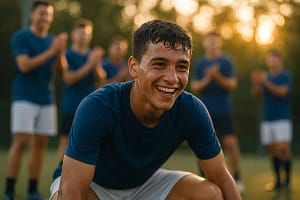
The High School College Showcase in San Juan gives young athletes a useful checkpoint: not just for being seen, but for learning how their baseball skills hold up in a structured evaluation setting. The official event listing places the RGV College Showcase in San Juan, Texas, on July 25-26, 2026, official event listing. For Texas families, that date can serve as a target for building better habits in the cage, on the field, on the mound, and in the weight room.
A showcase should not be treated like a two-day finish line. It is better used as a development marker. Players can walk in with specific goals, test those goals under pressure, then return home with a clearer training plan. The skills listed for the San Juan event touch the core areas that separate a good youth player from a player ready for higher competition: hitting, defense, pitching, base running, game awareness, conditioning, mental preparation, and exposure.
What The High School College Showcase Can Teach
The best use of a showcase is to connect instruction with game-speed execution. A player may look polished in a lesson, then rush decisions when a coach, evaluator, or unfamiliar opponent is watching. That gap is not a failure. It is feedback. The High School College Showcase gives athletes a setting where technical skills and competitive composure can be trained together.
High School College Showcase Hitting Cues
Hitting instruction at the event is centered on refining batting mechanics, improving contact consistency, and building power. Those three goals belong together. Young hitters often chase power first, but contact quality starts with repeatable timing, balance, and barrel direction. A player who wants to get real value from the event should enter with one or two swing cues, not five. Too many thoughts in the box usually slow the body down.
For development purposes, families should watch how the player responds after a missed pitch or a weak round. Does he adjust his setup? Does he control his breathing? Does he stay on plane longer through the hitting zone? Those details matter because a showcase environment can expose whether a swing is stable or dependent on perfect rhythm.
Fielding Fundamentals Under Evaluation
Fielding work at the showcase emphasizes proper fielding positions, footwork, and glove work. Defensive reliability is built before the ball is hit. Young infielders need to show a ready position, active feet, and a clean exchange. Outfielders need to read the ball early, take direct routes, and finish throws with control. Catchers, if included in defensive work, should treat receiving posture and transfer speed as skill checks rather than performance theater.
Players sometimes think defensive value is only about making the difficult play. Coaches tend to notice the routine play first. A clean first step, a controlled gather, and an accurate throw tell a lot about practice habits. For more on how events can support skill growth beyond one score or one stat line, families can review individual development in youth baseball events.
Pitching, Running, And Baseball IQ
Pitchers at the San Juan event can expect work on delivery techniques, velocity enhancement, and pitch control. That mix should be handled carefully by young athletes. Velocity is valuable, but it must be developed alongside direction, balance, arm timing, and the ability to throw competitive strikes. A pitcher who tries to impress every throw may lose the chance to show repeatability.
Delivery Work And Pitch Control
Pitching mechanics are not just about how hard the ball leaves the hand. A useful evaluation setting should help a pitcher see whether his delivery repeats when he is tired, watched, or facing a hitter who will not chase. Control is also not the same as playing catch. It includes the ability to miss in safer areas, recover after a non-competitive pitch, and hold body tempo with runners on base.
For families preparing before July, bullpens should include intent and structure. A pitcher can work through fastball command, secondary-pitch feel, and simple count situations. He should also know what he wants evaluators or coaches to see: strike throwing, clean movement, poise, or a specific mechanical improvement. A focused plan creates better feedback than simply trying to throw harder.
Base Running And Situational Awareness
Base running instruction listed for the event includes lead-offs, stealing bases, and reading pitchers. These are teachable skills, and they often separate prepared players from passive ones. A strong runner does not guess. He studies pitcher rhythm, lead distance, first-step direction, and the count. He also understands risk. Not every steal attempt is smart, and not every aggressive turn helps the offense.
Game situational awareness is another listed area of emphasis. This can include knowing where the ball should go, understanding score and inning context, and making decisions without waiting for a coach to rescue the play. Young athletes should train these moments during practice, not only during games. A coach can pause a drill, ask the player what he saw, and make awareness part of the rep.
Preparing The Body And Mind For San Juan
Physical conditioning at the event is tied to baseball performance, with strength and agility as key areas. That matters in Texas, where summer training and tournament schedules can place steady stress on young players. Athletes should not wait until the week of the event to think about mobility, sprint work, hydration habits, or recovery. A showcase weekend rewards players who can move well in the first session and still stay sharp late in the day.
Conditioning That Supports Baseball Skill
Conditioning for baseball should support the sport’s short bursts, rotation, deceleration, and repeated focus demands. Young players need enough strength to hold positions, enough agility to change direction, and enough endurance to repeat quality reps. The goal is not to turn baseball players into distance runners. The goal is to help their tools show up more often.
Families should also plan food and fluids around the schedule once details are available. The research provided does not list session times, so players should build flexible routines rather than make assumptions. For practical tournament-week planning, young athlete tournament nutrition can help families think through meals, snacks, and recovery windows.
Mental Preparation Without Empty Hype
Mental preparation at the showcase includes focus, resilience, and confidence. Those words can sound broad, but they show up in specific baseball moments. A hitter takes a called strike and stays composed. A fielder boots a ground ball and wants the next one. A pitcher walks a batter and returns to his delivery instead of rushing. Confidence is not loud body language. It is the ability to stay present after the game pushes back.
Parents and coaches can help by setting process goals before the event. The player might aim to communicate on every defensive rep, run hard through every base, stay committed to one hitting cue, or reset after each pitch. Those goals are controllable. They also give the athlete something useful to review after the event ends.
Scouting Exposure And Player Development
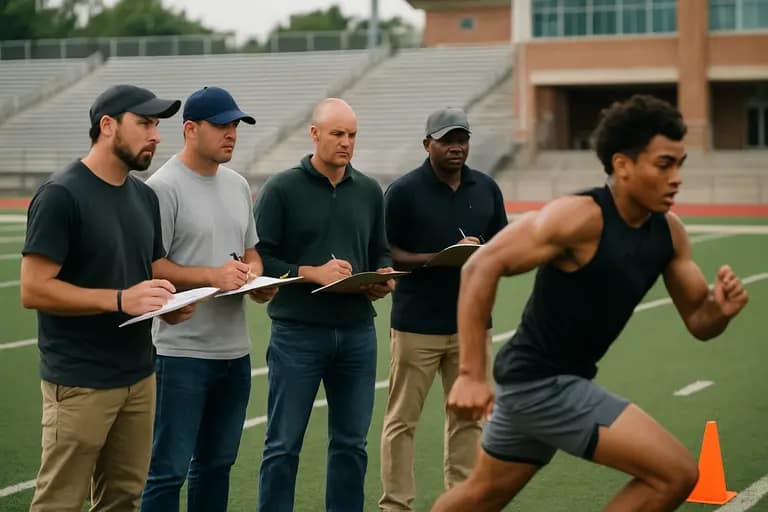
The event research notes exposure to scouts, including college and MLB scouts in attendance, showcase listing. That is a meaningful opportunity, but families should keep the frame realistic. Exposure is not a promise of recruitment, an offer, or a ranking. It is a chance for a player to show current ability and training habits in front of people who may value organized evaluation settings.
The High School College Showcase can help players learn how to present themselves. That includes arriving prepared, wearing proper baseball gear, listening closely, hustling between stations, and responding well to instruction. Scouts and coaches often notice how players carry themselves between reps because those moments can reveal maturity.
- Before the event: choose two technical goals and one mental goal.
- During the event: compete with pace, listen well, and avoid chasing attention.
- After the event: write down feedback while it is fresh, then build a four-week training plan.
Not every player will leave San Juan with the same result. That is normal. A younger athlete may gain clarity on footwork. A pitcher may learn that command needs more work. A hitter may see that contact consistency is a better short-term goal than raw power. The value comes from turning that information into better practice.
Why The High School College Showcase Matters In San Juan
The High School College Showcase matters because it gives Rio Grande Valley and Texas athletes a dated, local target for player development. San Juan is not just a place on the schedule. It is a setting where young players can test skill, preparation, and maturity against a higher standard.
For coaches, the event can help shape training blocks before and after July 25-26, 2026. For families, it can create a healthier way to talk about exposure: prepare well, compete hard, learn clearly, and keep developing. For players, the message is direct. The showcase is not only about being watched. It is about showing what your training has built and learning what your next stage should demand.