For Texas families, National Titles can shape how young players think about pressure, preparation, teammates, travel, and standards. The value is not in treating an age-group championship as a prediction of future recruiting status. The value is in giving players a clear test: can they compete with focus, handle a bigger stage, accept coaching, and return home with better habits?
Youth baseball programs in Texas should view national championship events through a development lens. A trophy may create pride for a team and its families, but the deeper benefit comes from the training block before the event, the way players respond during hard games, and the review after the weekend. That is where young athletes learn how to compete without letting one result define them.
The research available here supports a narrow point: national youth events have existed as organized championship platforms, and some have used broadcast or streaming distribution to bring more attention to 12U competition. It does not support broad scouting claims, current team rankings, or promises about future college or professional outcomes. That distinction matters for Texas programs that want ambition without hype.
What National Titles Teach Young Players
Keeping National Titles In Perspective
The best lesson from National Titles is perspective. Young players need to learn that winning matters, but preparation matters more. A strong tournament run can reward discipline, communication, and competitive toughness. It can also reveal gaps: defensive focus late in games, strike-zone judgment, mound presence after an error, or the ability to execute a routine play while everyone is watching.
For 10U, 11U, and 12U athletes, the emotional side of competition is often as important as the baseball skill. A player may face louder dugouts, tighter time windows, unfamiliar opponents, and long days away from home. Those conditions can expose whether a team has practiced routines that hold up under pressure. Coaches should not wait until bracket play to teach breathing control, between-pitch plans, dugout roles, and reset language after mistakes.
Pressure As A Teaching Tool
Pressure is useful when adults frame it correctly. A young player who boots a ground ball in a tight game needs coaching that connects the mistake to a controllable next action. A hitter who expands the zone against velocity needs a plan, not public embarrassment. A pitcher who loses command needs a mound visit that teaches tempo, target focus, and confidence in the next pitch.
That approach keeps championship baseball from becoming a fear-based environment. Texas programs with long-term priorities should ask one simple question after every high-level event: did our players leave with clearer standards, or only stronger emotions? If the answer is only emotion, the event did not do enough for development.
Event Structure And Exposure
What The NYBC Model Shows
The National Youth Baseball Championships were established in 2008 and brought together top 12-and-under teams from different organizations to compete for a national title. The inaugural event was scheduled for Memphis, Tennessee, from August 21-24, 2008, with MLB.com set to stream games from that first championship event, as MLB.com reported.
That structure matters because it shows how age-group baseball can move beyond isolated local results. A team that performs well in its region may still need to adjust against opponents with different pitching patterns, baserunning pressure, defensive pace, or dugout energy. For a Texas team, that kind of event can test whether local success travels.
Exposure should still be defined carefully. A streamed youth tournament gives players experience in a public setting, but it should not be sold as a recruiting guarantee. At 12U, the most useful exposure is often exposure to better competition and stronger routines. Players learn how their current habits compare, then take that information back into practice.
The Ripken 12U Signal
Ripken Baseball launched a 2025 national championship tournament aimed at the 12U market, with a finale at Cooperstown All Star Village and distribution through CBS Sports Network plus digital streaming through GameChanger, according to Youth Sports Business Report. That format reinforces how much attention the 12U age group receives in the youth baseball market.
For Texas programs, the lesson is not that every team must chase the farthest trip. The lesson is that tournament structure is becoming more visible and more organized. Coaches should prepare families for what that means: roster depth, pitching plans, recovery time, travel demands, and the need for players to stay coachable when games feel bigger than a normal weekend.
Building Competitive Habits In Texas
Practice Standards Before Travel
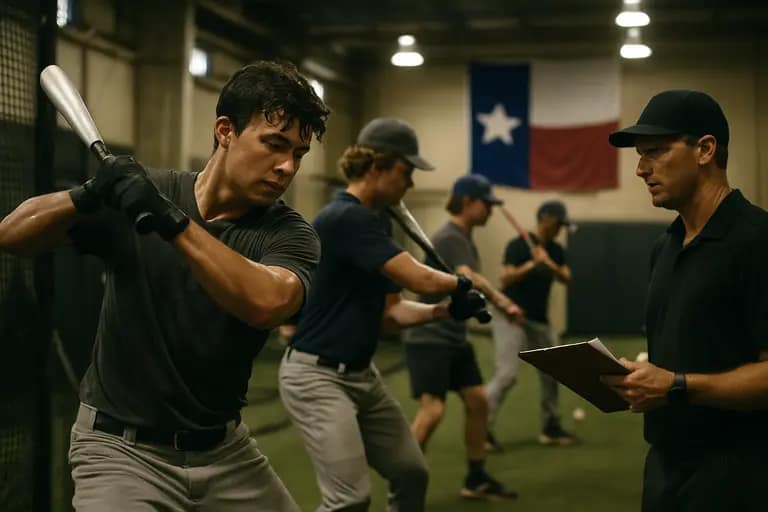
Strong tournament teams are usually built before the bus leaves or the family cars pull out of the driveway. Coaches can use championship goals to sharpen practice design. Defensive periods should include game-speed throws with consequences. Hitting work should include count-based rounds instead of only comfortable swings. Pitchers should practice holding runners, fielding their position, and throwing to specific lanes rather than only chasing velocity.
Families evaluating clubs should look for a connection between tournament goals and weekly development. A program that talks about trophies but runs loose practices is sending mixed signals. A program that teaches routines, tracks effort, communicates roles, and reviews performance gives players a better chance to grow from a major event. For a deeper youth development frame, Texas families can compare this topic with individual development in youth baseball events.
Family Planning Around Tournament Weeks
Travel events put stress on young athletes and parents. Long drives, hotel sleep, heat, back-to-back games, and irregular meals can affect performance. None of that makes a championship less valuable, but it does mean preparation must extend beyond batting practice and bullpen work. Families should plan food, hydration, downtime, and warm-up windows with the same seriousness they give uniforms and arrival times.
Texas summers can make recovery habits even more important. Young players are still learning how to manage their bodies, so adults need to build simple systems: water before thirst, shade between games, light movement after long sitting periods, and meals that support energy without leaving players sluggish. Practical planning around tournament nutrition planning can help families treat performance as a full-week responsibility.
- Coaches should define roles before the event, including pitching limits, defensive substitutions, and bench responsibilities.
- Players should know their personal focus point, such as first-step defense, two-strike approach, or mound tempo.
- Parents should support routines without turning every at-bat or inning into a referendum on the player.
What National Titles Mean For Texas Programs
Age-Appropriate Standards
A championship standard should fit the age group. A 12U player should be challenged, not treated like a professional. Coaches can demand effort, attention, and accountability while still protecting confidence and love for the game. The right balance helps players understand that serious baseball is built on daily choices, not one dramatic weekend.
Programs should also be honest about what the available facts do and do not show. The cited events confirm national youth championship structures and media distribution around 12U baseball. They do not prove that a player who appears in such an event will reach a specific high school, college, or professional level. Texas coaches should say that clearly. Trust grows when families hear ambition paired with honesty.
National Titles should point Texas players back to better work: cleaner catch play, stronger practice focus, smarter baserunning, more resilient dugout behavior, and respect for team roles. If a championship helps a young athlete compete harder while staying coachable, it has real value. If it becomes only a status label, the program has missed the stronger lesson.