I’ve seen enough Little League dads turn into Bobby Knight impersonators to know America has a winning problem. That red-faced parent screaming at umpires? They’re missing the whole ballgame.
Here’s the truth they don’t teach in scorebooks: how you play the game determines how you play life. That 12-year-old who shakes hands after a loss becomes the 35-year-old who handles career strikes with grace.
Baseball isn’t just America’s pastime – it’s our proving ground for adulthood. The diamond teaches what spreadsheets never can: that integrity outlasts innings, and class matters more than championships.
Forget batting averages. The real stats that matter are measured in character points. And spoiler alert: they’re the only numbers that actually follow you off the field.
Lessons from Coaches
Remember that grizzled coach who looked like he’d been chewing tobacco forever? Mine taught me more about people than my psychology class. These coaches use team values in every drill and speech.
Great coaches lead by example. They don’t just talk about respect, they show it. I saw a coach call timeout to praise a player’s sportsmanship. “That,” he said, “is how we win, not just the game.”
The pitching rotation teaches patience and trust. Your ace pitches, but the middle reliever might win the game. Coaches show that every role is important in team values.
Defensive shifts teach adaptability. Moving you from third to shallow right field is more than strategy. It’s about being ready for anything, like a CEO or a parent.
After a tough loss, coaches turn kids into team players. They use balls and sarcasm. I remember a coach saying, “At least we practiced defense today. Silver linings, kids.”
These coaches teach more than just baseball. They teach:
- Resilience through failed plays
- Adaptability through unexpected games
- Accountability through owning mistakes
The best coaches focus on building good people, not just winning teams. They teach team values that last a lifetime. They show us that we’re all part of the team, no matter our role.
Building Team Spirit
Team spirit is like a jazz band – it’s not about being the best soloist. It’s about how well you listen and work together. When the bass player knows what the drummer will do next, that’s teamwork.
This teamwork isn’t just about looking the same or saying the same things. It’s about showing respect through what you do. It’s about knowing that everyone’s role is important, just like in Silicon Valley’s top startups.
Building trust is like The Avengers working together. Each hero is strong alone, but together they’re unstoppable. The same goes for sports teams. The ones that talk through tough times do better than those that only celebrate wins.
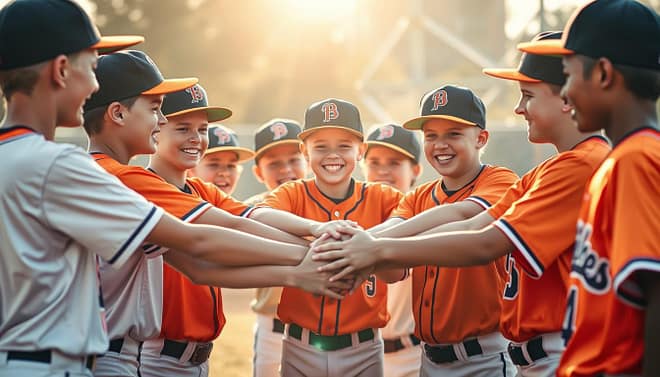
When a team cheers for each other’s wins, it creates a positive cycle. A bench erupting for a newcomer’s first basket is like a jazz band playing together. Everyone gets a chance to shine, but no one takes over.
Dealing with losses together makes a team into a community. A high-five after a strikeout shows respect for trying. These moments teach more about character than any trophy.
True team spirit is about valuing every contribution. It’s about respecting each other’s talents, making the team stronger together. And that’s more impressive than any trophy.
Recognizing Good Behavior
Kids love positive feedback, just like politicians love applause. They thrive on it. When it comes to sportsmanship, praising them for good behavior works better than scolding for bad.
Imagine you’re a scientist watching kids play soccer. Your job is to spot sportsmanship moments before they disappear.
What are we looking for? It’s not just the obvious. Shaking hands after a game is important. But the real magic is in the small, kind actions:
- The player who helps an opponent up after a hard tackle
- The team that applauds an incredible play from their rivals
- The kid who admits the ball was out when no referee saw it
- The high-five between opponents after a great effort
Coaches know praising good behavior leads to more of it. It’s like a science. When you celebrate a kid who complimented the other team’s pitcher, you’re rewarding more than one child. You’re showing everyone what sportsmanship looks like.
Why does praising work better than punishing? It’s simple psychology. Positive reinforcement makes good behavior a habit. Punishment just teaches kids to avoid getting caught.
Stanford Children’s Health says praising good behavior helps kids learn values, not just follow rules.
Recognizing good behavior needs to be timely and specific. Don’t just say “good job.” Be specific: “I saw how you helped their player up after that fall – that’s exactly what sportsmanship looks like.” This is not just praise; it’s shaping behavior.
Don’t forget to celebrate the small victories. A “nice shot” to an opponent or sharing a water bottle with the other team. These moments build character that lasts long after the season ends.
Kids don’t naturally know how to lose or win gracefully. They learn by seeing what gets praised. When we celebrate sportsmanship, we’re not just making better athletes. We’re making better people.
So, next time you’re watching, put on your scientist hat. Look for those moments of kindness. Then make sure everyone sees them. In the world of kids, what gets noticed gets repeated.
Parent Reinforcement at Home
Your living room is where life’s team values are practiced. The game doesn’t end with the final whistle. It just moves to a new place. You’re now the coach at home, using every moment to reinforce what’s learned on the field.
How do you talk about mistakes without causing worry? The answer is “The Post-Game Pizza Protocol.” Instead of focusing on errors, talk about effort. Ask about the best play, not the missed one. This is about encouraging good behavior.
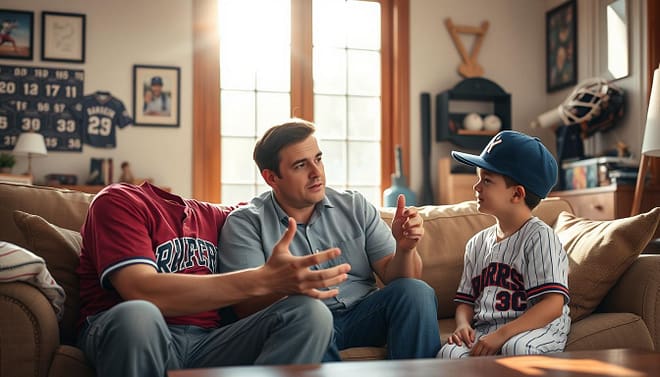
What if your kid wants to practice sliding through your house? It’s not bad behavior; it’s excitement. Channel that energy into safe activities. Create a “safe slide” zone with pillows to turn frustration into fun.
Managing school and sports is like any double play. Make homework and practice equal. This teaches time management and setting priorities – key team values beyond sports.
| Household Scenario | Sportsmanship Lesson | Practical Response |
|---|---|---|
| Post-game disappointment | Resilience and perspective | “What did we learn for next time?” |
| Sibling rivalry | Cooperation over competition | “How can you help each other improve?” |
| Homework vs practice conflict | Balance and responsibility | “Let’s schedule both like a real pro” |
| Celebrating others’ successes | Generosity and support | “What was awesome about their play?” |
The remote control dilemma is like sacrifice bunting. Sharing screen time teaches selflessness. These moments build character, showing that team values are learned at home.
Remember, keeping pressure off means valuing effort over results. This turns stress into lessons on perseverance and teamwork. It shows that being part of a team is about more than just playing a sport.
Real Life Scenarios
Sportsmanship shines in real moments, not just in theory. It’s when respect is tested and proven. These are not just stories; they’re real-life lessons.
Imagine your kid’s team is down by one run with two outs in the last inning. The umpire calls strike three, and it seems way off. The parents around you start yelling like they’re at a hearing.
I saw a coach handle this situation with grace. He didn’t argue with the umpire. Instead, he calmly asked for a review. When the call was confirmed, he told his team, “Umpires are human. Let’s focus on what we can control.” That moment taught a lot about respect.
There’s also the parent with the detailed spreadsheet. I’ve seen them track 8-year-olds’ stats. When they criticized a child for “lowering the team’s WAR,” the coach said, “We’re here to build people, not statistics.” The silence that followed was powerful.
Dealing with mistakes and losses is tough. I saw a shortstop make an easy error that lost the game. His teammates could have blamed him. But the first baseman went over and said, “We’ll get the next one.” That act of respect turned a bad moment into a learning experience.
Pressure tests true character. When a young pitcher faced bases loaded with no outs, his coach went to the mound. He told the pitcher, “Breathe. We believe in you.” The pitcher didn’t get out of the jam, but he stayed calm. He earned his teammates’ respect through his dignity.
But then there are the failures that show the opposite. The coach who yelled at an umpire until he was kicked out. The parent who yelled at a child from the stands. The player who threw his helmet after striking out. These moments lost respect.
The key to success? Perspective. Adults who see it as a chance to grow, not just win. Players who know how they handle tough times shows more about them than their wins.
Sportsmanship is tested when things don’t go as planned. It’s about learning respect for officials, opponents, the game, and oneself.
Next time you’re in a tough situation, think about what you’re teaching about respect. Your response might change.
Awarding Positive Attitudes
The debate over participation trophies has been ongoing for a long time. We’re not focusing on plastic awards. Instead, we aim to raise individuals who value growth over winning.
The “Most Improved” award is often more meaningful than “MVP.” It highlights the journey, not just the end result. This approach shows that progress is more important than being the best.
Team success is more powerful than individual awards. Celebrating wins together, like a perfect double play, teaches us about teamwork. It shows that working together is key to success.
These lessons are not just for sports. They apply to life, too. Learning to play fair at a young age helps us be honest and fair in our careers. We’re not just making athletes; we’re shaping people who value integrity.